Sources characterize Ankalamma as a locally rooted mother/guardian cult that was later syncretized with pan‑Indian goddess identities such as Parvati and Kali and in some accounts counted among the Matrikas. Some modern summaries describe the tradition as predating the organized, textual Hindu presence in South India; medieval epigraphic evidence (inscriptions dated to 1154 A.D. and 1532 A.D.) attests to a long history of local temple worship and institutional presence.
The supplied sources do not record a systematic, detailed iconographic description. Identification in the sources rests on temple dedications, sacred grove sites (Ankalamma Gudi / Ankalamma Konda), festival contexts, and association with graves and cremation grounds. Literary and local accounts commonly treat her as a mother/goddess figure (Amman/Devi/Paramesvari) and equate her functionally with Parvati/Kali and mother‑goddess networks rather than providing consistent physical attributes.
Documented functions emphasize territorial guardianship of villages and sacred groves (kaval deivam), roles connected to mortuary liminality (association with graves, cremation, and local notions of resurrection or return), and social legitimization for certain communities (for example, veneration by thirunangai communities as an ethical role model). Ritually she is propitiated through temple worship and seasonal jatara festivals; some local fiestas include animal sacrifice as part of propitiation. The sources do not provide accounts of specific supernatural powers beyond these protective and mortuary associations.
Weaknesses
- conditionNo documented weaknesses — cult function tied to continued ritual maintenance and local veneration
Wards
- ritualShrine maintenance and regular temple worship
- ritualParticipation in jatara (festival) observances, including offerings and, in some places, animal sacrifice
- conditionCollective propitiation by the village community to secure her protective guardianship
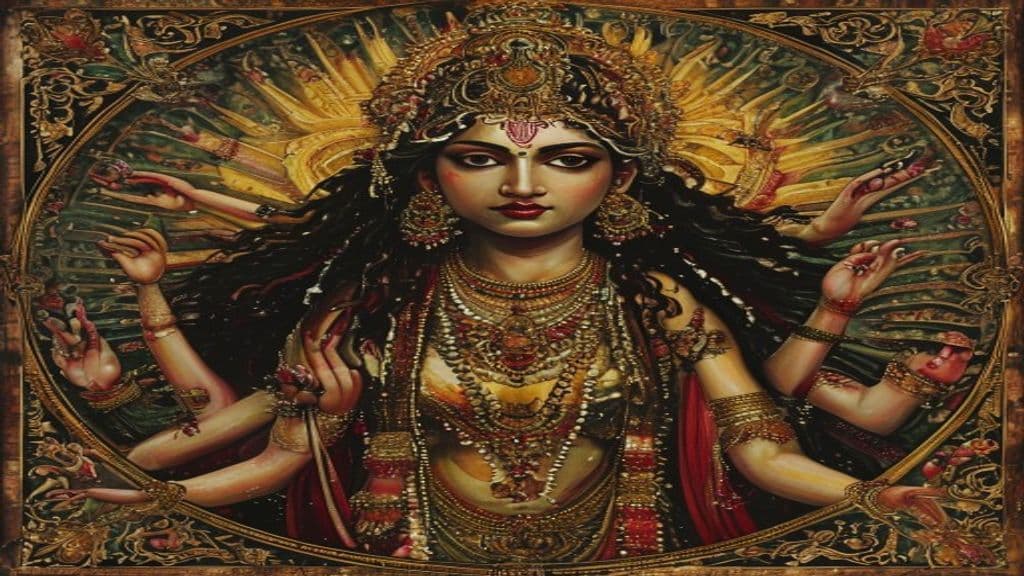
Parvati
Parvati is a principal goddess in Hindu tradition, worshipped as the consort of Shiva and as his shakti (divine power). She embodies a range of roles — devoted wife and mother, fertility and nourishment-giver, and in other manifestations a ferocious protector who destroys evil.
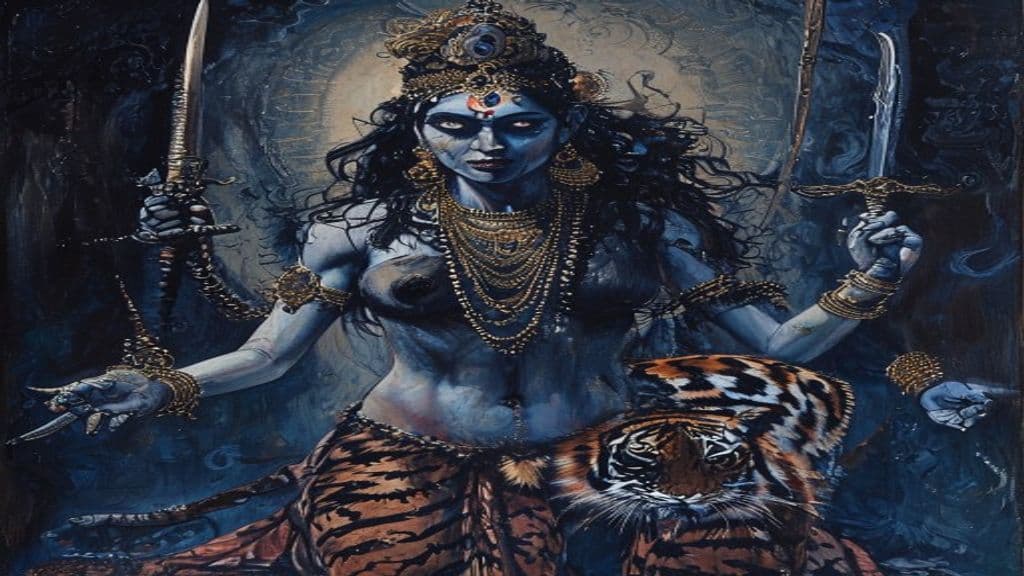
Kali
Kali is a major Hindu goddess associated with time (kāla), death, destruction, and also with liberating knowledge; she appears in Puranic and Tantric texts as a fierce battlefield power and as a protective Divine Mother (Kali Mātā).
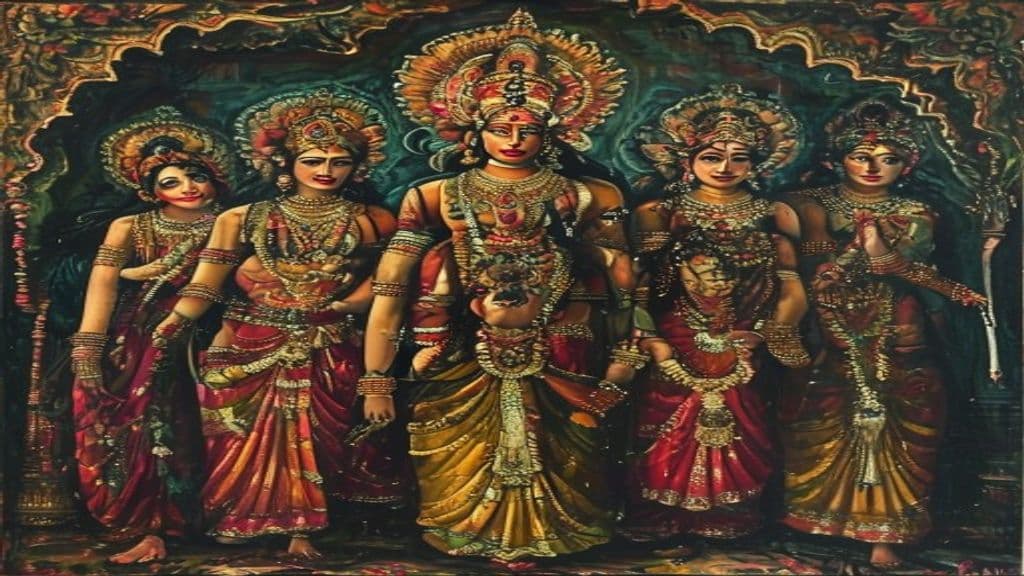
Matrikas
Matrikas (Sanskrit: mātṛkā, 'mothers') are a group of related mother-goddess figures in Hindu tradition, commonly rendered as seven (Saptamatrikas) or eight (Ashtamatrikas). They function ambivalently as protectors and as dangerous female powers tied to fertility, child mortality, disease, and martial activity, and were incorporated into temple and tantric/Shakta practice by the Kushana–Gupta and early medieval periods.
Community Record
- [1]Angala Devi (Wikipedia). Wikipedia, 'Angala Devi' entry (Ankalamma / Angala Paramesvari overview)wiki
- [2]Kondapuram mandal, Nellore district (Gottigundala Jatara mention). Wikipedia, Kondapuram mandal (notes on Gottigundala village festivals and animal sacrifice)wiki
- [3]Karempudi (Ankalamma Temple noted). Wikipedia, Karempudi (lists Ankalamma Temple among prominent temples)wiki
- [4]South Indian Inscriptions (Velanandu chiefs, slab dated 1154 A.D.). South Indian Inscriptions, inscription noting slab in Ankalamma temple courtyard dated 1154 A.D.other
- [5]Telugu Inscriptions of the Vijayanagara Dynasty (pillar dated 1532 A.D.). South Indian Inscriptions Volume 16, inscription referring to a pillar in the mandapa of the Ankalamma temple dated Saka 1454 (1532 A.D.)other
- [6]Ankalamma in Andhra Pradesh heritage inventory (sacred groves). CPREEC Andhra Pradesh eco‑heritage inventory (records Ankalamma Gudi and Ankalamma Konda sacred groves)other
- [7]Goddess Angala Parameswari Amman (devotional blog). Hindu devotional blog summarizing popular identifications of Angala Paramesvari/Ankalammafolk
- [8]Angala Parameswari Non Vedic Deity – Ramanisblog. Ramanisblog (discussion of non‑Vedic/local aspects and syncretism with Puranic goddesses)folk
- [9]Kadapa tourist listing (Ankalamma Gudur visitation days). Kadapa tourist information noting temple visitation patterns for an Ankalamma siteother
- [10]High Court archives & Andhra Pradesh government references (modern civic/legal visibility). High Court archival reference where 'Ankalamma Temple' appears in legal documents (archive)other