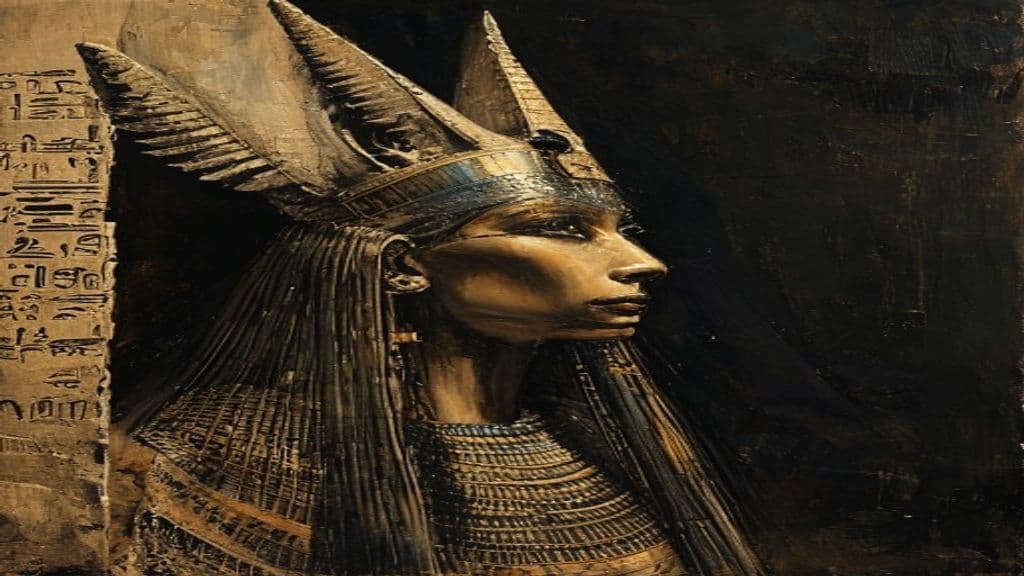
Anput is recorded in Egyptian textual and onomastic evidence as the female counterpart (feminine morphological form jnpwt) and consort to the god Anubis (jnpw). She is primarily attested within funerary tradition and royal funerary literature (notably the Pyramid Texts) and is identified in later summaries and encyclopedic treatments as a local tutelary goddess of the seventeenth nome of Upper Egypt. The surviving sources portray her role as subsidiary to major funerary deities rather than as the focus of an independent myth-cycle.
In iconography Anput is typically represented as a woman wearing a headdress that shows a recumbent jackal upon a feather. Occasional attestations present her with the body of a woman and the head of a jackal, though this is described in the sources as rare. In the Pyramid Texts she appears in serpent imagery, where that form is associated with refreshing and purifying the pharaoh.
Textual and summary sources associate Anput with funerary and mummification functions, protection of corpses (including a protective role toward the body of Osiris), and with providing refreshment and purification in the funerary context. The Pyramid Texts explicitly depict her as a serpent who 'refreshes and purifies' the pharaoh and sources describe her as bringing water to spirits awaiting mummification. She is presented as a protective, caretaking divine agent within the mortuary sphere rather than as a hostile being.
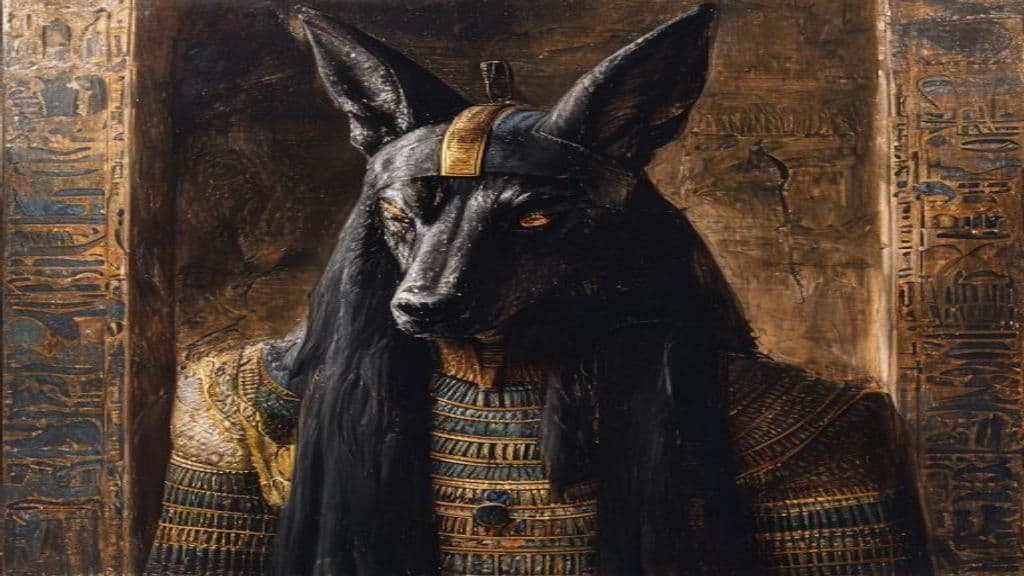
Anubis
Anubis is the ancient Egyptian funerary deity associated with embalming, protection of graves, and guiding the dead into the afterlife. Depicted as a canine or a man with a canine head and shown in black, he presides over mortuary rites and attends the judgment of the deceased, though he is not the central subject of many major myths.
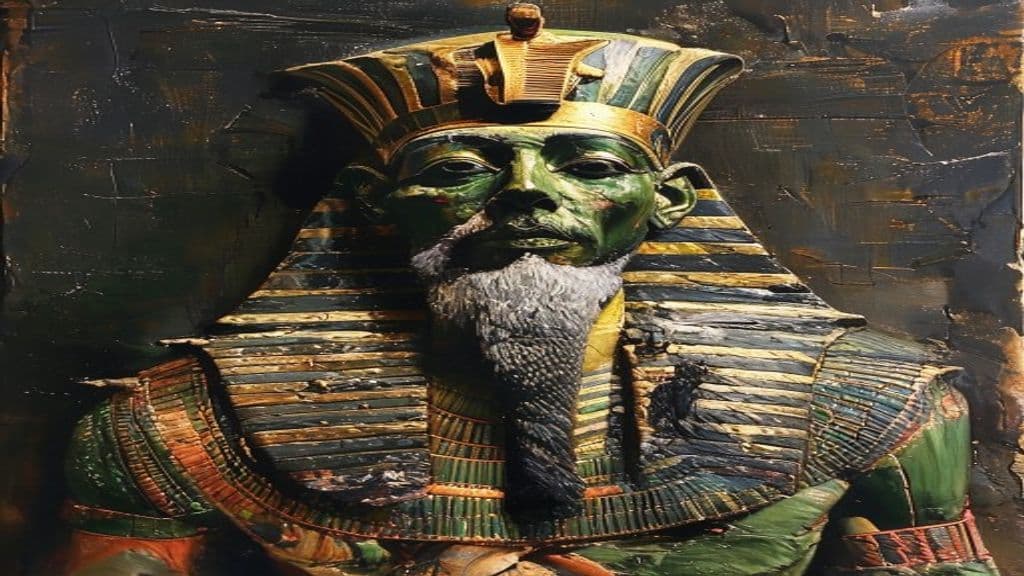
Osiris
Osiris is the major ancient Egyptian god of fertility, vegetation, death, resurrection, and the afterlife. He functions as sovereign of the realm of the dead, a guarantor of postmortem renewal and agricultural fertility, and the archetypal divine figure with whom deceased kings and mortals ritually unite to gain continuity after death.
Community Record
- [1]Anput. Wikipedia, 'Anput' article (accessed via provided research notes); statements include name (jnpwt), reconstructed pronunciations, variant renderings, feminine suffix explanation, iconography (woman with jackal-on-feather headdress; occasional jackal-headed depictions), association with funerals/mummification and protection, connection to Osiris and seventeenth nome, and summary that she 'refreshes and purifies' the pharaoh in Pyramid Texts.wiki
- [2]Anput (Wikidata entry). Wikidata entry for Anput (Q2302818) referenced in research notes as corroborating classification as an Egyptian deity.wiki
- [3]Pyramid Texts (as cited in secondary summaries). Pyramid Texts are cited within modern summaries (Wikipedia) as attesting Anput's depiction as a serpent who 'refreshes and purifies' the pharaoh and as bringing water to the spirits of the dead awaiting mummification; the current entry relies on that attestation as recorded in the provided sources.literary