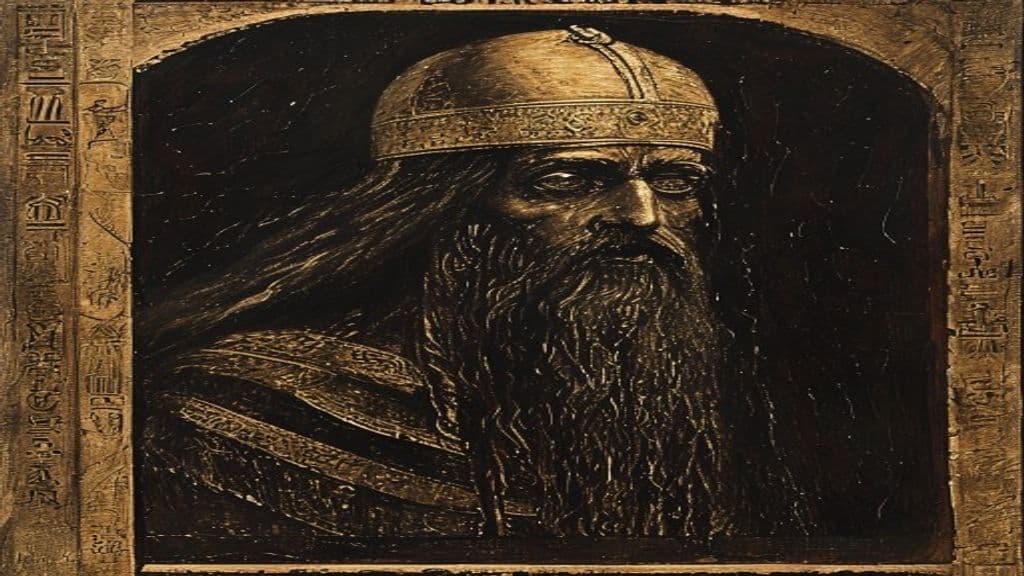
In Mesopotamian theogonic tradition Anshar is a first-generation, ancestral figure representing the totality of the heavens. In genealogical lists and in the Enūma Eliš he appears among the elder gods who precede the active, younger pantheon: he is paired with Kishar ("whole earth") and is treated as an ancestor of Anu and of subsequent divine generations. Scholarly sources note some textual uncertainty about precise parentage in various lists (for example, whether Anshar and Kishar are children of Lahmu and Lahamu), but the prevailing interpretation in the cited material treats him as an early primordial progenitor who temporarily occupies a kingly, legitimizing role in myth.
The available textual sources present Anshar primarily as an abstract, theological personification rather than a vividly anthropomorphic or iconographically consistent deity. No specific, consistent physical descriptions or iconographic attributes are attested in the provided materials. Later occurrences of the logogram AN.ŠÁR in Assyrian and Neo-Babylonian contexts that indicate cultic inscriptions or a shrine more likely reflect the logographic writing of the state god Ashur rather than a continuous, independent iconographic tradition for the primordial Anshar.
In literary and theological texts Anshar functions as the personification of the whole sky and as an ancestral legitimator in the theogony: he participates in creation accounts, is named among the elder gods, briefly occupies kingship in the Enūma Eliš narrative, summons an attendant (Kakka) to communicate decisions in the epic, and is described in the Enūma Eliš as the first deity to provide Marduk with new names after Marduk's victory. Beyond these textual roles, Anshar is not presented in the cited sources as an interactional, cultic power with regular direct dealings with humans. In later scribal and political-theological practice the cuneiform sign AN.ŠÁR is used logographically to represent other high gods (notably Ashur), so textual "behaviors" can include functioning as a logographic label and a node for theological equation.
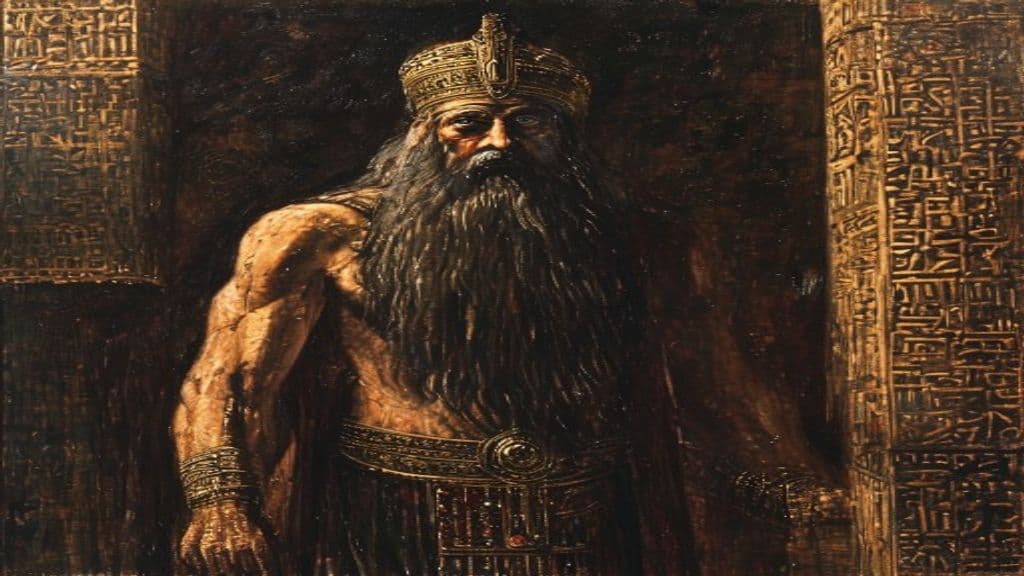
Kishar
Kishar (Akkadian Kišar) is a primordial female principle in Babylonian cosmology attested in the opening lines of the Enuma Elish. She functions as the paired earth-counterpart to the sky-principle Anshar and is genealogically the mother of Anu; surviving sources present her as an abstract, cosmological origin-aspect rather than an actively worshiped cult figure.
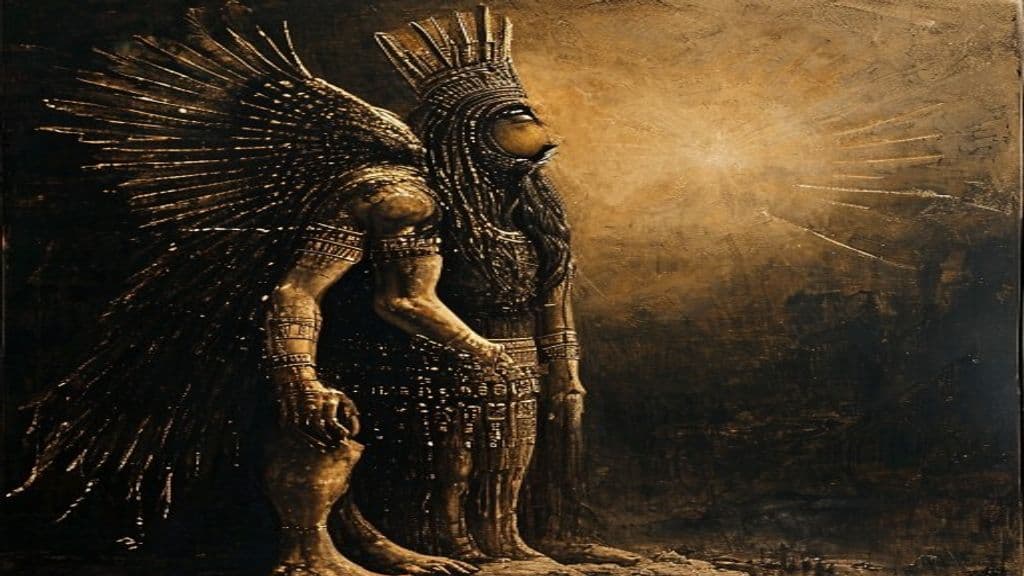
Anu
Anu (Sumerian An; Akkadian Anu/Anum) is the divine personification of the sky in ancient Mesopotamian religion, traditionally ranked at the top of god‑lists as the source of heavenly authority (anûtu/anuti) and the fount of legitimate rule for gods and kings. Though supreme in genealogies and astronomical schema, many periods portray him as a relatively passive or figurehead deity whose active cultic role is limited until a late Seleucid reinvention in Uruk.

Laḫmu
Laḫmu (Laḫamu for the feminine counterpart) is an apotropaic Mesopotamian supernatural being attested both as a class of protective attendants in ritual contexts and as an individual primordial figure in some theogonies (notably variants of the Enūma Eliš). Generally regarded as protective household and temple guardians, Laḫmu are also incorporated in certain mythic genealogies.

Lahamu
Lahamu is a minor primordial figure in Mesopotamian cosmological genealogies, attested in variants of the Enuma Elish and in some god-lists as a feminine counterpart to Lahmu and an ancestor in the lineage that leads to the major sky-god Anu. She appears in literary creation contexts rather than as a focus of cultic practice.
Community Record
- [1]Anshar - Wikipedia. Wikipedia, 'Anshar'wiki
- [2]Enūma Eliš (Babylonian creation epic) - Wikipedia. Wikipedia, 'Enūma Eliš'wiki
- [3]Enūma Eliš text (mirror). SaturnianCosmology mirror of Enūma Eliš (text mirror referenced in notes)other