Aphrahat is attested in Syriac and later sources as a Persian‑born Christian teacher active in the first half of the fourth century (commonly dated c. 280–c. 345). He is described as of Iranian descent and as a subject of the Sasanian Empire, born near the Roman‑Sasanian border. His literary activity — the twenty‑three Demonstrations — arose within the pastoral and ecclesiastical milieu of the Persian church and in response to the political‑religious pressures of Shapur II's persecutions and intra‑communal debates (notably tendencies toward Judaizing). Later manuscript traditions and marginal notes sometimes identify him with other local figures (e.g., Jacob of Nisibis) or ascribe to him a bishopric (Mar Mattai), but such identifications are treated as uncertain or later elaborations in the sources.
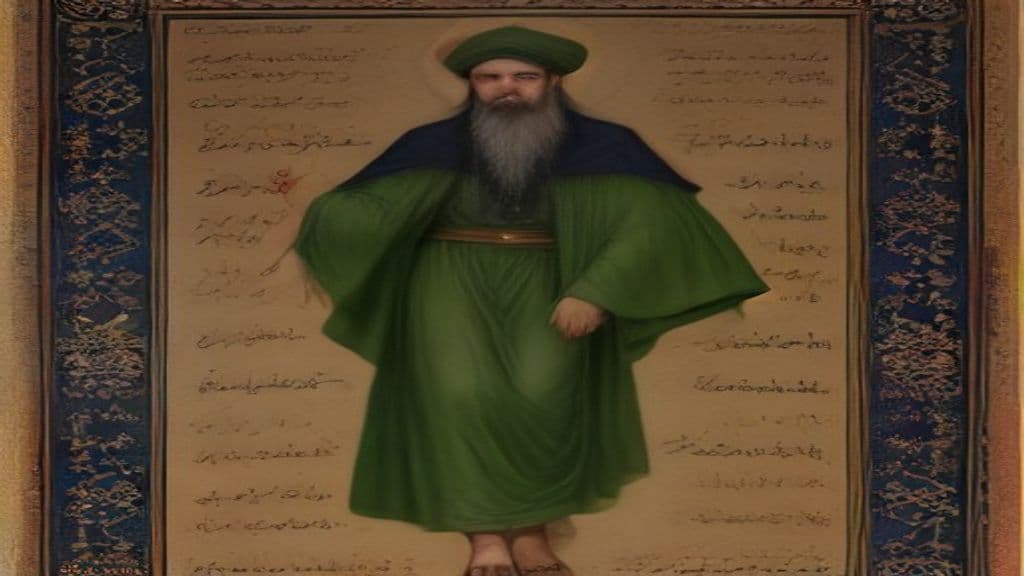
The supplied sources provide no contemporary physical description. Rather than corporeal features, surviving testimony characterizes Aphrahat by his social and religious persona: an ascetic, celibate member of a "son of the covenant" communal form, a teacher and counselor in Syriac Christian communities. Later tradition visually or biographically embellishes his identity (e.g., connecting him to Mar Mattai monastery), but no original eyewitness depiction of his appearance is preserved in the cited materials.
Aphrahat's principal 'abilities' are literary, pastoral, and administrative: he authored twenty‑three Demonstrations (homilies/expositions) that instruct congregations in doctrine, moral practice, and church order. The Demonstrations employ Syriac literary forms (the first twenty‑two begin with successive letters of the Syriac alphabet), exegetical use of Scripture (including reliance on the Diatessaron), pastoral counsel for communities under persecution, polemic responses to Judaizing tendencies (explaining circumcision, Passover, and Shabbat), and apocalyptic reflections. He also functioned in an administrative/pastoral capacity (e.g., composing a circular letter in 344 for churches of Ctesiphon and Seleucia). Later manuscript transmission and scholarly discussion debate whether he held episcopal office, but his recognized role is that of an influential ascetic teacher and author.
Apesh
Apesh is an Ancient Egyptian god of the night associated with the head of a turtle or tortoise and attested in funerary literature as opposing the sun-god Ra. Sources describe Apesh in negative terms tied to cultural attitudes toward turtles and cite funerary formulae that rhetorically wish the turtle’s death in favor of Ra’s life.
Aphaia
Aphaia is a local Greek goddess worshipped chiefly on the island of Aegina, associated in the sources with fertility, the agricultural cycle, and huntress attributes through identification with Britomartis/Diktynna and later with Artemis and Athena. Her cult was centered on a single prominent sanctuary and temple on a 160 m peak at the northeastern end of Aegina, with a monumental Late Archaic temple rebuilt ca. 500 BCE on the site of an earlier shrine destroyed by fire c. 510 BCE.
Aphareus
Aphareus (Ancient Greek: Ἀφαρεύς) is an ancient Greek anthroponym attested for several distinct figures in myth and history (a Messenian king, a Centaur, a Greek warrior at Troy, and an Athenian rhetor/tragedian) and separately as a modern taxonomic genus of fish. The name does not denote a single autonomous supernatural being in the supplied sources but is used across multiple narrative registers.
Aphareus of Messenia
Aphareus (Ancient Greek: Ἀφαρεύς) is a legendary king of Messenia attested in Greek mytho-historical genealogies. He appears in literary and local traditions as a member of heroic-age lineages, a regional ruler, and an ancestral figure used to anchor Messenian dynastic claims.
Apheidas
Apheidas is a personal name attested in ancient Greek mythic genealogies and narratives that refers to multiple distinct figures — including an Arcadian son of Arcas, a centaur at the wedding of Pirithous and Hippodamia, one of Odysseus’ companions slain by the Cyclops Polyphemus, a short-reigning legendary king of Athens, and an eponymous ancestor of a Molossian subgroup. The name appears across epic, genealogical, and local-regional traditions rather than as a single, consistent supernatural class.
Apheleia
Apheleia (Ancient Greek: Ἀφέλεια) is a personified spirit in ancient Greek religion representing ease, simplicity, and a valorized primitivity — glossed in modern English as "the good old days." A late antiquity testimony reports an altar to her on the Athenian Acropolis and that she was honored as a nurse of Athena.
Aphrodite
Aphrodite is a major ancient Greek goddess associated with love, lust, beauty, pleasure, passion, procreation, and related social and cosmic forces. She is counted among the principal Olympian deities with major cult-centers (Cythera, Cyprus, Corinth, Athens), celebrated annually at the Aphrodisia, and syncretized with the Roman Venus.
Aphrodite Pandemos
Aphrodite Pandemos is an epithet of the Greek goddess Aphrodite denoting either her role as goddess of communal, bodily/sensual love or her civic function as ‘Aphrodite of all the people’ who unites the demos. The epithet appears in literary, epigraphic, and archaeological sources and is attested in sanctuaries and festivals in multiple Greek locales.
Aphroditus
Aphroditus (Ἀφρόδιτος) is a Cyprus-origin cultic form of Aphrodite celebrated in Amathus and adopted in Athens; depicted with female dress and form yet bearing male genitalia, the deity functions in ancient testimonia as a fertility and apotropaic figure whose rituals include sanctioned gender reversal.
Apis
Apis (Ancient Greek: Ἄπις) is a name applied to several early mythic figures in Greek tradition—kings, a seer-healer, and local heroes—whose stories explain place-names (notably Apia/Peloponnesus) and foundational events in the Peloponnesus. Classical sources treat Apis as a mythic ancestor or culture-hero embedded in genealogies and early regal chronology rather than as a narrowly ‘otherworldly’ being.
Apis
Apis (also Hapis, Hapi-ankh) is the sacred bull cult of ancient Memphis, Egypt: a living black calf selected by specific markings, housed and worshiped as an embodiment of Ptah in life and assimilated to Osiris after death (Osorapis), later syncretized in Hellenistic times with figures such as Serapis. The Apis bull served as an oracular and healing presence, a symbol of royal strength and a focus of elaborate funerary treatment at Saqqara.
Apis of Argos
Apis of Argos is a mythic early king of Argos in Greek tradition, remembered as an eponymous ruler and lawgiver whose violent end and posthumous honours gave rise to local cult memory and later cross-cultural confusion with Egyptian traditions.
Community Record
- [1]Aphrahat. Wikipedia, article 'Aphrahat'wiki
- [2]Aphrahat | syri.ac. syri.ac authority file for Aphrahatacademic
- [3]Aphrahat, Demonstration II: On Love. Translation/edition of Demonstration II (On Love)literary
- [4]Aphrahat, Demonstration VII: On Penitents. Translation/edition of Demonstration VII (On Penitents)literary
- [5]A Select library of Nicene and post-Nicene fathers of the Christian church. Second series. Collected translations/editions referencing Syriac Fathers including Aphrahatliterary
- [6]Aphrahat the Persian Sage: Testimony to Constantine and the Roman-Persian Wars. Society for Classical Studies summary on Aphrahat's historical contextacademic
- [7]Saint Aphrahat - New World Encyclopedia. New World Encyclopedia entry on Saint Aphrahatwiki