
Rather than a single mythic birth, Apis is an institutional cultic role: successive living bulls in Memphis were ritually identified, consecrated, and venerated as Apis. Sources describe Apis as the son of Hathor and as closely identified with Osiris; when an Apis died he was given specialized mortuary treatment (including embalming) and the cult perpetuated the role by finding and installing a new sacred bull. The funerary infrastructure attested in inscriptions (for example the Apis Stela of Nectanebo II naming an 'Embalming House of the Apis Bulls') indicates formalized interments and rites tied to burial and rebirth motifs.
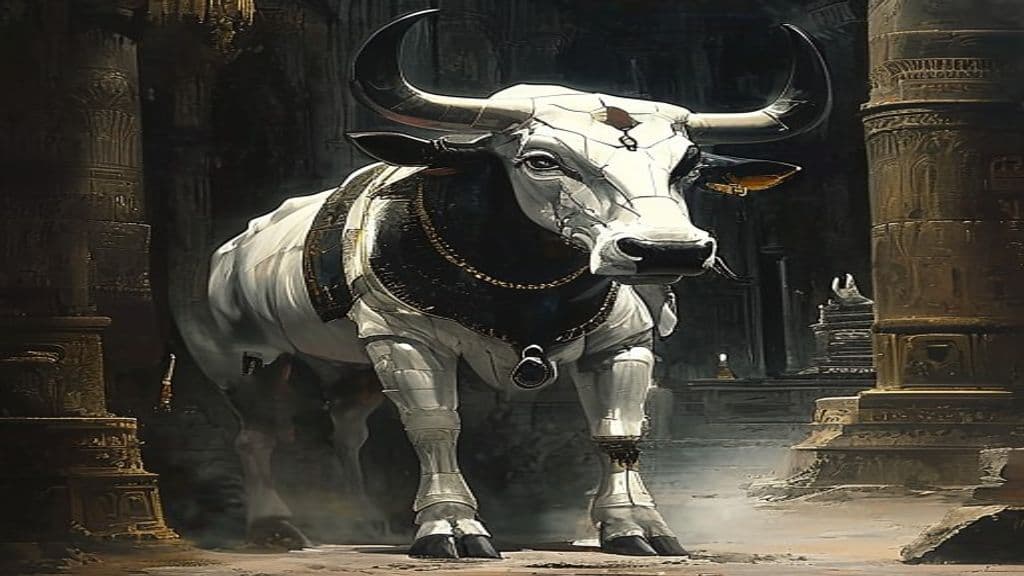
Apis is consistently described as a bull. Modern summaries and reference overviews record identifying iconographic marks attributed to the cult tradition — notably a generally dark or black bull bearing a distinctive white triangular mark on the forehead in some descriptive accounts — but primary epigraphic formulas and variants are not fully reproduced in the supplied materials. The sources therefore present Apis simultaneously as a real, living animal cared for in temple precincts and as an emblematic divine figure represented in cult imagery.
The sources frame Apis's "powers" in ritual and symbolic terms rather than as explicit supernatural feats. Apis functioned as an intermediary between humans and higher deities (used by worshippers to approach gods), was ritually associated with Osiris and described as a symbol or embodiment of Osiris (the 'living deceased one'), and participated in cultic sequences that involved sacrificial death, embalming, burial, and the institutional replacement or rebirth of the sacred bull. No supplied material ascribes independent magical powers such as speech or sorcery; his efficacy is expressed through embodied presence, ritual status, and funerary association.
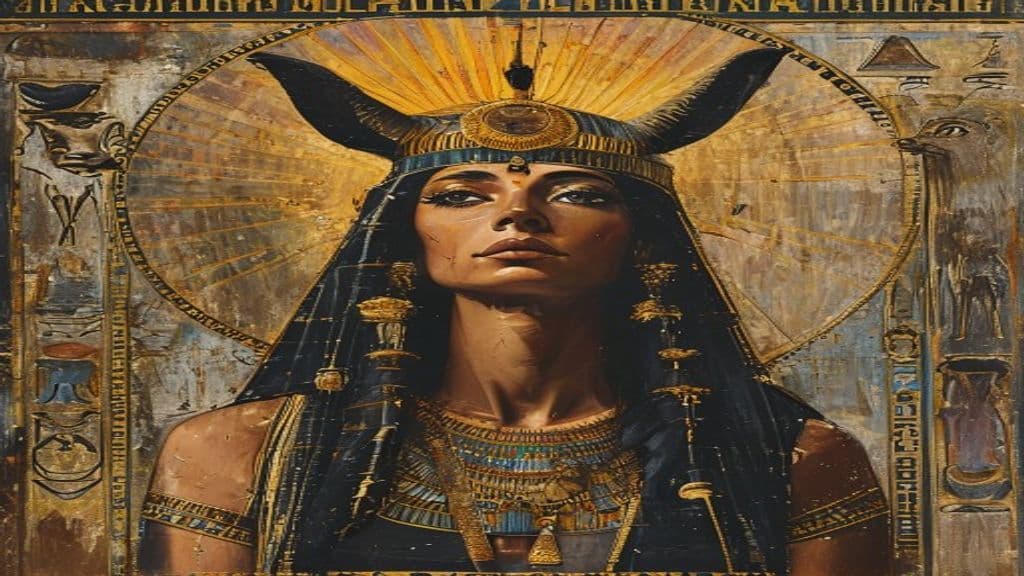
Hathor
Hathor (Ancient Egyptian ḥwt-ḥr, 'House of Horus') is a major polyvalent goddess of ancient Egypt associated with the sky, maternal and royal motherhood, music, joy, fertility, and the Eye of Ra; she appears in multiple local manifestations and assisted the deceased into the afterlife.
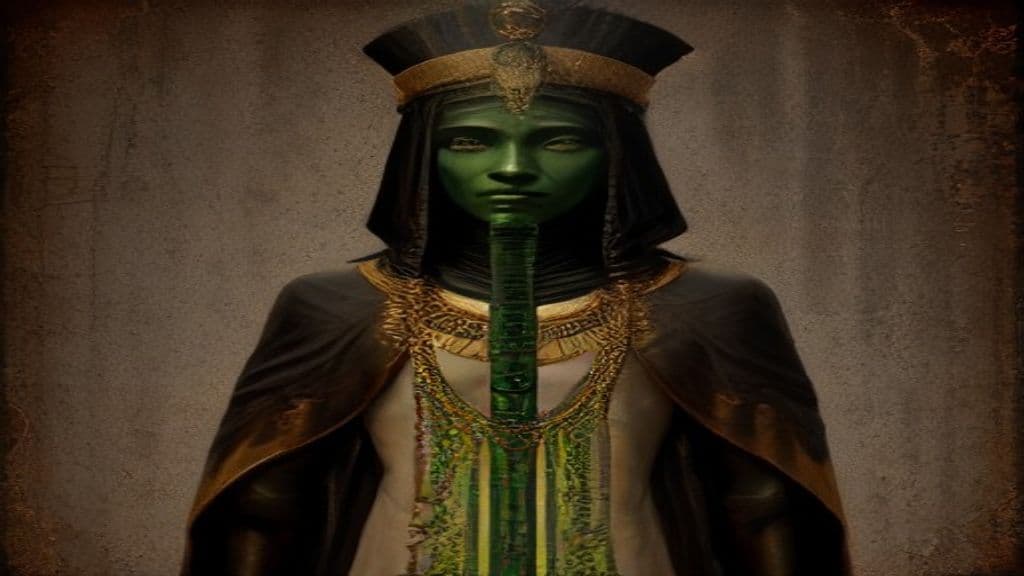
Ptah
Ptah is the principal Memphite deity of ancient Egypt, venerated as a creator god and patron of craftsmen and architects. He conceives the world 'in the design of his heart' and realizes it by speech, serves as master of ceremonies and justice in state cult, and is central to funerary and royal ritual in Memphis.
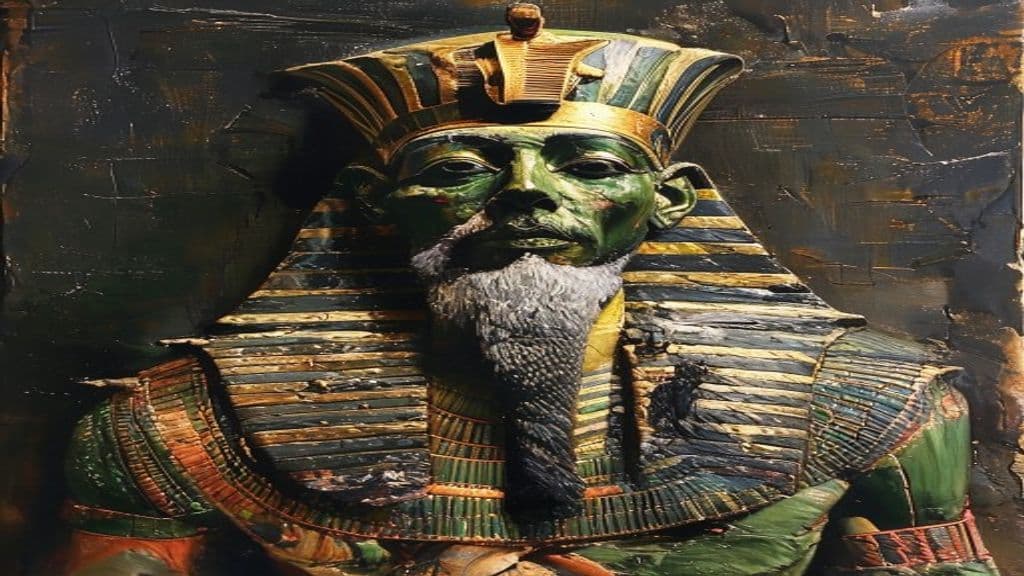
Osiris
Osiris is the major ancient Egyptian god of fertility, vegetation, death, resurrection, and the afterlife. He functions as sovereign of the realm of the dead, a guarantor of postmortem renewal and agricultural fertility, and the archetypal divine figure with whom deceased kings and mortals ritually unite to gain continuity after death.

Serapis
Serapis is a deliberately syncretic Graeco‑Egyptian deity formed from the fusion of the Egyptian Osiris‑Apis cult (Demotic wsjr‑ḥp / Coptic Userhapi) with Greek divine elements. Promoted in the Ptolemaic period as a civic cult figure, Serapis embodied chthonic rulership, healing, protection/asylum, and themes of abundance and resurrection, and his cult spread through the Hellenistic and Roman worlds.
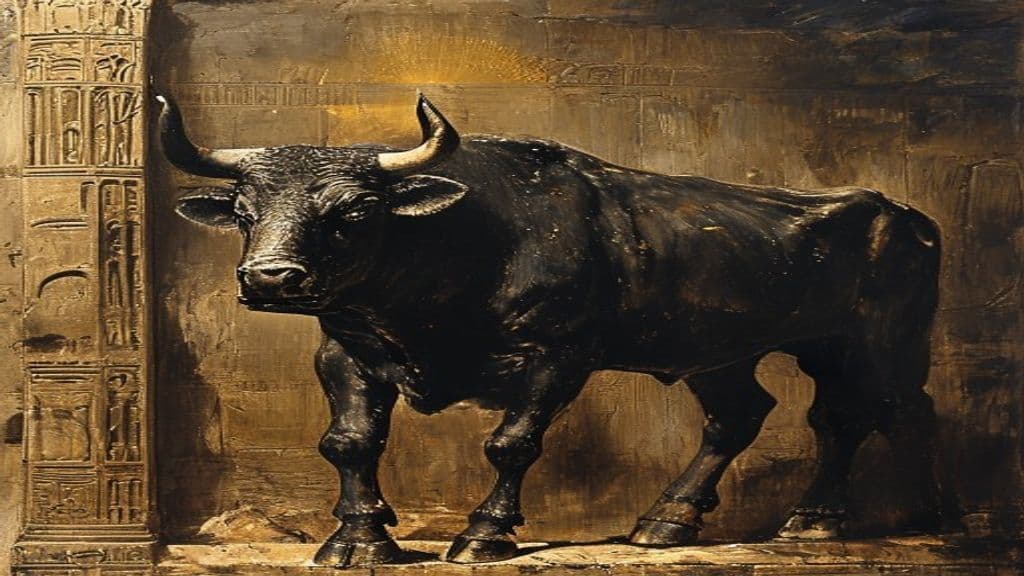
Mnevis
Mnevis is the ancient Egyptian sacred bull cult of Heliopolis (On), regarded as the living manifestation or ba of the solar god Ra and later assimilated with Atum‑Ra. A single living bull served as an oracular and cultic presence, entitled to ritual attendants and embalmed and buried with honours in a dedicated necropolis; the cult persisted into the late Pharaonic and classical periods and was one of the few cults tolerated during Akhenaten's reign.
Buchis
The deification of the kꜣ (ka) of the war god Montu, incarnated as a sacred bull in Egyptian mythology. (Note: - Remove "Greater" power tier; no information in source material supports this level of power. - Add sensory cues (e.g., distinctive markings, specific sounds) related to sacred bulls' selection and w)
Community Record
- [1]Apis (deity) — Wikipedia. Wikipedia contributors. 'Apis (deity).' Wikipedia, The Free Encyclopedia.wiki
- [2]Serapeum of Saqqara — Wikipedia. Wikipedia contributors. 'Serapeum of Saqqara.' Wikipedia, The Free Encyclopedia.wiki
- [3]Apis (book/archive entry) — Archive.org. Archive: Apis (catalog/archival bibliographic item).other
- [4]Trailer: The Story of The Golden Calf of Israel (comparative reference). Archive trailer notes referencing Apis in comparative discussion of calf-worship.other
- [5]Apis — Biblical Cyclopedia. Biblical Cyclopedia entry on Apis (summary reference).other
- [6]Le magnétisme animal retrouvé dans l'antiquité ... (1820) — Archive.org. Archive: historical dissertation including discussion of Apis/Serapis (1820).other
- [7]Apis — Wikipedia (disambiguation). Wikipedia contributors, 'Apis,' Wikipedia, The Free Encyclopedia, https://en.wikipedia.org/wiki/Apiswiki
- [8]Apis — Wikidata entry Q102857. Wikidata, 'Apis' (Q102857), http://www.wikidata.org/entity/Q102857wiki
- [9]Archive and assorted technical/archival pages (collection of supplied non-folkloric sources). Various supplied archival and technical pages (see research notes); these do not provide folkloric material on Apis.other
- [10]Apis - Thelemapedia. Thelemapedia, 'Apis'other
- [11]Apis Stela of Nectanebo II (entry). Attalus.org, 'Apis Stela of Nectanebo II' (notes on the 'Embalming House of the Apis Bulls')other