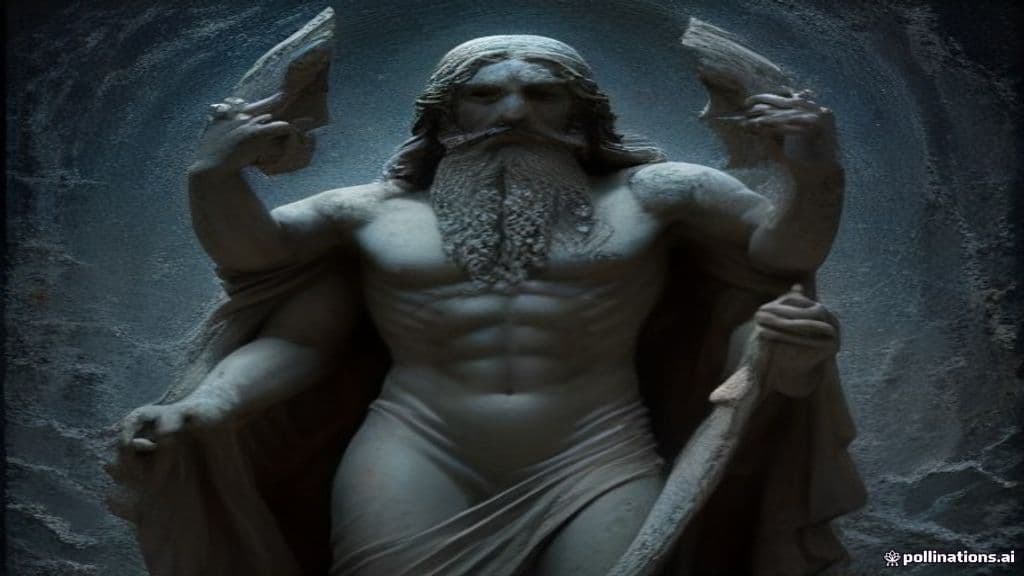
Ardescus, insofar as he is treated in the source, is best understood through the generic Hesiodic genealogy of river deities: in Hesiod's Theogony the river gods are enumerated as the offspring of the Titans Oceanus and Tethys and siblings of the Oceanids. As a named river-god, Ardescus is therefore placed within this wider theogonic family and functions in mythic thought as a local divine ancestor emerging from the primeval elemental powers represented by the Titans. This genealogy served in Greek religious imagination to situate particular rivers and their divine patrons within a cosmic ordering: rivers are not merely physical features but members of a divine household whose descent could be invoked to legitimate local origins or relationships to land and community.
The provided source contains no direct description of Ardescus's physical appearance. Nevertheless, the source situates Ardescus in the broader category of Greek river gods, who in classical literature and iconography are commonly imagined as male figures associated with water—often bearded, reclining beside or pouring water from an urn, and accompanied by aquatic motifs. Any specific description of Ardescus would be inferential from this class imagery and is therefore uncertain: the source does not attribute particular features, attributes, or iconographic elements to Ardescus himself.
The source does not list discrete supernatural powers for Ardescus alone; it records class-level roles for river deities that can be projected to him. River gods in Greek tradition function as personified territorial forces bound to a given stream or river and are often named as progenitors in local genealogical lines. Such deities could be objects of local worship and thus play roles in the ritual and civic life of communities relying on a river—oversight of the watercourse, symbolic guardianship of boundaries, and participation in origin narratives are implications found in the source. Where the source moves beyond explicit statement to broader inference (for example, that river-gods influence fertility or water supply), it marks those points as uncertain because specific powers or behaviors for Ardescus are not enumerated.
Weaknesses
- otherNo weaknesses attested in source
Wards
- otherNo wards or protective formulas attested in source
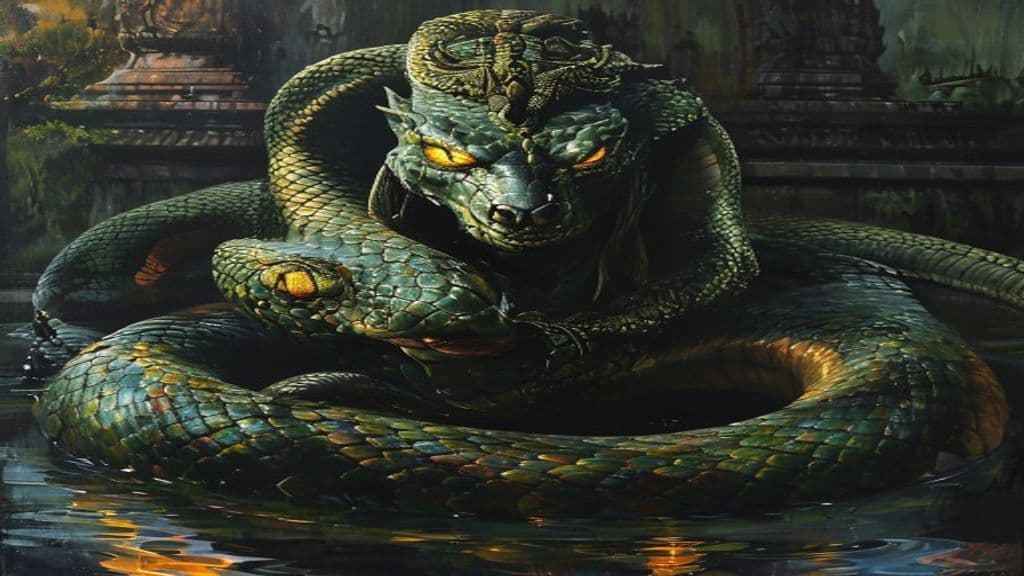
Naga
Divine serpent beings of Hindu, Buddhist, and Jain cosmology — powerful guardians of water, earth, and underground treasures. Revered as deities in South and Southeast Asia.
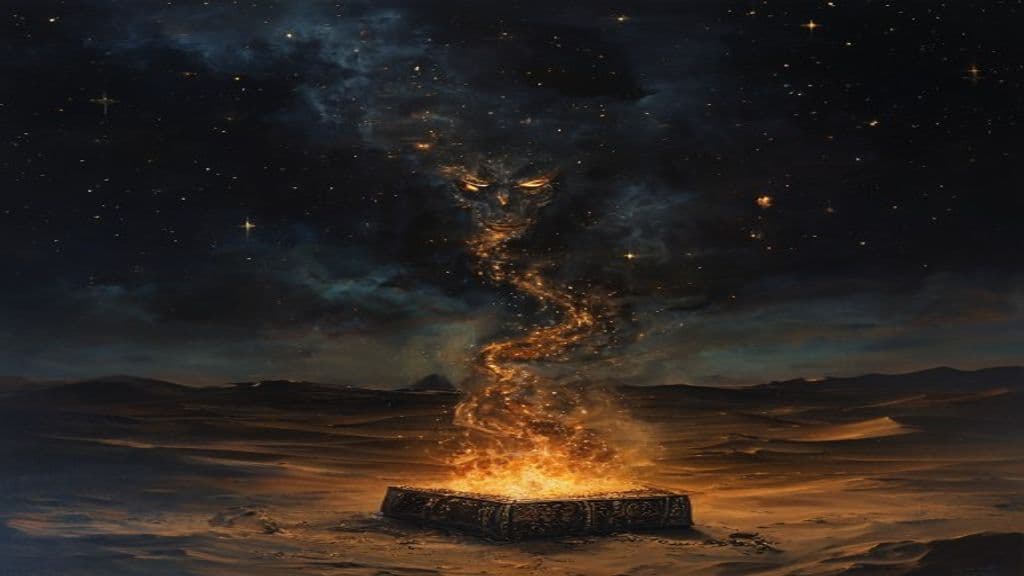
Djinn
The class of supernatural beings created from smokeless fire in Islamic cosmology — a parallel civilization to humanity, capable of belief or unbelief, with their own prophets, society, and judgment before God.

Jann
The weakest class of djinn in Islamic tradition, associated with desert winds and taking the form of snakes or whirlwinds, dwelling in empty wilderness and posing little threat to those who know the proper invocations.
Community Record
- [1]River gods (Greek mythology) — Wikipedia. "In ancient Greek religion and mythology, rivers were often personified as deities, and in a number of ancient Greek cities river gods were the subject of local worship." "In Hesiod's Theogony, the river gods are the offspring of the Titans Oceanus and Tethys, and the brothers of the Oceanids." "In Greek mythology, river deities – such as Inachus, Scamander, and Peneus – are often progenitors of local genealogical lines."wiki