
Argia is presented in classical genealogical tradition as a daughter of King Adrastus of Argos (by Amphithea, daughter of Pronax) who becomes the wife of Polynices, the exiled king of Thebes. Her marriage links the Argive royal house to the Theban royal line and places her within the network of familial obligations, claims, and vendettas central to the heroic age narratives of the Seven Against Thebes and their aftermath. Sources record her role as mother to sons—Thersander, Adrastus, and Timeas—who continue dynastic lines.
Classical and Roman sources do not supply a sustained physical description of Argia. Poetic treatments (notably Statius) attach a notable object to her persona—the Necklace of Harmonia—which is described as a 'fatal' or 'luckless' ornament she wears or has received, but the sources provide no specific bodily attributes, dress details beyond conventional epic cues, or distinctive iconography for Argia herself.
The primary 'abilities' ascribed to Argia in the sources are social and genealogical: she functions as daughter, wife, and mother within the royal networks that constitute much of Greek mythic causality. She is not described as possessing supernatural powers, magic, or agency independent of human political and familial influence. Statius’s poetic linkage of Argia with the cursed Necklace of Harmonia associates her narratively with inherited misfortune transmitted by objects and kinship, but the texts do not attribute active magical agency to her.

Polynices
Polynices is a mythic human prince of Thebes in the Greek Theban cycle. Son of Oedipus, he contests the throne with his brother Eteocles, leads the Argive expedition known as the Seven against Thebes, dies in single combat with Eteocles, and becomes the focal point of the funerary and legal conflict dramatized in Sophocles' Antigone.
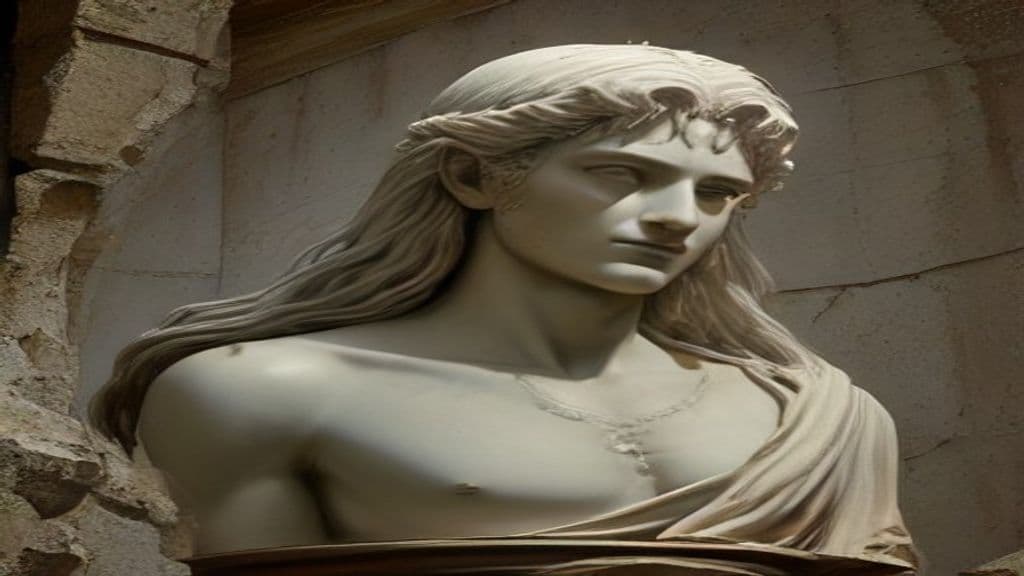
Adrastus
Adrastus (Ancient Greek: Ἄδραστος or Ἄδρηστος) is a legendary king of Argos in the Greek mythic-historical tradition, best known as the leader of the expedition of the Seven against Thebes and as a figure tied to oracular counsel, dynastic marriages, and local hero cults.
Community Record
- [1]Argia (daughter of Adrastus) - Wikipedia. Wikipedia contributors, 'Argia (daughter of Adrastus)', Wikipedia, The Free Encyclopediawiki
- [2]Thebaid, Book II — Statius. Statius, Thebaid, Book II (translation), reference to Argia wearing the Necklace of Harmonialiterary
- [3]Thebaid, Book XII — Statius. Statius, Thebaid, Book XII (translation), passage: 'Argia has come to your Thebes...'literary
- [4]Apollodorus / The Library (genealogical summaries). Apollodorus, The Library (compilation/archival edition), genealogical entries concerning Adrastus and his childrenliterary
- [5]Fables of Hyginus (genealogical material). Hyginus, Fabulae (archival edition), genealogical summaries referencing Argive and Theban housesliterary
- [6]ARGIVE ECHIDNA (Ekhidna Argia) - She-Dragon of Greek Mythology (Theoi.com). Theoi Project, 'Argive Echidna (Ekhidna Argia)' entry — demonstrates adjectival use of 'Argia' for an Argive monster distinct from the mortal Argiaother
- [7]Name Doctor: Arg / Arge name entries. Name-Doctor entries for Arg / Arge noting association with Argos and the meaning 'Argive'other