The Ashta Lakshmi are not described as individually originating independent myths in the provided sources; rather they are eight named manifestations of the single goddess Lakshmi (consort of Vishnu) each representing a distinct source of wealth. Scholarly commentary cited in the sources notes that while the attributes represented by these forms exist in traditional literature, the consolidation of these eight specific manifestations into a fixed octet — and their rise in popular devotion as a set — appears to be a more recent development, associated in particular with the publication and circulation of an Ashtalakshmi Stotra in the mid-to-late 20th century.
Ashta Lakshmi are typically depicted and worshipped collectively as an octet in temple panels and household devotional images. Individual iconographies reported across sources include: Adi Lakshmi — four-armed, holds a lotus and a red flag, with two hands in abhaya and varada mudras; Dhana Lakshmi — six-armed, wears red, carries the Sudarshana chakra, shankha, a kalasha or Amrita kalasha, bow and arrow and lotus, shows abhaya mudra and has gold coins falling from a hand; Dhanya Lakshmi — eight-armed, dressed in green, holds two lotuses, a gada (mace), paddy crop, sugarcane and bananas, with abhaya and varada mudras; Gaja Lakshmi — four-armed in red garments, two arms hold lotuses, two show abhaya and varada mudras, flanked by two elephants bathing her with water pots; Santana Lakshmi — six-armed, carries two kalashas, is shown with a sword and shield in some depictions and a child on her lap (Skanda Purana texts indirectly imply a hand holding prana as a child with a lotus); Dhairya/Veera Lakshmi — eight-armed, seated on a lion, in red garments, carries chakra, shankha, bow, arrow, trishula or sword and a bundle of palm-leaf scriptures, with abhaya and varada mudras; Vijaya/Jaya Lakshmi — eight-armed in red, carries chakra, shankha, sword, shield, lotus and pasha, with abhaya and varada mudras; Vidya Lakshmi — dressed in a red saree, resembling Saraswati, holding a book of the Vedas and a peacock feather used as a pen, displaying varada and abhaya mudras. Variants and alternative lists sometimes substitute forms such as Aishvarya Lakshmi, Saubhagya Lakshmi, Rajya Lakshmi, or Vara Lakshmi.
Each manifestation presides over and bestows a particular source or kind of wealth: Adi Lakshmi grants spiritual support and meditative peace; Dhana Lakshmi confers material wealth (depicted with falling coins); Dhanya Lakshmi provides agricultural wealth and sustenance; Gaja Lakshmi bestows animal wealth (e.g., cattle) and royal splendour; Santana Lakshmi grants offspring; Dhairya/Veera Lakshmi bestows valour and courage; Vijaya/Jaya Lakshmi grants victory and success; Vidya Lakshmi bestows knowledge of arts and sciences. In worship the octet functions as petitionary foci for these varied blessings, invoked in hymns and stotras and represented in temple and household devotional objects.
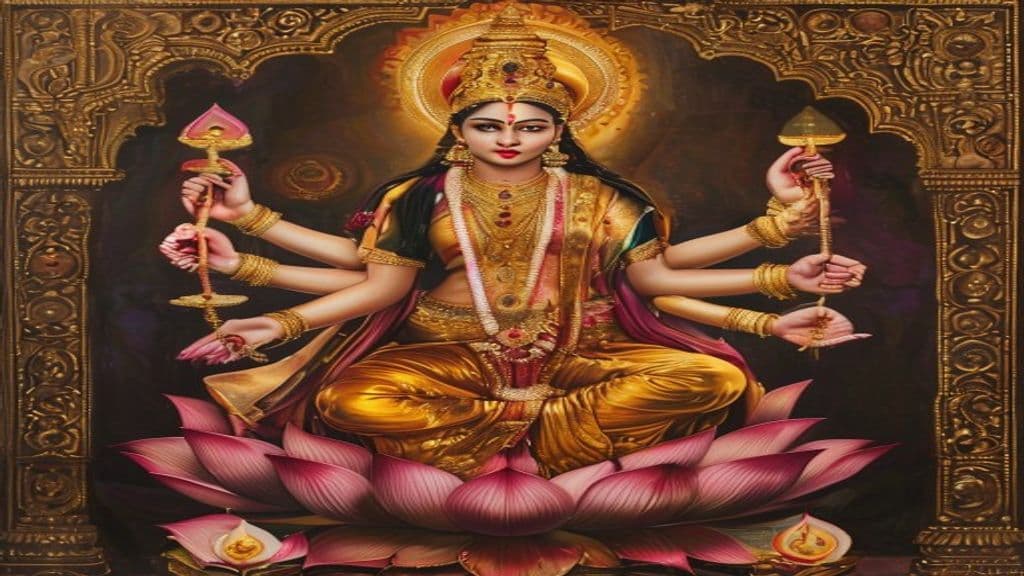
Lakshmi
Lakshmi is a principal Hindu goddess who personifies śrī (auspiciousness) and is revered as the giver of fortune, wealth, prosperity, beauty, fertility, sovereignty, and abundance. She is the consort and shakti of Vishnu in Vaishnavism, part of the Tridevi with Parvati and Sarasvati, and is the focus of popular devotional and festival practices such as Lakshmi Puja during Deepavali and Navaratri.

Saraswati
Saraswati is a principal Hindu goddess (Devi) whose portfolio encompasses knowledge, learning, speech (vac), the arts (poetry, music), language and purification. Originating in Vedic literature as a river goddess, later texts reframe her primarily as the divine personification and patron of speech, learning and creative/intellectual order; she is venerated across Hindu, Buddhist and Jain contexts.
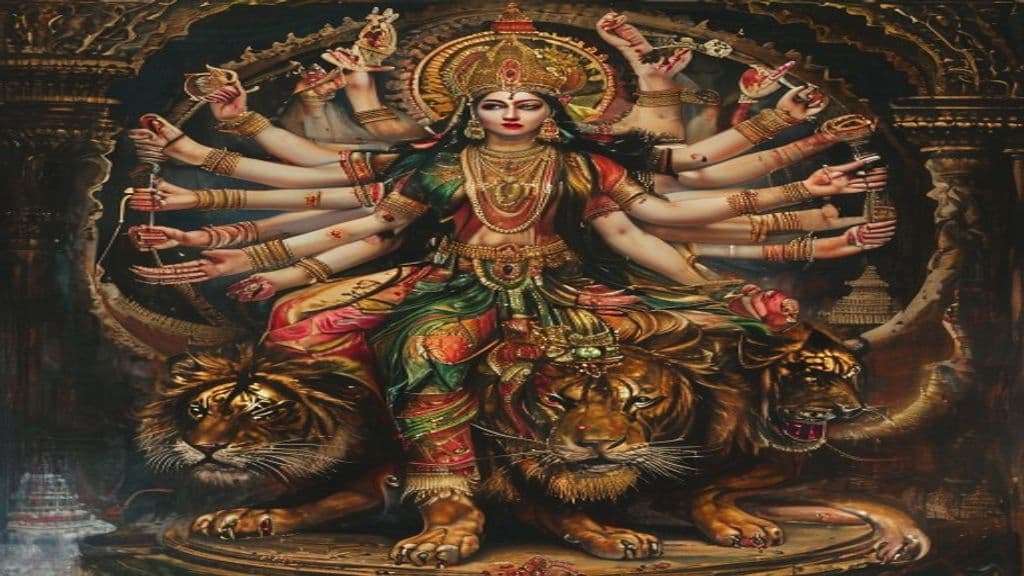
Durga
Durga is a major Hindu goddess, central to the Shakta tradition as an aspect of the Divine Feminine (Mahadevi). She is venerated as a protective, martial mother-goddess who combats demonic forces (notably Mahishasura) to uphold dharma, and is celebrated in major festival cycles such as Navaratri and Durga Puja.
Community Record
- [1]Ashta Lakshmi — Wikipedia. Wikipedia, 'Ashta Lakshmi'wiki
- [2]Wikidata: Ashta Lakshmi. Wikidata entry Q3345994other
- [3]Archive: Friday - LalitaDevi LakshmiDevi and DurgaDevi Songs - Listen on Friday. Archive.org collection listing Ashta Lakshmi Sthothra Malika among devotional songsother
- [4]Archive: Municipal/Place-name reference to Ashta Lakshmi Layout. Archive.org municipal document mentioning Ashta Lakshmi Layoutother
- [5]Archive: A TO Z INDIA: NOVEMBER 2021 (Special Issue). Archive.org special issue referencing Ashta Lakshmi devotional cultureother