
In the Vedic layer Saraswati appears first as a river and river‑goddess associated with waters that purify; her name etymologically combines saras (pooling water, sometimes rendered as 'speech') + vati ('she who possesses'). Over the textual history cited in the sources her concrete river identity diminishes while her role as goddess of speech (vac), knowledge, poetic and musical inspiration, and purification by means of learning becomes prominent. In later classical and sectarian literature she is linked to the creator Brahma—variously described as his creation, his consort, or his shakti—and is grouped with Lakshmi and Parvati as the Tridevi, the triad of chief goddesses.
Later iconography typically depicts Saraswati as a serene woman with radiant white complexion, dressed in white (symbolic of sattva and purity), often with four arms holding a book, a rosary (mala), a water pot, and a veena (lute). Her mounts are commonly a hamsa (swan or goose) or, in some depictions, a peacock. The river origins are emphasized in older Vedic references, while later representations foreground scholarly and musical attributes; some regional and syncretic variants show further iconographic adaptations.
Classical sources and later tradition attribute to Saraswati the role of patron and personification of speech (vac), knowledge, learning, the arts (poetry and music), language and culture. She is described as the source or inspirer of Sanskrit poetic and liturgical language and of artistic creativity, and as purifying through knowledge and speech. In her earlier river aspect she is associated with fertility and purificatory waters. She is widely propitiated by students, teachers and artists who seek her patronage; Vasant Panchami (Saraswati Puja) and related educational rites mark social practices for invoking her favor.
Weaknesses
- otherNo specific vulnerabilities recorded in supplied sources; classical literature frames Saraswati as a beneficent patron rather than a hostile being.
Wards
- ritualRegular worship and invocation (Saraswati Puja / Vasant Panchami)
- ritualTemple cultic worship (offerings of books, musical instruments, white garments/items)
- otherEducational rites—helping children learn letters and invoking her patronage at beginnings of study

Brahmarakshas
The most learned and terrible of spirits — the ghost of a Brahmin who misused his scriptural knowledge in life and was condemned after death to be both demon and scholar, haunting places of learning.
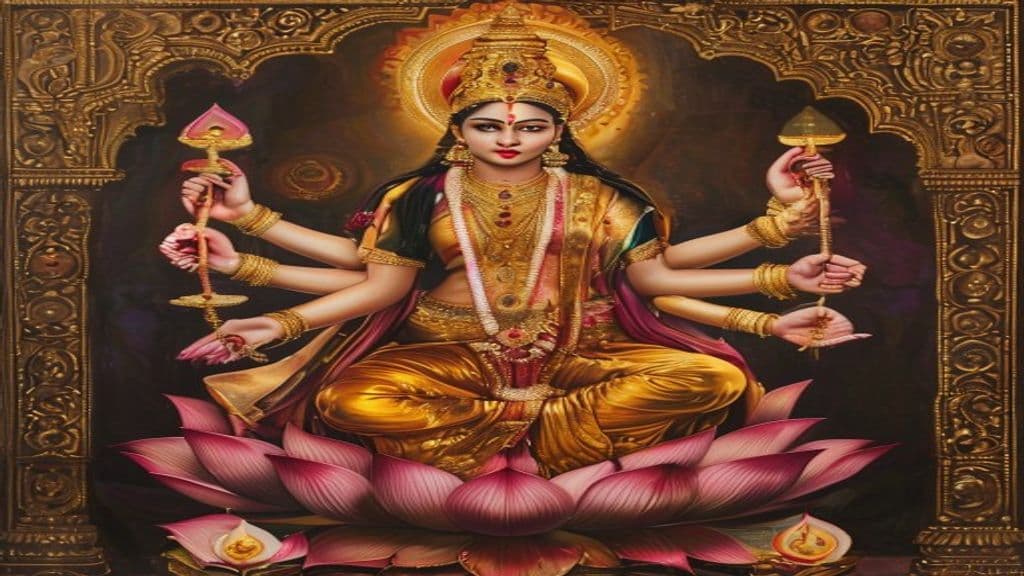
Lakshmi
Lakshmi is a principal Hindu goddess who personifies śrī (auspiciousness) and is revered as the giver of fortune, wealth, prosperity, beauty, fertility, sovereignty, and abundance. She is the consort and shakti of Vishnu in Vaishnavism, part of the Tridevi with Parvati and Sarasvati, and is the focus of popular devotional and festival practices such as Lakshmi Puja during Deepavali and Navaratri.
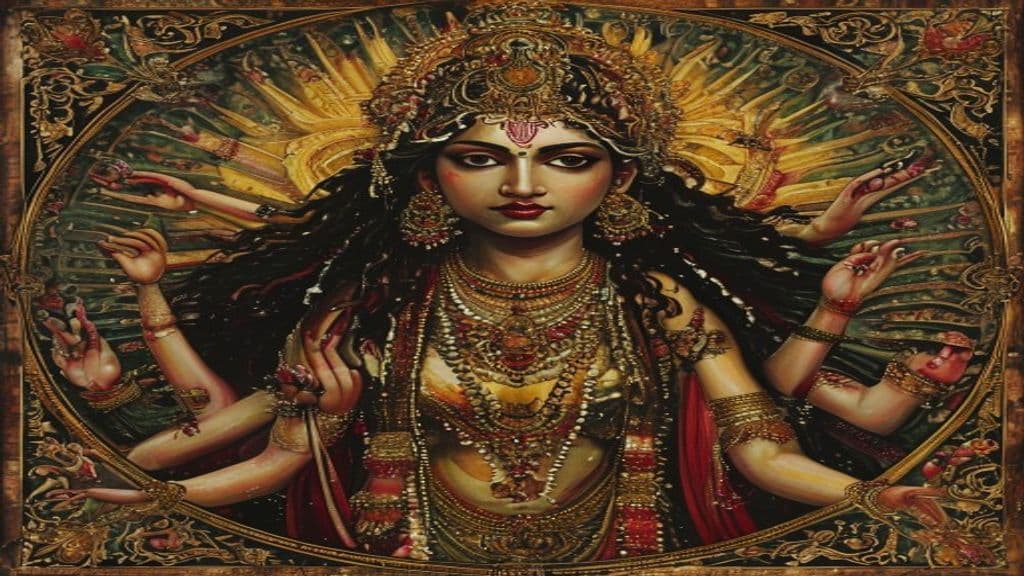
Parvati
Parvati is a principal goddess in Hindu tradition, worshipped as the consort of Shiva and as his shakti (divine power). She embodies a range of roles — devoted wife and mother, fertility and nourishment-giver, and in other manifestations a ferocious protector who destroys evil.
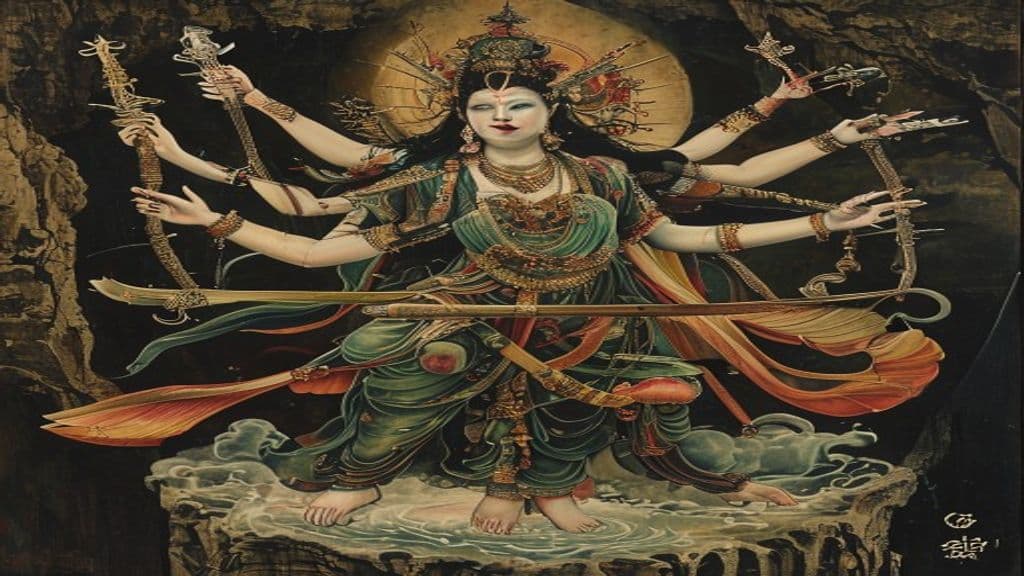
Benzaiten
Benzaiten (弁才天/弁財天), often shortened to Benten, is an East Asian Buddhist protective goddess derived from the Indian Sarasvatī. In Japan she was syncretized with Shinto kami and local serpent/dragon spirits, functioning as a patron of speech, music, learning, wealth, and a protective deity whose vows in the Golden Light Sutra promise protection to those who recite or copy it.

Buddha (Siddhartha Gautama)
Siddhartha Gautama, most commonly called the Buddha, is presented in the provided sources as a historical wandering ascetic and religious teacher of the 6th–5th century BCE who attained nirvana, taught Dharma, and founded the monastic community (sangha) that became Buddhism.
Community Record
- [1]Saraswati - Wikipedia. Wikipedia, 'Saraswati' article (provided research notes)wiki
- [2]Wikidata: Saraswati. Wikidata entry for Saraswati (provided research notes)other
- [3]Benten's roots (Saraswati) - Green Shinto. Discussion of syncretic transformations linking Saraswati to Japanese Benzaiten (provided research notes)other
- [4]Saraswati in Brahmin and Non-Brahmin Tradition: A Discussion. Discussion of Saraswati's roles and social context (provided research notes)academic
- [5]Gamelan Nyai Saraswati. Example of cultural/adapted uses of Saraswati name in performing arts (provided research notes)other