
Two separate attestations appear in the cited reference material. First, Asopis is listed as one of the naiad daughters of the river-god Asopus and the nymph Metope (herself daughter of the river Ladon), a placement within the standard Greek genealogical roster that links river-deities to eponymous daughters associated with places and features. Second, Asopis is named among the fifty daughters of King Thespius (the Thespian princess tradition) who were paired with Heracles during his stay hunting the Cithaeronian lion; in that account Asopis is said to have borne Heracles a son called Mentor. The primary modern reference explicitly glosses the name as 'daughter of Asopus.' (Sources: Wikipedia: Asopis; Wikidata: Q55802221.)
The cited sources do not provide any physical description of either Asopis. One occurrence is as a naiad (a class of water-nymphs in Greek myth), and the other as a mortal princess; beyond these categorical labels, no classical descriptions, iconography, or distinctive visual attributes for Asopis are recorded in the provided materials. Any typical naiad imagery (youthful female figures associated with water) is not asserted in the sources and would be interpretive extrapolation.
No specific supernatural powers, behaviors, or deeds are ascribed to Asopis in the provided sources. The naiad-instance is presented only as one daughter among Asopus's progeny—implying an affiliative association with a river by patronymic convention—while the Thespian-instance is recorded genealogically as bearing Heracles a son (Mentor). Beyond lineage and locative association, the sources do not record actions, cultic roles, or magical abilities for either figure.

Asopus
Asopus is a Greek river-eponym: both the name of several rivers and of mythic personages identified with those rivers. Traditions alternately present Asopus as a divine river-god (often as a child of Oceanus and Tethys, or in variant genealogies a son of Poseidon or Zeus), and as a local founding king; he functions as progenitor of many eponymous daughters and as an agent in myths explaining springs, city origins, and river characteristics.
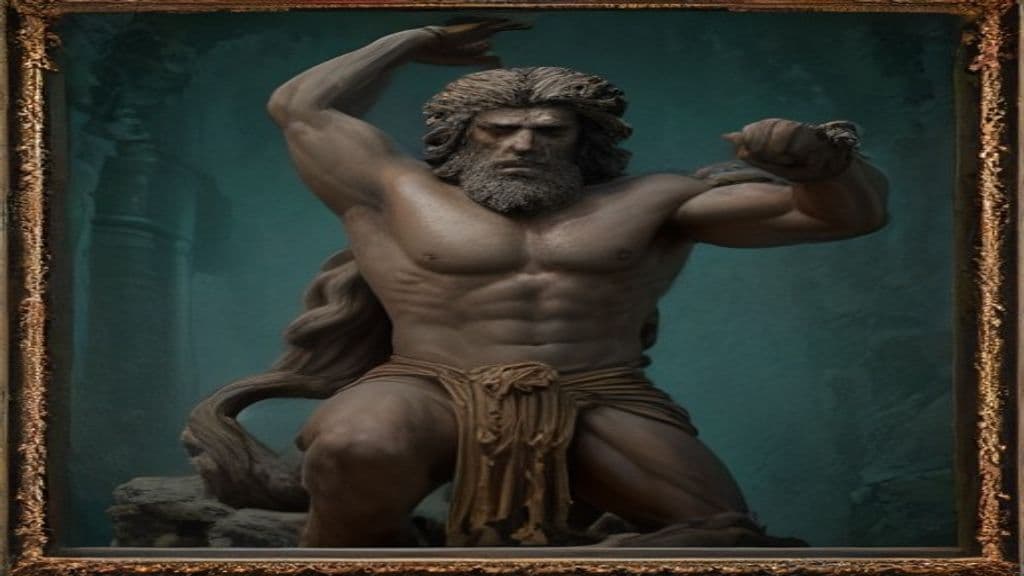
Heracles
Heracles is the greatest hero of Greek myth whose career bridges mortal hero-cult and full divinization. Celebrated for his Twelve Labours, martial prowess, and travels between the mortal world, the underworld, and Olympus, he functioned as a civic patron, ancestor of royal lines (the Heracleidae), and object of cult that treated him both as chthonic hero and as god.
Acacallis
Acacallis (Ancient Greek: Ἀκακαλλίς; also Acalle) is a mythological princess of Crete in Greek tradition, daughter of King Minos and Pasiphae. She functions primarily as a dynastic and etiological figure: in varying accounts she is mother, by gods such as Hermes (Mercury) or Apollo, of eponymous or founder-figures like Cydon (founder of Cydonia), Miletus, or Lydon/ Lydus.
Acanthis
Acanthis is a young woman in Greek myth, daughter of Autonous and Hippodamia, who is transformed into a thistle finch by the gods as an etiological explanation for the bird's name. The story is preserved chiefly in Antoninus Liberalis' Metamorphoses and summarized in modern reference works.
Acaste
Acaste (Ancient Greek: Ἀκάστη) is a named Oceanid — one of the daughters of the Titans Oceanus and Tethys — recorded among the companions of Persephone at the moment of her abduction; the name also appears separately as a nurse of the daughters of King Adrastus of Argos in later genealogical lists.
Achaeus
Achaeus (Ancient Greek: Ἀχαιός, Akhaiós) is an eponymous personal name borne by three mythological human figures in Greek tradition; best attested is Achaeus, son of Xuthus and Creusa, brother of Ion and grandson of Hellen, who is named as father of Archander and Architeles in Pausanias. The name is glossed as meaning "griever," from ἄχος (achos, "grief, pain, woe").
Aegle
Aegle (Ancient Greek: Αἴγλη, 'brightness' or 'dazzling light') is a name applied to several distinct female figures in Greek myth: a daughter of Asclepius associated with health, a Naiad mother of the Charites by Helios and Neaera, one of the Heliades transformed into a poplar after Phaeton's death, a named Hesperid, an alternate name for Coronis in some traditions, a daughter of Panopeus beloved by Theseus, and a nurse of Dionysus. The recurrence of the name links these figures by the themes of brightness, beauty, and filial or nymph-like status rather than by a single unified identity.
Aello
Aello (Ancient Greek: Ἀελλώ) is a named figure in Greek myth primarily attested as one of the Harpies—winged female personifications of storm-wind who harry, snatch, and torment. The name also appears in variant lists as applied to an Actaeonian hunting dog, showing onomastic fluidity in the tradition.
Agaptolemus
Agaptolemus (Ancient Greek: Ἀγαπτόλεμος) is a mythic Greek prince, one of the fifty sons of King Aegyptus, best known as the husband of the Danaid Pirene who, like most of the Danaids, slew her husband on their wedding night at the command of her father Danaus.
Agave
Agave (Ancient Greek: Agaue/Agaúē) is a personal name borne by at least two distinct figures in Greek myth: a Nereid (one of the fifty sea-nymph daughters of Nereus) and a Theban princess, daughter of Cadmus, who appears in myths connected with Dionysus. The name is glossed in Greek sources as 'illustrious', 'noble', or 'high-born'.
Agrius
Agrius (Ancient Greek: Ἄγριος, 'wild') is an onomastic figure in Greek myth whose name is applied to multiple distinct personae—including a Giant, a centaur, a bear‑born twin, a princely son, a suitor of Penelope, and one of Actaeon's dogs—rather than a single unified supernatural being. Each attestation places an Agrius in different narrative registers (Gigantomachy, Heracles' labors, heroic genealogies, the Odyssean cycle, and the Actaeon hunt).
Agron
Agron (Ancient Greek: Ἄγρων, 'wild' or 'rustic') is a human/mortal figure attested in the summary of Antoninus Liberalis' Metamorphoses (as presented on Wikipedia) who, because of impiety toward certain gods, is transformed by Hermes into a plover. The tale functions as an etiological metamorphosis and moral exemplum about observing cult obligations.
Aitolos
Aitolos is a name that appears in Greek-language traditions referring to two distinct figures: Aetolus, a mythic genealogical ancestor in classical Greek myth (son of Endymion, descendant of Deucalion), and Kosmas Aitolos (St. Cosmas of Aetolia), a historical/hagiographic Orthodox teacher whose collected writings emphasize pastoral and ascetical themes. The sources do not present Aitolos as a single folkloric supernatural being.
Alcestis
Alcestis (Ancient Greek: Ἄλκηστις, Álkēstis) is a mortal princess of Greek myth famed for voluntarily dying in place of her husband Admetus and being temporarily returned from the underworld through Heracles’ intervention. Her story highlights conjugal devotion, substitutive death, and the need for purification after contact with chthonic powers.
Community Record
- [1]Asopis — Wikipedia. Wikipedia, 'Asopis' (accessed via provided research notes)wiki
- [2]Asopis — Wikidata Q55802221. Wikidata entry Q55802221 (Asopis) (accessed via provided research notes)wiki
- [3]Asopus — Wikipedia. Wikipedia, 'Asopus' (used for contextual information about parentage and naming conventions)wiki