
The name Astynome appears in multiple classical and mythographic sources as a personal name borne by distinct mortal women rather than a single originating entity. Attestations include: an Astynome counted among the Niobids (the children of Niobe); an Astynome listed as daughter of Talaus and mother of Capaneus by Hipponous in Argive genealogies; an Astynome used as an alternative name for Chryseis, the daughter of Chryses taken captive in traditions associated with the Iliad; and an Astynome described in one tradition as mother by Ares of Calydon who saw Artemis naked and was transformed into a rock. These variants are recorded across literary summaries and mythographic compilations (see Wikipedia summary, Pantheon entry, ToposText and related mythographic sources).
No consistent or canonical physical description of 'Astynome' is provided in the supplied sources, because the name refers to several mortal women in distinct narratives. Individual references depict her in roles (daughter, mother, captive) rather than by bodily detail; one tradition records her being transformed into a rock by Artemis, which is an outcome rather than a physical portrait. Overall, the sources present Astynome as ordinary mortal women whose appearances are not specified beyond their narrative functions.
The supplied materials do not ascribe inherent supernatural powers to Astynome. Her recorded capacities are ordinary mortal roles: motherhood (e.g., mother of Capaneus), genealogical identity (daughter of Talaus; daughter of Chryses when identified with Chryseis), and being a war captive (the Chryseis/Astynome tradition). One account records a divinely caused metamorphosis—she saw Artemis naked and was turned into a rock—which is a punishment inflicted by a deity rather than an ability possessed by Astynome herself.
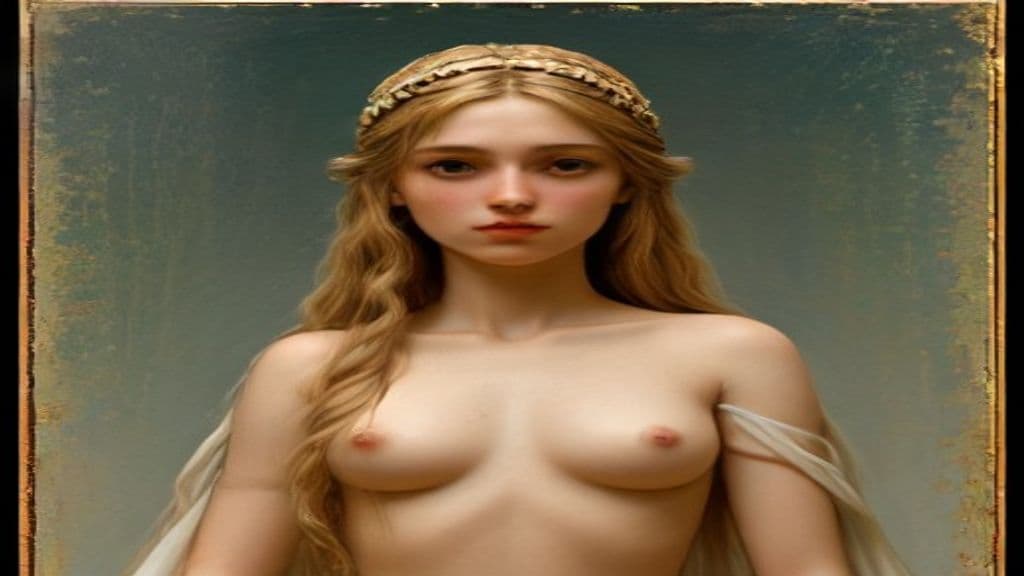
Chryseis
A mortal woman in Greek myth best known from Book 1 of the Iliad as the daughter of Chryses, a priest of Apollo, taken as a captive/concubine by Agamemnon; her father's supplication to Apollo and the resulting plague force Agamemnon to return her, illustrating the nexus of religious and political obligation in the epic. Later traditions give her personal names (Astynome) or rework her into medieval figures such as Cressida and, in some post-Homeric accounts, assign her children by Agamemnon.

Apsara
Celestial dancers and water nymphs of Hindu cosmology — beautiful semi-divine beings who dance at the court of Indra and, by his command, descend to earth to distract sages from excessive asceticism.
Acamas
Acamas (Ancient Greek: Ἀκάμας) is a personal name recurrent in ancient Greek narrative traditions applied to multiple human characters (warriors, princes, suitors), once to a Cyclops, and once as a hound's name. Rather than a single supernatural entity, bearers of the name appear episodically across the Trojan War, Theseid, and Theban cycles as mortal actors whose deeds intersect with gods and fate.
Acanthus (son of Autonous)
Acanthus is a mythic human figure in a Greek metamorphosis tale (recorded by Antoninus Liberalis) who, with his family, was transformed by Zeus and Apollo into a bird named after him. The story functions etiologically, explaining the origin and behaviors of certain birds by linking them to formerly human persons and their experiences.
Admetus
Admetus is a mortal king of Pherae in Thessaly in the Greek tragic tradition (notably Euripides' Alcestis). His life becomes the subject of a divine bargain in which Apollo intervenes to delay his appointed death, a bargain that requires another to die in his stead — most famously his wife Alcestis.
Admetus of Pherae
Admetus of Pherae is a mortal king of Thessaly in Greek myth whose household and fate intersect with Olympian gods (notably Apollo and Artemis), the Fates, the personification of Death (Thanatos), and the hero Heracles. He is celebrated for hospitality and justice and is best known from the tragic cycle surrounding his wife Alcestis, who dies in his stead and is later recovered.
Aegiale
Aegiale is a mortal woman in Greek mythic tradition, best known as the wife of the hero Diomedes. In post‑Trojan War nostos narratives she is depicted in several accounts as unfaithful and as plotting against her husband; some traditions attribute her conduct to the vengeance of the goddess Aphrodite.
Aeopolus
Aeopolus (Ancient Greek: Αἰπόλος, gen.: Αἰοπόλου, romanized Aipolus or Aiopólos, lit. 'goatherd') is a mortal figure in Greek mythic genealogical tradition recorded only in brief scholia and summaries. He is named as the father of Cleobule, who in one variant is cited as a possible mother of Myrtilus by Hermes; some sources note he was also called Aeolus. Attestations are limited and no cult, deeds, or narratives are preserved for him.
Aerope
Aerope (Ancient Greek: Ἀερόπη) is a mythological mortal woman of Greek tradition, a Cretan princess connected to the royal house of Mycenae (the Atreidai). In surviving accounts she functions as a human agent whose sexual relationships and/or the transfer of a symbolic object (the "golden lamb") are narrated as catalysts in the dynastic feuds of Atreus and Thyestes; sources preserve variant and sometimes conflicting traditions about her fate and parentage.
Aesacus
Aesacus (Ancient Greek: Αἴσακος) is a mythic son of King Priam of Troy who, grieving the death of a river-nymph beloved, throws himself from a cliff and is transformed mid-plunge by the sea-goddess Tethys into a diving seabird (mergus). In some traditions (Apollodorus and Tzetzes) he is also described as a seer who learned dream-interpretation from his grandfather Merops and interprets Hecabe’s dream about Paris.
Aeëtes
Aeëtes is a mythic, semi-divine king of Aea (identified with Colchis) in the Greek heroic tradition, son of Helios and the Oceanid Perseis. He is guardian of wondrous objects—most famously the Golden Fleece—and functions as a royal task-master whose demands and possessions test visiting heroes (notably Jason and the Argonauts).
Agrius and Oreius
Agrius (Ἄγριος) and Oreius/Orius (Ὄρειος) are twin sons of Polyphonte and a bear in a Greek mythic tale. Presented as 'twin savage bear-like children,' they committed acts of impiety and violence and were ultimately transformed by the gods into ominous birds (vulture and eagle-owl) as part of divine punishment and resolution.
Alcimenes
Alcimenes (Ancient Greek Ἀλκιμένης) is a personal name borne by multiple mortal figures in Greek myth and literary history — including a Boeotian prince, one of the sons of Jason and Medea, and several authors. The sources treat Alcimenes as human characters within mytho-historical narratives and literary tradition rather than as a distinct supernatural class or spirit.
Alector
Alector (Ancient Greek: Ἀλέκτωρ) is a personal name borne by multiple mytho-historical figures in ancient Greek tradition. The name appears in several regional genealogies and foundation stories (Magnesia, Boeotia, Elis, Argos, Sparta) and functions as an eponymous ancestor or princely figure rather than a single supernatural being.
Community Record
- [1]Astynome. Wikipedia, 'Astynome' entry (summary of classical attestations)wiki
- [2]Astynome | Facts, Information, and Mythology. Pantheon.org summary of mythographic tradition identifying Astynome with Chryseis and listing other attestationsother
- [3]ToposText: People - Astynome. ToposText genealogical references for figures named Astynome (daughter of Talaus; other mentions)literary
- [4]Wikidata: Chryseis (Q611124). Wikidata entry for Chryseis, reflecting overlap of the names Chryseis and Astynome in traditionother
- [5]Modern creative and miscellaneous mentions (selected). Modern literary uses of the name 'Astynome' (not used as primary mythographic evidence)other