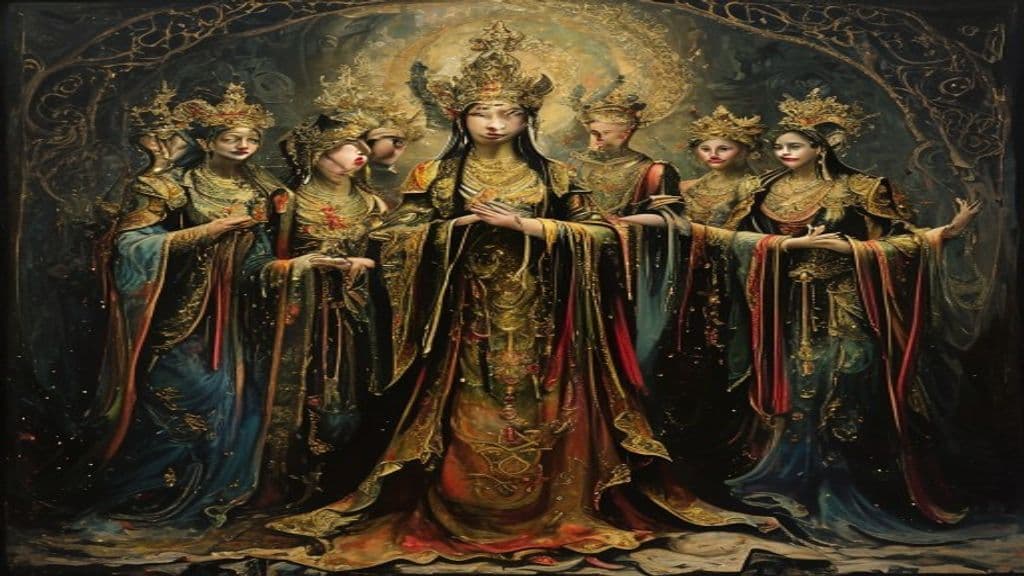
According to Wikipedia, the Bà mụ teach babies various prosperous traits and skills such as sucking and smiling. They are also associated with a special ritual performed when a baby is one month old.
Buzi
Buzi (Hebrew: בּוּזִי, Būzī) is attested in Hebrew sources as the father of the prophet Ezekiel and identified as a priest of Jerusalem (Ezekiel 1:3). The name derives from the Hebrew Buz (בּוּז), which can mean 'despise' or indicate descent from Buz son of Nahor; later traditions sometimes read the name thematically rather than ascribing further biographical detail.
Byggvir
Byggvir is a minor named attendant of the Vanir god Freyr attested in the Old Norse poem Lokasenna (prose introduction and stanzas 55–56). Scholarly commentary commonly reads him as an agricultural personification linked to barley or to mill-refuse (chaff), though the primary texts give only sparse narrative detail.
Bysen
Bysen is a legendary gnome-like being from the island of Gotland, Sweden, associated with woods, boundaries, and mischief. Accounts portray Bysen both as a small forest guardian/agent and, in some variants, as a restless deceased person condemned for moving boundary markers.
Byssa
Byssa (Ancient Greek: Βύσσα, Bússa) is a woman of Meropis on the island of Kos in Greek myth who, according to surviving summaries of a myth preserved in metamorphosis compilations, refused to honor Artemis, Athena, and Hermes and was punished by being transformed into a bird.
Byōbunozoki
A Japanese yōkai recorded in Toriyama Sekien's Konjaku Hyakki Shūi, described as a creature that peers at a person from the outside of a folding screen (byōbu), literally a 'folding-screen peeper.' The entry is primarily a literary/visual bestiary motif rather than a detailed folkloric tradition.
Bà Chúa Xứ (Lady of the Realm)
Bà Chúa Xứ, also called Chúa Xứ Thánh Mẫu, is a localized tutelary and prosperity goddess in Vietnamese folk religion centered at Vĩnh Tế village at the foot of Sam Mountain, An Giang province. She is worshipped as a protector of business, health, and the Vietnamese border and attracts pilgrimages and a major three-day festival beginning on the 23rd day of the fourth lunar month.
Báigǔ Jīng
The White Bone Demon of Journey to the West — a skeletal demoness who shapeshifts into innocent humans three times to attempt to capture and devour the monk Tripitaka.
Bârmân (بارمان)
Bârmân is a Turanian hero and commander in Ferdowsi’s Shahnameh who fights in the Great War of Iran and Turan during the reign of Nowzar. In the epic he kills the Iranian Qobád and is later slain by the Iranian warrior Qaran; he is represented in Safavid illustrated Shahnameh folios as a recognizable martial figure.
Bäckahäst
A Scandinavian water-horse figure: a horse-shaped water spirit associated with streams, rivers, lochs and other watery edges. Presented in comparative folklore as a member of the wider water-spirit or ‘water-horse’ family that functions as a cautionary figure about the hazards of water and unknown horses at the water’s edge.
Bêlit
Bêlit is a fictional Shemite pirate-queen from Robert E. Howard's Hyborian Age, captain of the ship Tigress and romantic partner of Conan in the short story "Queen of the Black Coast" (1934). Presented as a mortal warrior-leader whose life and death intersect with supernatural elements in the tale, she is remembered as an avaricious and charismatic sea-queen in later adaptations and comics.
Bölþorn
Bölþorn (also attested as Bölþor) is a named jötunn in Norse mythic genealogies, recorded as the father of Bestla and thus an ancestor of Odin, Vili, and Vé. He appears only briefly in the extant poetic and prose Eddaic material and functions primarily as a genealogical forebear rather than an active narrative figure.
Bönpo Lu (local mountain spirits)
A research label for local mountain-associated spirits situated in Himalayan/Tibetan ritual worlds; the term as presented is not documented in detail in the supplied sources. The available materials place such landscape spirits within a broader Bön and Tibetan Buddhist milieu where mountains and local non-human agents are engaged through offerings and ritual specialists.
Community Record
- [1]Bà mụwiki