
Bêlit appears within Howard's single canonical short story "Queen of the Black Coast" (Weird Tales, 1934). In that narrative she is an accomplished pirate-captain, native of Shem, who rules a fleet of raiders from the ship Tigress. The story relates her meeting and instant love-affair with Conan, their joint career of piracy, her seizure of a priceless ruby necklace in the ruins of a city of the "old ones," and her subsequent death at the hands of an "ancient winged ape-like creature" which later hanged her from the yardarm; Howard's tale also reports that she temporarily returns from death to protect Conan from that same creature. Later pastiches and comics expand her exploits, but Howard's original corpus contains only the single short story in which she lives, dies, and briefly returns.
Howard's prose depicts Bêlit as a Shemite woman whose description emphasizes an arresting, eroticized physical presence: "slender, yet formed like a goddess: at once lithe and voluptuous," wearing essentially only a broad silken girdle with sandals and jewelry; passages speak of "white ivory limbs and the ivory globes of her breasts," "rich black hair" falling in rippling clusters, and "dark eyes" that burn on Conan. This formulation is Howard's literary depiction in the story and is echoed in later comic artwork, which offers varied visual renderings but does not introduce a consistent alternative physical canon.
Bêlit possesses no documented supernatural powers in the primary sources; she is characterized as an expert sailor, commander, and pirate captain who directs raids along the Black Coast and northward to Zingara. She commands the respect and awe of an all-male crew, is a fearsome warrior in battle, and instructs Conan in seamanship and piracy. Narratively she is strongly avaricious—Howard's text links her passion for treasure to plot consequences—and her life intersects with supernatural antagonists (the winged ape-like creature that kills her and her reported brief post-mortem manifestation to defend Conan) but these are external events rather than intrinsic abilities.
Weaknesses
- conditionmortal vulnerability (can be slain by the story's supernatural antagonist)
- othernarrative susceptibility to avarice (Howard frames her greed for treasure as leading to fatal encounter)
Wards
None recorded.
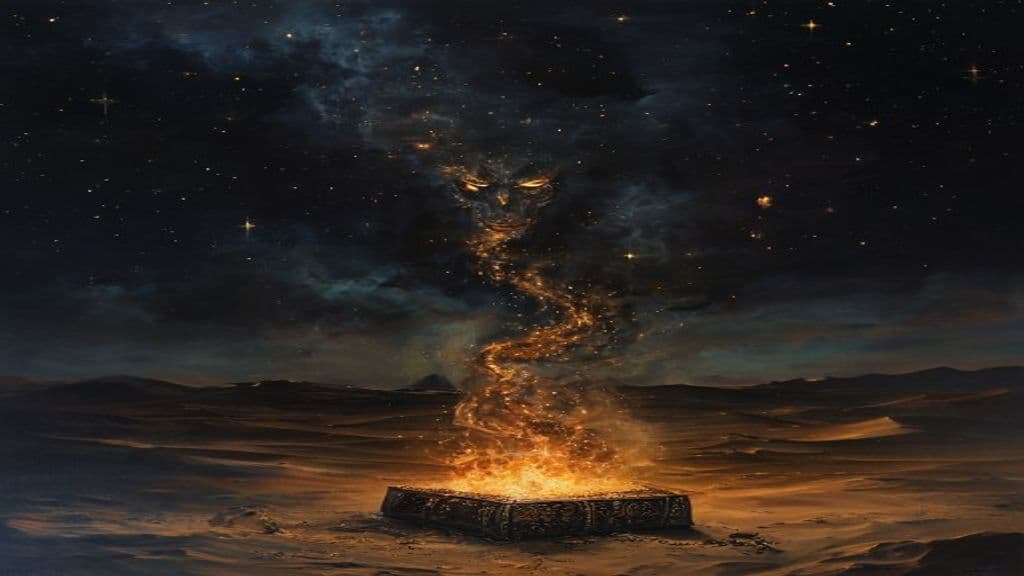
Djinn
The class of supernatural beings created from smokeless fire in Islamic cosmology — a parallel civilization to humanity, capable of belief or unbelief, with their own prophets, society, and judgment before God.

Apsara
Celestial dancers and water nymphs of Hindu cosmology — beautiful semi-divine beings who dance at the court of Indra and, by his command, descend to earth to distract sages from excessive asceticism.
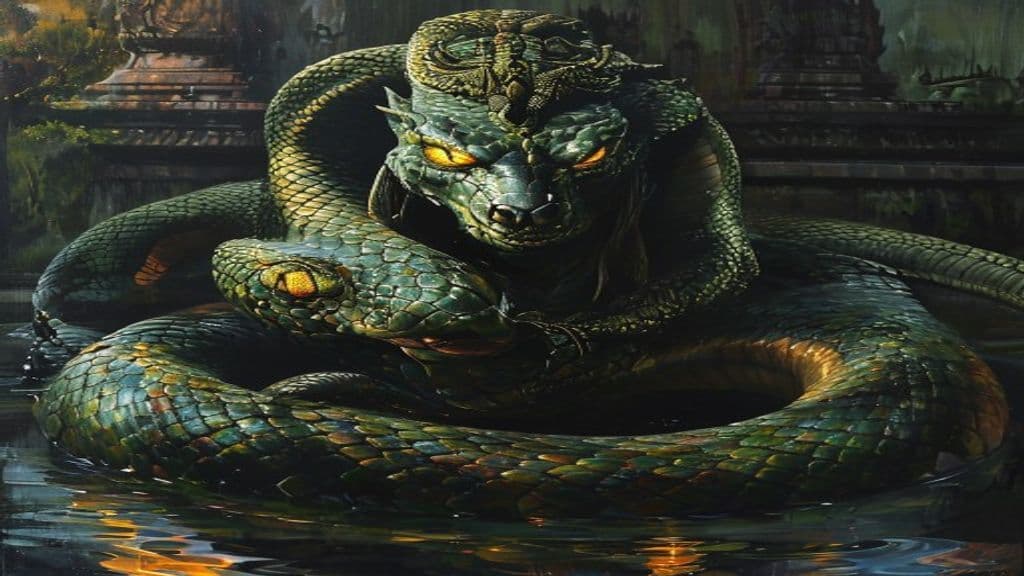
Naga
Divine serpent beings of Hindu, Buddhist, and Jain cosmology — powerful guardians of water, earth, and underground treasures. Revered as deities in South and Southeast Asia.
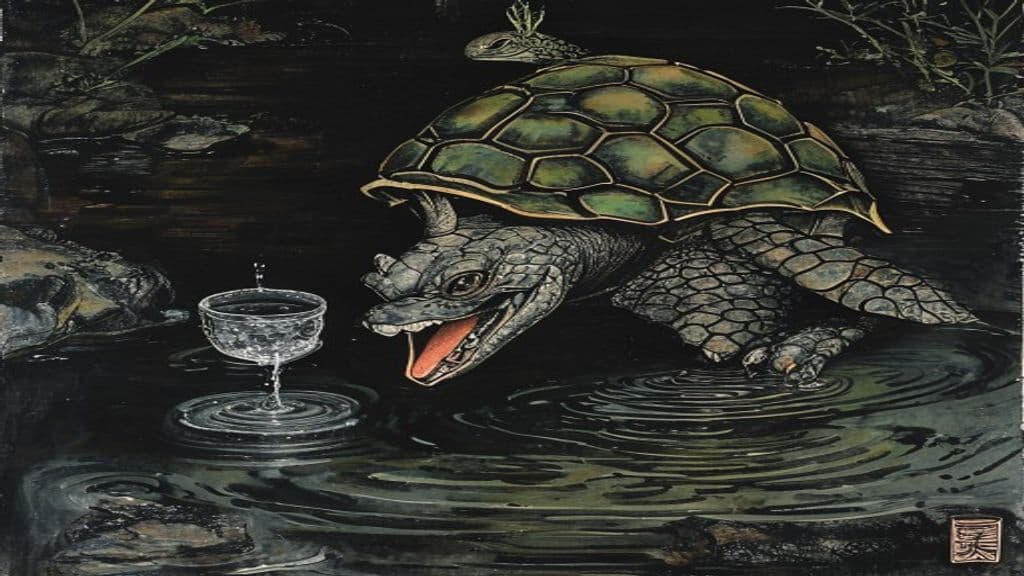
Kappa
A water-dwelling imp of Japanese folklore with a bowl of water on its head. Mischievous but bound by strict codes of politeness; dangerous near rivers.
Byōbunozoki
A Japanese yōkai recorded in Toriyama Sekien's Konjaku Hyakki Shūi, described as a creature that peers at a person from the outside of a folding screen (byōbu), literally a 'folding-screen peeper.' The entry is primarily a literary/visual bestiary motif rather than a detailed folkloric tradition.
Bà Chúa Xứ (Lady of the Realm)
Bà Chúa Xứ, also called Chúa Xứ Thánh Mẫu, is a localized tutelary and prosperity goddess in Vietnamese folk religion centered at Vĩnh Tế village at the foot of Sam Mountain, An Giang province. She is worshipped as a protector of business, health, and the Vietnamese border and attracts pilgrimages and a major three-day festival beginning on the 23rd day of the fourth lunar month.
Bà mụ
In Vietnamese mythology, the Bà mụ are twelve deities revered for teaching infants important skills and traits. (Note: - Power tier should be Ancient, not Primordial (deity-level abilities described) - Abilities description supported by source material, but could be expanded upon - Sensory cues are missing; add that B)
Báigǔ Jīng
The White Bone Demon of Journey to the West — a skeletal demoness who shapeshifts into innocent humans three times to attempt to capture and devour the monk Tripitaka.
Bârmân (بارمان)
Bârmân is a Turanian hero and commander in Ferdowsi’s Shahnameh who fights in the Great War of Iran and Turan during the reign of Nowzar. In the epic he kills the Iranian Qobád and is later slain by the Iranian warrior Qaran; he is represented in Safavid illustrated Shahnameh folios as a recognizable martial figure.
Bäckahäst
A Scandinavian water-horse figure: a horse-shaped water spirit associated with streams, rivers, lochs and other watery edges. Presented in comparative folklore as a member of the wider water-spirit or ‘water-horse’ family that functions as a cautionary figure about the hazards of water and unknown horses at the water’s edge.
Bölþorn
Bölþorn (also attested as Bölþor) is a named jötunn in Norse mythic genealogies, recorded as the father of Bestla and thus an ancestor of Odin, Vili, and Vé. He appears only briefly in the extant poetic and prose Eddaic material and functions primarily as a genealogical forebear rather than an active narrative figure.
Bönpo Lu (local mountain spirits)
A research label for local mountain-associated spirits situated in Himalayan/Tibetan ritual worlds; the term as presented is not documented in detail in the supplied sources. The available materials place such landscape spirits within a broader Bön and Tibetan Buddhist milieu where mountains and local non-human agents are engaged through offerings and ritual specialists.
Böri Shad
Böri Shad (fl. c. 627) is a historical Turkic princely governor and military commander (shad/ishad) of the Western Turkic Khaganate who operated in the far western North Caucasus and led campaigns into the South Caucasus during the Perso-Turkic conflicts of 627–630. He combined kinship status (son of Bagha Shad; nephew of Tong Yabghu Khagan) with delegated frontier authority and military command, and fled to Central Asia after Tong Yabghu's murder in 630.
Böðvildr
Böðvildr is a human princess of Germanic heroic legend, daughter of a king (Níðuðr / Niðhad / Niðung) whose fate is entwined with the smith Wayland (Völundr). In older poetic sources she is presented as a tragic figure—victim of the smith's revenge (murder of her kin and rape)—while later prose redactions (Þiðrekssaga) report that she bore Wayland a son (Viðga) and later married him.
Bøyg
The Bøyg is a legendary Scandinavian (Norwegian) obstacle-being, most often portrayed in sources as a great, slimy serpent or troll-like presence that stands as an impediment to travellers; it is regionally associated with Telemark and Gudbrandsdalen and appears as a dramatic obstacle in Ibsen's Peer Gynt (and Grieg's incidental music).
Búri
Búri is an Old Norse primordial divinity attested in the Prose Edda and a skaldic verse as an early ancestor of the Æsir. He is presented as a first-born godlike figure who is freed from salty rime by the primeval cow Auðumbla and is genealogically prior to later gods such as Borr and, by descent, the Æsir.
Community Record
- [1]Bêlit — Wikipedia. Wikipedia: Bêlitwiki
- [2]Bêlit (Hyborian character; Conan lover; Queen of the Black Coast) — Marvunapp Appendix. Marvunapp: Bêlit appendix entryliterary
- [3]Conan Volume 16: The Song of Bêlit - Dark Horse Books listing. HowardWorks: Conan Volume 16 (comic collection reference)literary
- [4]A Bêlit Cover Gallery (Poisonpie). Poisonpie: Bêlit cover galleryother