
Sources present variant genealogies. The principal tradition names the harpy Podarge and the West Wind Zephyrus as the parents of Balius and Xanthus, making them offspring of wind and a divine/monstrous mother. Alternative accounts attribute parentage to Poseidon (and in fragmentary variants pair Xanthus with other divine-born horses such as Cyllarus) or present them as divine gifts from Poseidon to Peleus at his marriage to Thetis. Peleus then passes the horses to his son Achilles; the horses thereafter appear yoked to Achilles' chariot in the Trojan War narratives.
Descriptions in surviving sources are not highly detailed beyond heroic and descriptive epithets. Xanthus' name means "blonde" and is presented as indicative of coloration; Balios (Balios/Balius) has an uncertain etymology, sometimes rendered as possibly "dappled." Homeric and later summaries call them "Podarge's famous colts," "far-famed," or "bright" steeds suited to draw a hero's chariot, emphasizing nobility, swiftness, and an arresting, heroic appearance rather than precise markings or tack.
Traditionally described as exceptional in speed and endurance, able to draw Achilles' chariot in battle and to outrun or outpace mortal horses. Many sources characterize them as immortal or of divine origin in certain traditions, though genealogies vary. They display attachment and responsiveness to their masters and attendants; Homeric material relates that they stood motionless and wept at Patroclus' death. In Iliad Book 19 Hera grants Xanthus the power of human speech so that the horse can declare that Apollo struck Patroclus and prophesy that Achilles will soon be killed by "a god and a mortal;" immediately after the utterance the Erinyes strike Xanthus mute. Variant fragmentary traditions associate Xanthus with other episodes or owners (e.g., the Dioscuri) but these are uncertain in the extant summaries.
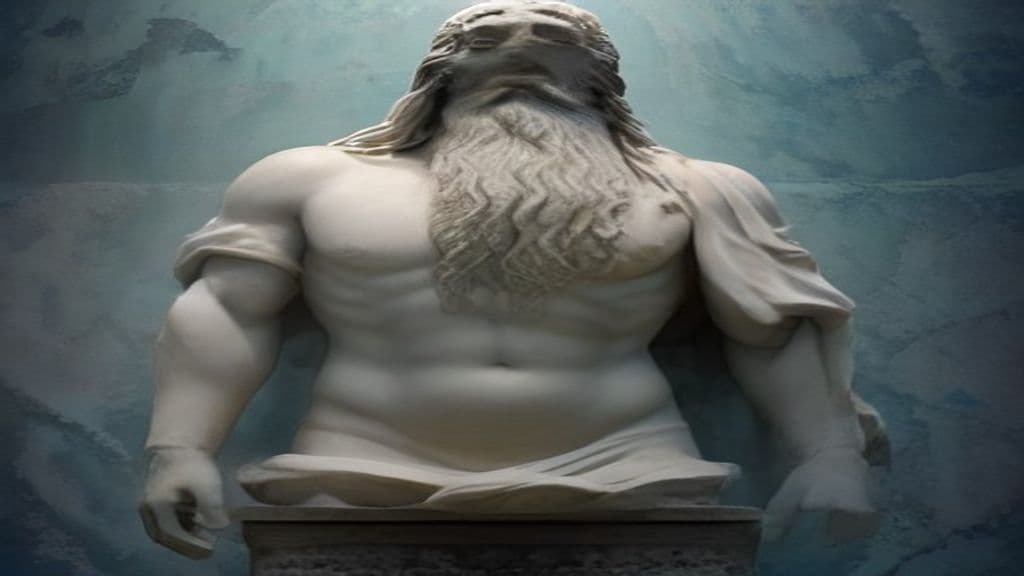
Poseidon
Poseidon is a principal deity of the ancient Greek pantheon, counted among the Twelve Olympians; he presides over the sea, storms, earthquakes and horses and functions as protector of seafarers and guardian of cities and colonies.

Achilles
A legendary Greek heroic figure of epic poetry, son of the sea‑nymph Thetis and the mortal Peleus, celebrated as the greatest of the Greek warriors at Troy whose anger and fate shape events in the Trojan War cycle.
Acacallis
Acacallis (Ancient Greek: Ἀκακαλλίς; also Acalle) is a mythological princess of Crete in Greek tradition, daughter of King Minos and Pasiphae. She functions primarily as a dynastic and etiological figure: in varying accounts she is mother, by gods such as Hermes (Mercury) or Apollo, of eponymous or founder-figures like Cydon (founder of Cydonia), Miletus, or Lydon/ Lydus.
Acamas
Acamas (Ancient Greek: Ἀκάμας) is a personal name recurrent in ancient Greek narrative traditions applied to multiple human characters (warriors, princes, suitors), once to a Cyclops, and once as a hound's name. Rather than a single supernatural entity, bearers of the name appear episodically across the Trojan War, Theseid, and Theban cycles as mortal actors whose deeds intersect with gods and fate.
Acanthis
Acanthis is a young woman in Greek myth, daughter of Autonous and Hippodamia, who is transformed into a thistle finch by the gods as an etiological explanation for the bird's name. The story is preserved chiefly in Antoninus Liberalis' Metamorphoses and summarized in modern reference works.
Acaste
Acaste (Ancient Greek: Ἀκάστη) is a named Oceanid — one of the daughters of the Titans Oceanus and Tethys — recorded among the companions of Persephone at the moment of her abduction; the name also appears separately as a nurse of the daughters of King Adrastus of Argos in later genealogical lists.
Achaeus
Achaeus (Ancient Greek: Ἀχαιός, Akhaiós) is an eponymous personal name borne by three mythological human figures in Greek tradition; best attested is Achaeus, son of Xuthus and Creusa, brother of Ion and grandson of Hellen, who is named as father of Archander and Architeles in Pausanias. The name is glossed as meaning "griever," from ἄχος (achos, "grief, pain, woe").
Aegle
Aegle (Ancient Greek: Αἴγλη, 'brightness' or 'dazzling light') is a name applied to several distinct female figures in Greek myth: a daughter of Asclepius associated with health, a Naiad mother of the Charites by Helios and Neaera, one of the Heliades transformed into a poplar after Phaeton's death, a named Hesperid, an alternate name for Coronis in some traditions, a daughter of Panopeus beloved by Theseus, and a nurse of Dionysus. The recurrence of the name links these figures by the themes of brightness, beauty, and filial or nymph-like status rather than by a single unified identity.
Aello
Aello (Ancient Greek: Ἀελλώ) is a named figure in Greek myth primarily attested as one of the Harpies—winged female personifications of storm-wind who harry, snatch, and torment. The name also appears in variant lists as applied to an Actaeonian hunting dog, showing onomastic fluidity in the tradition.
Agaptolemus
Agaptolemus (Ancient Greek: Ἀγαπτόλεμος) is a mythic Greek prince, one of the fifty sons of King Aegyptus, best known as the husband of the Danaid Pirene who, like most of the Danaids, slew her husband on their wedding night at the command of her father Danaus.
Agave
Agave (Ancient Greek: Agaue/Agaúē) is a personal name borne by at least two distinct figures in Greek myth: a Nereid (one of the fifty sea-nymph daughters of Nereus) and a Theban princess, daughter of Cadmus, who appears in myths connected with Dionysus. The name is glossed in Greek sources as 'illustrious', 'noble', or 'high-born'.
Agrius
Agrius (Ancient Greek: Ἄγριος, 'wild') is an onomastic figure in Greek myth whose name is applied to multiple distinct personae—including a Giant, a centaur, a bear‑born twin, a princely son, a suitor of Penelope, and one of Actaeon's dogs—rather than a single unified supernatural being. Each attestation places an Agrius in different narrative registers (Gigantomachy, Heracles' labors, heroic genealogies, the Odyssean cycle, and the Actaeon hunt).
Agron
Agron (Ancient Greek: Ἄγρων, 'wild' or 'rustic') is a human/mortal figure attested in the summary of Antoninus Liberalis' Metamorphoses (as presented on Wikipedia) who, because of impiety toward certain gods, is transformed by Hermes into a plover. The tale functions as an etiological metamorphosis and moral exemplum about observing cult obligations.
Aitolos
Aitolos is a name that appears in Greek-language traditions referring to two distinct figures: Aetolus, a mythic genealogical ancestor in classical Greek myth (son of Endymion, descendant of Deucalion), and Kosmas Aitolos (St. Cosmas of Aetolia), a historical/hagiographic Orthodox teacher whose collected writings emphasize pastoral and ascetical themes. The sources do not present Aitolos as a single folkloric supernatural being.
Community Record
- [1]Balius and Xanthus - Wikipedia. Wikipedia, 'Balius and Xanthus'wiki
- [2]Xanthus (mythology) - Wikipedia. Wikipedia, 'Xanthus (mythology)'wiki
- [3]Wikidata: Balius and Xanthus. Wikidata entry Q1062608 summarizing classificationwiki
- [4]The Iliad, Book 19 (classic translations and summaries). Homer, The Iliad (Book 19) — translations and classical passages cited in summariesliterary
- [5]Event: Poseidon gives Peleus immortal horses, Balius and Xanthus. myths.uvic.ca event summary: Poseidon gives Peleus immortal horsesliterary
- [6]Balius and Xanthus – Mythopedia. Mythopedia summary and fragmentary variantsother
- [7]On Translating Homer (Matthew Arnold) — Homeric phrasing citations. Arnold, commentary and Homeric quotation translations referenced in summariesother