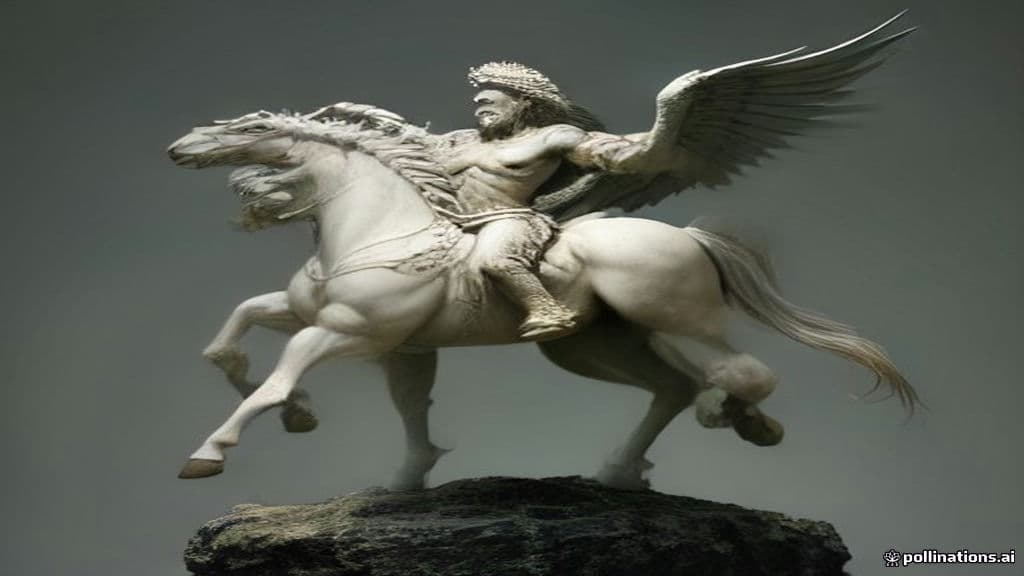
Accounts vary. In many traditions Bellerophon is named Hipponous originally and later called Bellerophon/Bellerophontes. Some sources present him as a son of the sea-god Poseidon by the mortal Eurynome (or Eurymede); other accounts (notably a tradition recounted in the Homeric scholia) present him as son or foster-son of Glaucus of Potniae. One narrative-gloss for his name holds that he was renamed after accidentally slaying a Corinthian named Belleros while practicing knife-throwing, an act that produced exile and set in motion the sequence of purification, service at royal courts, and the sending on a deadly mission that culminates in his slaying of the Chimera.
The provided sources do not supply a standardized physical portrait of Bellerophon himself. Narrative iconography commonly pairs him with Pegasus, the untamed winged horse he captures (through divine aid), and with his opponent the Chimera, described as a lion-headed, goat-bodied, serpent‑tailed creature that breathes fire — typical visual scenes show Bellerophon astride Pegasus confronting the Chimera.
Bellerophon is portrayed as an exceptional mortal warrior and monster-slayer rather than as innately supernatural. He is credited with taming and riding Pegasus (a feat achieved with divine assistance — Athena provides a charmed/golden bridle in a dream) and with slaying the Chimera. He benefits from seerly counsel (Polyeidos) and divine aid (particularly Athena, and in some accounts Poseidon as progenitor). Narrative traditions also record a moral-ritual dimension to his life: accidental homicide, ritual purification by a king (Proetus), exile, and being sent on a lethal quest by a host-king (Iobates). Some versions recount that he later incurred divine disfavour after attempting to ride Pegasus to Mount Olympus.
Weaknesses
- conditionvulnerability to divine displeasure (hubris/overreaching)
Wards
- ritualpurification/cleansing by a king (expulsion of miasma)
- conditionprotection of xenia (guest-right) as social/ritual safeguard
Poseidon
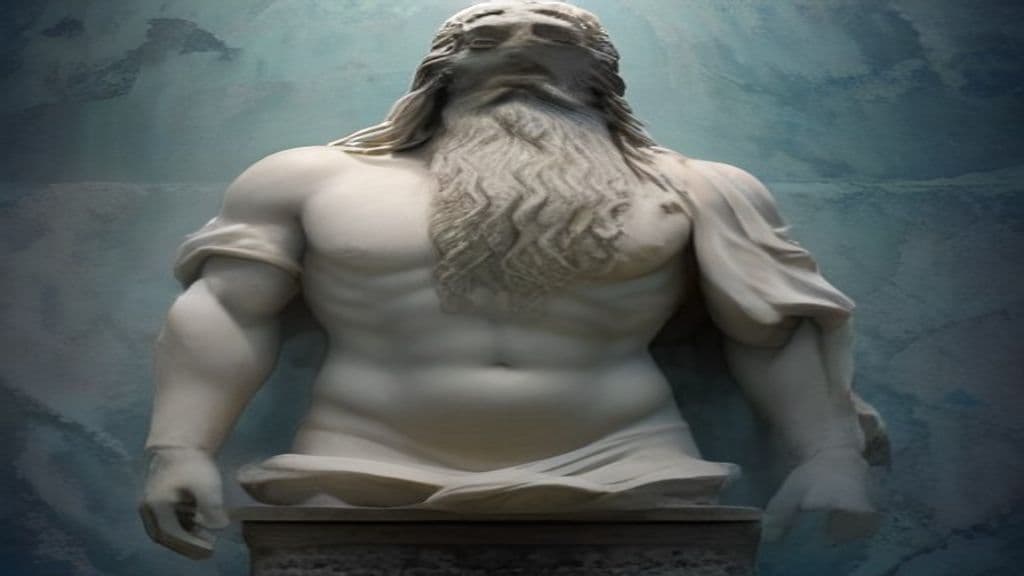
Poseidon is a principal deity of the ancient Greek pantheon, counted among the Twelve Olympians; he presides over the sea, storms, earthquakes and horses and functions as protector of seafarers and guardian of cities and colonies.

Athena
Athena is a major ancient Greek goddess associated with wisdom, handicraft (notably weaving), and warfare; she serves as a tutelary protector of cities—most prominently Athens—and is central to myth, cult, and civic identity in the Greek world.
Community Record
- [1]Bellerophon — Wikipedia. Wikipedia, article 'Bellerophon'.wiki
- [2]Bellerophon (Wikidata entry for fossil genus). Wikidata entry Q310262 (Bellerophon, fossil mollusc genus).other
- [3]Dictionary of Antiquity (1840) — reference to ship-naming. Dictionary of Antiquity (1840), noted reuse of classical names (e.g., HMS Bellerophon).other