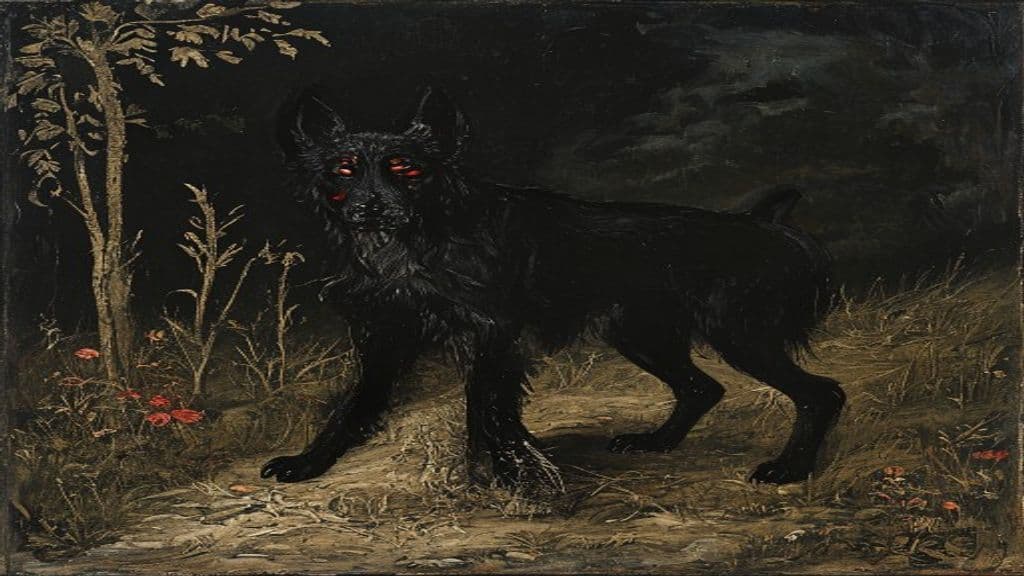
Sources present the black dog as a long-lived folkloric motif rather than a single unified origin story. Scholarship represented in the sources situates the motif in a conceptual family of underworld or death-associated dogs (citing analogues such as Cŵn Annwn, Garmr, and Cerberus) and notes uncertainty whether the English black dog originated in Celtic or Germanic layers of British belief. Medieval Christian influence is recorded in some accounts that recast certain dogs as diabolic or 'hellhounds,' while other local tales retain older guardian or psychopomp-like roles.
Most accounts describe the black dog as unnaturally large and black, frequently with glowing red or yellow eyes and a spectral or uncanny aspect. Regional variation is emphasized: the Gallytrot/Galleytrot is described in some sources as a large white dog with an indeterminate outline; a Yorkshire instance is said to be headless; some traditions report packs of hounds (e.g., mining-accident tales or the Cheney Hounds of Cornwall). Descriptions range from ghostly and demonic to simply very large and strange.
Reported behaviours vary by local tale. Commonly the black dog functions as an omen-bearer of death (for example, a Yorkshire dog said to presage death within a year). Several named variants (Barghest, Black Shuck) are recorded as directly harmful or aggressive toward passersby; the Aylesbury story records an attack after which the human was left paralysed. Conversely, other stories present benevolent or guardian behaviour: the Gurt Dog of Somerset guides travellers at night and protects them from danger, and an Isle of Man tale tells of a great black dog that blocked a skipper’s way, causing him to stay ashore and thereby avoid a deadly storm. The motif is also tied to liminal landscape features and stormy weather, and auditory phenomena such as baying or barking by unseen packs are reported in some accounts.
Weaknesses
- conditionavoidance/flight (narrative outcome)
- conditionconfrontation (recorded as coinciding with disappearance in at least one tale)
Wards
- othercompany / staying ashore (narrative protective action)
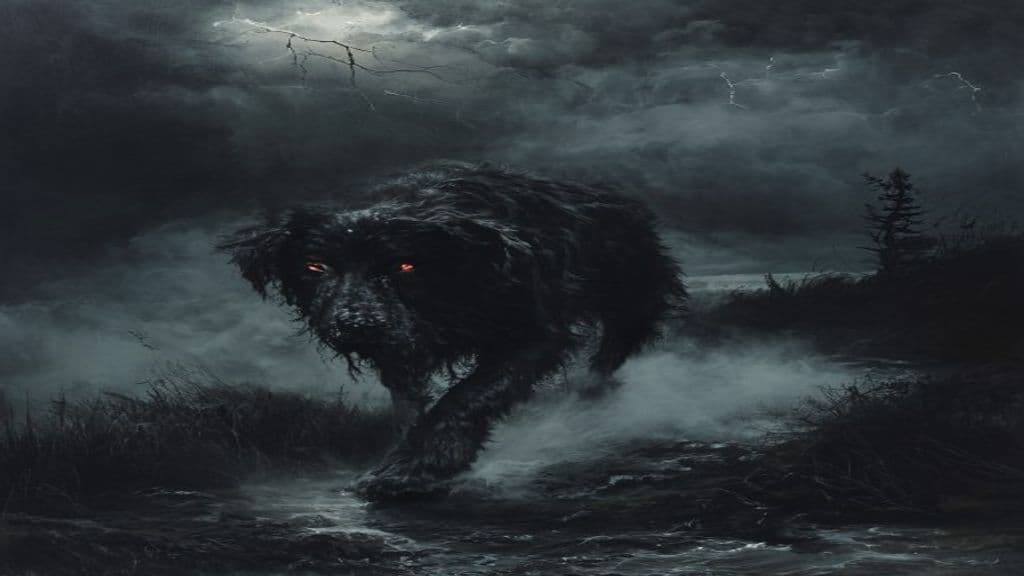
Black Shuck
A spectral black dog of East Anglian legend, with glowing red or green eyes. Its appearance is an omen of death. Its howl has been heard on clifftops during storms for centuries.
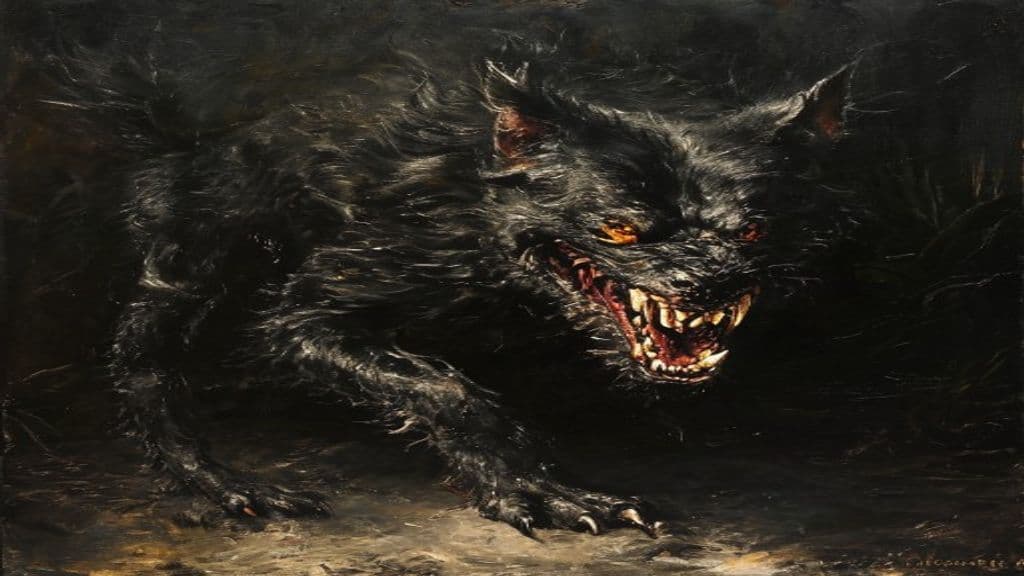
Barghest
A Northern English uncanny presence most often described as a monstrous black dog that serves as an omen of death; the term also covers variant local beings (ghosts or household elves) in some counties, making it a fluid category of liminal, threatening presences in regional folklore.
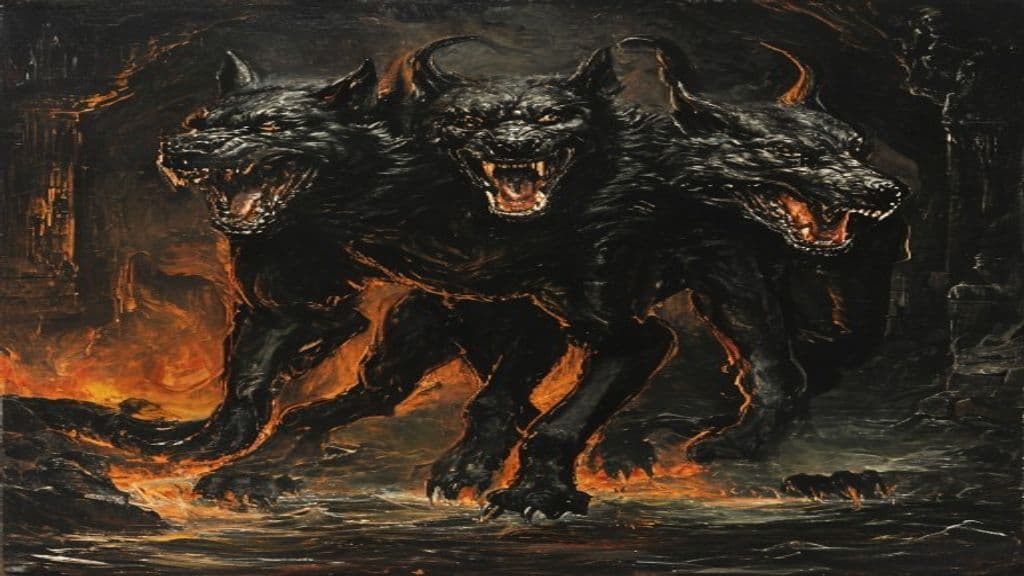
Cerberus
The three-headed hound of Hades, guardian of the underworld's gates — welcoming the dead in but allowing no shade to leave and no living mortal to enter uninvited.
Community Record
- [1]Black dog (folklore) — Wikipedia. Wikipedia contributors. "Black dog (folklore)." Wikipedia, The Free Encyclopedia.wiki
- [2]Wikidata: black dog. Wikidata entry Q1321618 (black dog)other
- [3]Shuckin' and jivin' : folklore from contemporary Black Americans (table of contents). Dance, D. 'Shuckin' and jivin': table of contents and references to spirit-dog tales (archive).folk
- [4]Megalithomania — Conway Hall (archive listing). Coil, Megalithomania event listing (archive); indicates contemporary retellings but adds no ritual detail.other
- [5]Episode 27: Spooky Dog Stories part 2 and 3 (podcast archive). Podcast episode listing: 'Spooky Dog Stories' (archive).other