
In the Old Norse heroic-poetic corpus Brynhildr appears as a valkyrie-figure woven into the Sigurd (Sigurðr) cycle and the associated lays; she is treated in texts collected in the Poetic Edda and in poems of the Sigurd/Brunhild material such as Sigrdrífumál and Sigurðarkviða hin skamma (the supplied sources identify these poems as part of the same narrative cycle). Later vernacular and scholarly traditions in Germanic legend preserve her under the names Brunhild/Brunhilda; modern secondary summaries note these varying onomastic forms but do not in the supplied excerpts give a definitive etymology.
The supplied sources do not provide a single consistent physical description; instead Brynhildr is attested primarily by role and epithet as a valkyrie and narrative heroine. The Faroese summary cited in the notes describes Brynhildr as 'headed' among valkyries and the Poetic Edda frames her as the valkyrie Brynhildr who appears in the intimate, tragic episodes surrounding Sigurðr and Guðrún. Beyond these role-based identifications the excerpts do not offer detailed corporeal attributes or uniform epithets describing her looks.
Within the provided material Brynhildr's abilities are presented in functional, role-based terms: as a valkyrie she is part of the class of supernatural women who serve Odin, select and receive slain warriors, and participate in the warrior-afterlife economy (Valhalla). A Faroese song summary in the notes explicitly states that valkyries 'serve the supreme god Odin, headed by Brynhildr' and that valkyries 'took [the slain] back to Valhalla.' The supplied sources do not enumerate further individual magical powers, spells, or explicit supernatural feats unique to Brynhildr beyond her valkyrie-associated functions.
Weaknesses
- otherNo weaknesses attested in supplied sources
Wards
- otherNo protective measures or wards against Brynhildr are recorded in the supplied sources
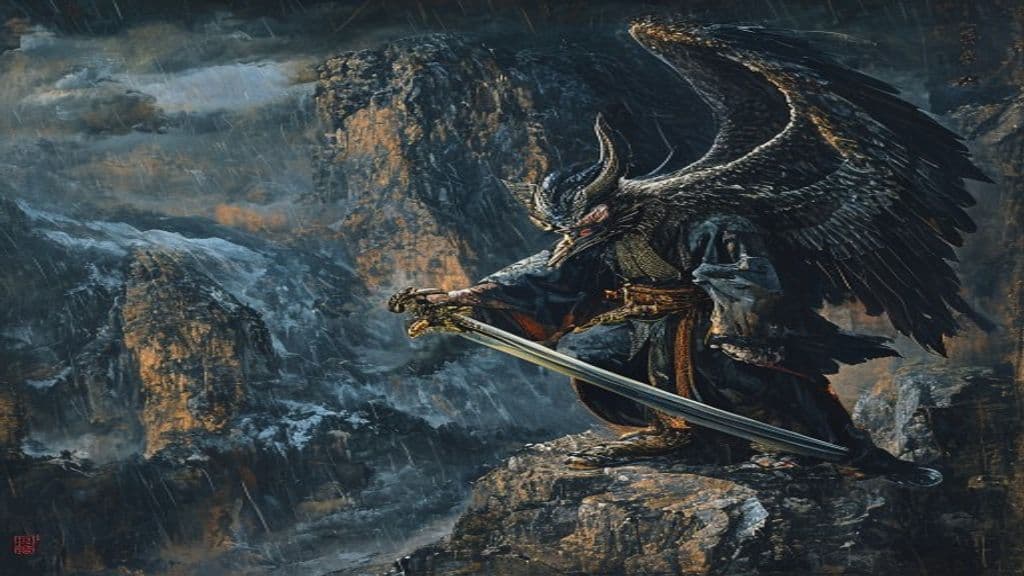
Tengu
Proud, warrior-like mountain spirits of Japan, associated with martial arts, pride, and the wild mountains. Neither fully good nor evil — they test and train warriors and monks, but punish the arrogant.

Valkyrie
The valkyrie (Old Norse valkyrja, “chooser of the slain”) is a set of semi-divine female figures in Old Norse poetry and saga who choose warriors slain in battle, guide the chosen to Odin’s hall (Valhalla), and serve the einherjar there. Literary and archaeological sources depict them as armed riders, occasional lovers of men in swan‑maiden episodes, and in older imagery as fate‑weaving death spirits.
Adils
Adils (Old Norse Aðils; also Eadgils, Adillus, Athisl, Adhel) is a semi‑legendary sixth‑century Swedish king attested in Old Norse saga material and later medieval traditions. He appears in saga episodes as a storied royal figure involved in warfare, court acts, and marriage suits rather than as a supernatural being.
Agilaz (Egil)
Agilaz (reconstructed Proto-Germanic) — commonly recorded in medieval sources as Egil or Ægil — is a legendary archer attested in Germanic heroic tradition. He appears as the brother of Völund (Wayland/Weland) in the Old Norse poem Völundarkviða and in the Thidreks saga, and his name is also inscribed on early medieval objects (Franks Casket, Pforzen buckle). The attested material presents him as a named heroic human archer within saga and inscriptional contexts rather than as a recurrent supernatural species.
Beaduhild (Böðvildr)
Beaduhild (Old Norse Böðvildr; Old English Beaduhild/Beadohild; also Bodil, Badhild) is a legendary human princess in Germanic heroic tradition whose life is entangled with the smith Wayland (Weland/Vǫlundr). In earlier sources she appears as a tragic victim in the Weland cycle; in later Scandinavian recensions she is recast as Wayland's wife and the mother of a heroic descendant (Viðga).
Brunhild
A female character in Germanic heroic legend, associated with royal or noble status. (Note: * Power tier: Unknown/Not applicable -> Minor Spirit (as there are no specific abilities mentioned) * Origin story: Add that Brunhild is associated with several sources, including historical figures s)
Dietrich von Bern
A legendary Germanic heroic figure formed by the folkloric transformation of the historical Ostrogothic king Theoderic the Great; he appears across medieval heroic poems and sagas as an exiled king of 'Bern' (medieval Verona), a great warrior, and opponent of both human and monstrous foes.
Fáfnir
In Old Norse heroic legend Fáfnir is a kin-figure who, after killing his father Hreiðmarr over a cursed hoard, withdraws into the wilderness and takes the hamr of a worm/dragon to brood over treasure; he is slain by the hero Sigurð (Sigurd).
Hagen
Hagen (German; Old Norse Hogni; Old English Hagena; Latin Hagano) is a named Burgundian warrior and retainer in the corpus of Germanic heroic legend, prominently attested in the Nibelung material. He functions as an important counselor and martial figure within the Burgundian court and is implicated in central narrative conflicts of the cycle, including enmity with figures such as Siegfried.
Heodenings
A named princely household/retinue in the Germanic heroic-legend tradition, remembered chiefly for its association with a legendary, recurring battle cycle (Hjaðningavíg, the legend of Heðinn and Hǫgni) and cited in Old English poetry as a hall where a poet once held bardic office.
Háma (Hama / Heime / Heimir)
Háma (also rendered Hama, Heime, Heimir) is a named figure of the Germanic heroic-legend tradition attested in Anglo‑Saxon and continental Germanic sources. He appears as a legendary warrior or retainer — often associated with the companion Witige — in poems such as Beowulf and Widsith and in later Germanic epic material (Alpharts Tod, Þiðreks saga). A single secondary source records a variant identification of the name with a mythic watchman figure linked to Heimdallr and the Bifrost; this identification is presented in the available material as a distinct, unverified tradition.
Brutus Greenshield
A legendary king of the Britons attested in Geoffrey of Monmouth's pseudo‑historical account and later reinterpreted in Elizabethan literature as a martial founder figure. In Geoffrey he is an otherwise unremarked dynastic successor; in sixteenth‑century sources he is magnified into a warrior who led an expedition to Hainaut.
Brutus of Troy
Brutus of Troy is a legendary ancestral founder-king in medieval British pseudo-history, presented as the eponymous progenitor of the Britons and first ruler/founder of Britain in narratives that link Britain to Trojan and, in some recensions, biblical genealogies. Best known from Geoffrey of Monmouth’s Historia Regum Britanniae and earlier mentions in the Historia Brittonum, the figure functions as a culture-ancestor and legitimizing founder rather than a supernatural being.
Brân the Blessed
Brân the Blessed (Welsh: Bendigeidfran / Brân Fendigaidd, 'Blessed Crow') is a giant-king in the Second Branch of the Mabinogi who functions as a mythic sovereign of Britain. He is depicted as a colossal royal figure associated with the sea and with poetry/bards; after being mortally wounded his severed head remains animate and is used as an apotropaic guardian of the island.
Community Record
- [1]Brunhild. Wikipedia — 'Brunhild, also known as Brunhilda or Brynhild, is a female character from Germanic heroic legend.'wiki
- [2]The Poetic Edda - A Dual-Language Edition. Poetic Edda edition — summaries note the poems include 'the more intimate, personal tragedies of the hero Sigurðr, his wife Guðrún and the valkyrie Brynhildr.'literary
- [3]Gandkvæði Tróndar — Faroese Traditional Song about Tróndur Í Götu (summary). Archive summary — 'Valkyries are goddesses serving the supreme god Odin, headed by Brynhildr... They were welcomed by Bragi and taken back to Valhalla by the Valkyries.'folk
- [4]Sigurðarkviða hin skamma. Wikipedia entry for the poem Sigurðarkviða hin skamma — part of the Sigurd/Brunhild poetic cycle in which Brynhildr is attested.wiki
- [5]Great Lacuna. Wikipedia — notes missing material from Codex Regius that would have contained parts of Sigrdrífumál and most of Sigurðarkviða, indicating fragmentary transmission of the cycle that includes Brynhildr.wiki
- [6]Spears / modern cultural uses (archive entry for a fan-made 'Spearhead of Brynhildr'). Archive — example of modern reuse of the Brynhildr name in material culture (fan-made spearhead pendant); used here only as evidence of modern reception, not as primary tradition.other