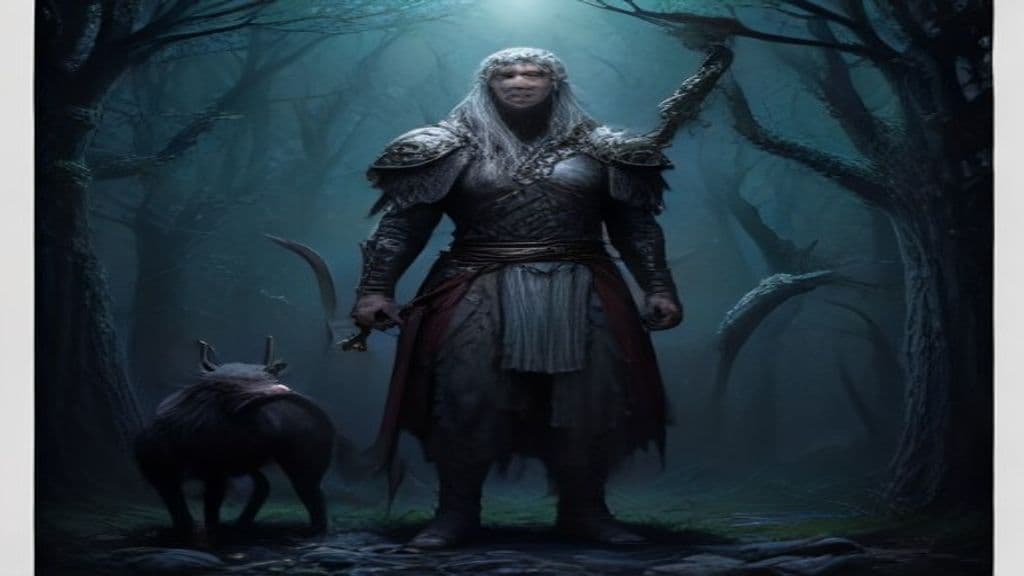
Sources relate that the gold-hoard at the centre of Fáfnir's story originates as weregild paid to Hreiðmarr after the gods (Odin, Loki, and Hœnir) caused the death of Ótr. Andvari the dwarf provided gold including the ring Andvaranaut, which was cursed. Fáfnir kills his father Hreiðmarr to seize the hoard, refuses to share it with his brother Regin, and withdraws to the wild where he 'shifts into the hamr' of a worm/dragon to guard the treasure.
Medieval sources vary. Earlier poetic accounts (Fáfnismál) describe Fáfnir in his transformed state as a flightless, snake-like 'worm' (Old Norse: ormr). Later prose (Völsunga saga) adds shoulders to his description, a development under continental influence that suggests a more dragon-like form (interpreted in some traditions as implying limbs or wings). The pre-transformation appearance is not consistently described in the sources; some texts identify kin who elsewhere have dwarf associations, but Fáfnir's precise human or dwarf visage before metamorphosis is not explicitly fixed in the surviving material.
Narrative attestations show Fáfnir's principal behaviours as acquisitive and guarded: he murders for a hoard, withdraws into wilderness to brood over it, patrols between lair and water (leaving a track), and emits 'atter' (poemically rendered as poisonous or venomous exhalation). He functions as a hostile, treasure-guarding creature slain by a hero; the canonical method of his death is an ambush in which Sigurð hides in a trench across Fáfnir's path and stabs through the belly into the heart. Sources do not ascribe other specific supernatural faculties beyond these narrative elements.
Weaknesses
- conditionvulnerability to ambush / belly/heart wound
Wards
- ritualtrench ambush (combat technique)
Andvari
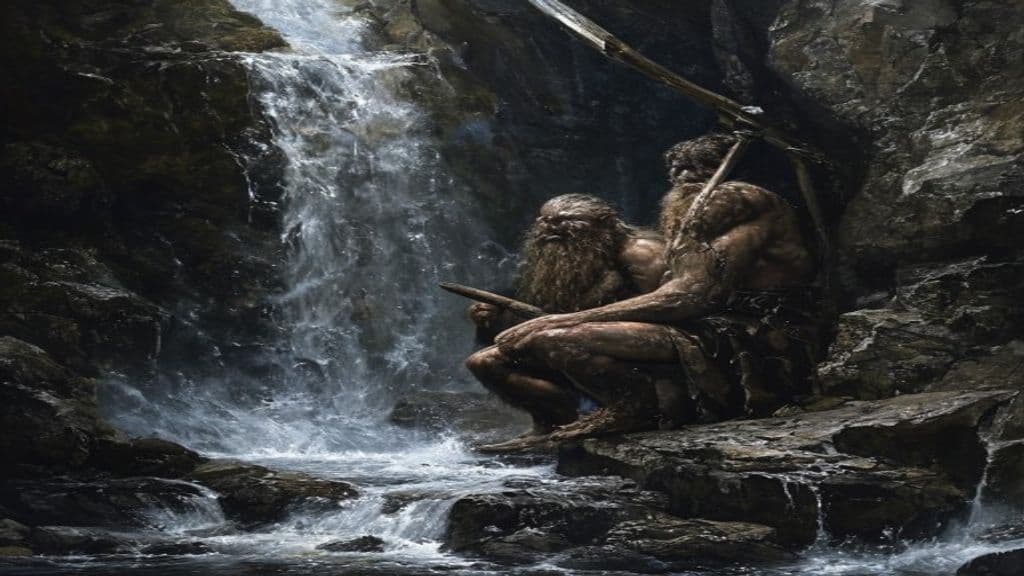
Andvari is a dwarf from Old Norse sources (attested in the 12th century) who lives beneath a waterfall, hoards gold, owns a magical ring called Andvaranaut, can change into a pike, and curses the gold when it is stolen—events that set in motion tragic outcomes in Norse heroic narrative.
Nibelung
A personal or clan name in Norse mythology associated with misty or ambiguous realms, also giving its name to the Middle High German epic Nibelungenlied. (Note: - Power tier: Primordial (given the ambiguous and multifaceted nature suggested by source material) - Appearance: Add a note that specific physical description does not exist, but may be implied by as)
Adils
Adils (Old Norse Aðils; also Eadgils, Adillus, Athisl, Adhel) is a semi‑legendary sixth‑century Swedish king attested in Old Norse saga material and later medieval traditions. He appears in saga episodes as a storied royal figure involved in warfare, court acts, and marriage suits rather than as a supernatural being.
Agilaz (Egil)
Agilaz (reconstructed Proto-Germanic) — commonly recorded in medieval sources as Egil or Ægil — is a legendary archer attested in Germanic heroic tradition. He appears as the brother of Völund (Wayland/Weland) in the Old Norse poem Völundarkviða and in the Thidreks saga, and his name is also inscribed on early medieval objects (Franks Casket, Pforzen buckle). The attested material presents him as a named heroic human archer within saga and inscriptional contexts rather than as a recurrent supernatural species.
Agnarr Geirröðsson
Agnarr Geirröðsson is a mortal prince attested only in the Poetic Edda poem Grímnismál; he aids Odin (disguised as Grímnir) during Geirröðr's torture and, after Odin reveals himself and King Geirröðr dies, Agnarr succeeds as king.
Anund (Bröt-Anund)
Anund, commonly known by the byname Bröt-Anund ('trail‑blazer' or 'land clearer'), is a semi-legendary Swedish king of the Yngling dynasty attested in early Norse genealogical poetry and saga prose. Sources credit him with avenging his father in Estonia, accumulating wealth, promoting settlement by clearing land and making roads, and dying under ambiguous circumstances (landslide or killing).
Aurvandill
Aurvandill is a figure attested in medieval Germanic onomastics and Norse narrative, most famously remembered in an Old Norse tale where Thor carries him across icy rivers and his frozen toe is cast into the sky as the star called Aurvandils-tá. Comparative linguistic study reconstructs a Common Germanic name associated with dawn or the morning star.
Beaduhild (Böðvildr)
Beaduhild (Old Norse Böðvildr; Old English Beaduhild/Beadohild; also Bodil, Badhild) is a legendary human princess in Germanic heroic tradition whose life is entangled with the smith Wayland (Weland/Vǫlundr). In earlier sources she appears as a tragic victim in the Weland cycle; in later Scandinavian recensions she is recast as Wayland's wife and the mother of a heroic descendant (Viðga).
Billingr
Billingr is a named paternal figure in Old Norse sources, best attested as the father of a maiden whose household prevents Odin from consummating a nocturnal rendezvous (Hávamál stanzas 96–102). Manuscript and kenning evidence leave his taxonomic identity (dwarf or jötunn) ambiguous.
Brunhild
A female character in Germanic heroic legend, associated with royal or noble status. (Note: * Power tier: Unknown/Not applicable -> Minor Spirit (as there are no specific abilities mentioned) * Origin story: Add that Brunhild is associated with several sources, including historical figures s)
Brynhildr (Brunhild / Brunhilda)
Brynhildr (Old Norse) — also known as Brunhild or Brunhilda in Germanic tradition — is a named valkyrie and tragic heroine of the Sigurd/Brunhild cycle in Old Norse-Icelandic heroic poetry. She appears in the Poetic Edda and related heroic lays as a fateful, martial woman associated with the valkyrie class and the narrative of Sigurðr (Sigurd) and Guðrún.
Dietrich von Bern
A legendary Germanic heroic figure formed by the folkloric transformation of the historical Ostrogothic king Theoderic the Great; he appears across medieval heroic poems and sagas as an exiled king of 'Bern' (medieval Verona), a great warrior, and opponent of both human and monstrous foes.
Domalde (Dómaldi)
Domalde (Old Norse Dómaldi/Dómaldr) is a legendary Swedish king of the Yngling dynasty whose reign is associated with prolonged famine. In Old Norse sources his personal ill‑luck (ósgæssa), said to be caused by a curse from his stepmother, is presented as coterminous with the land's fertility; communal cultic escalation culminates in the king's sacrificial killing and the restoration of good harvests.
Dwarf (folklore)
A type of supernatural, human-shaped being in Germanic tradition associated with subterranean places, craft (notably metalwork), and a liminal role between nature and culture. In Norse mythic sources dwarfs function as artisan-makers of powerful objects for gods and occasionally appear in folktales as magical servants bound to objects.
Community Record
- [1]Fáfnir — Wikipedia. Wikipedia entry 'Fáfnir'wiki
- [2]The Elder Eddas of Saemund Sigfusson & The Younger Eddas of Snorre Sturleson. Project Gutenberg edition of the Poetic and Prose Edda materialliterary