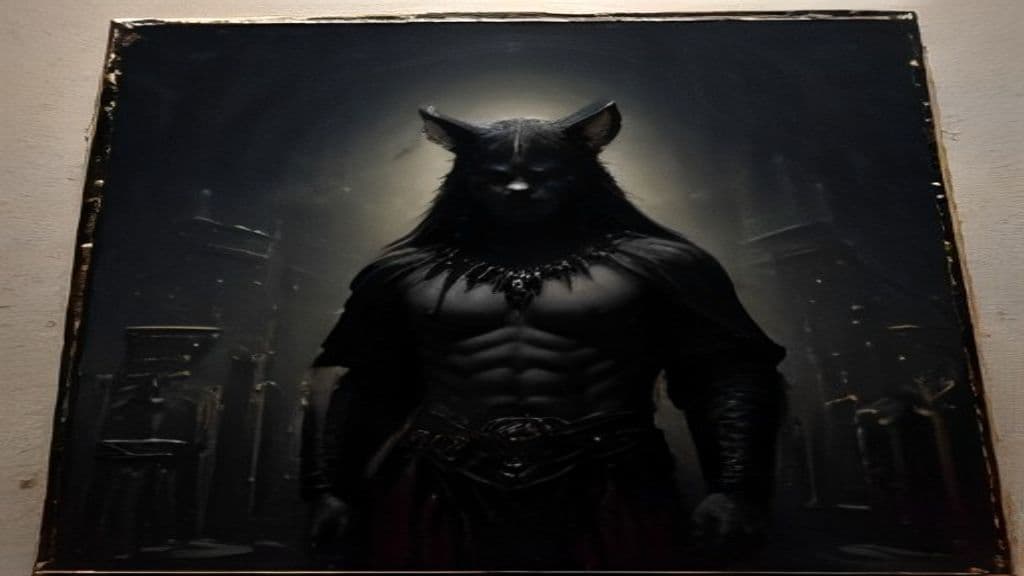
According to Roman literary and local tradition, Catillus the Arcadian, described as a son of Amphiaraus, together with his sons (one of whom also bears the name Catillus) and his sons Coras and Tiburtus, escaped the mass slaughter at Thebes. They traveled to the Aniene plateau, expelled the inhabitants reported in the tradition, and founded a city called Tibur (modern Tivoli), named in honor of Tiburtus. The family and their eponymous toponym appear in Roman epic contexts linking Greek-Arcadian mythic genealogies to Latin local origins.
Classical sources present Catillus as a mortal legendary founder and warrior; the supplied materials provide no physical description or supernatural iconography for either Catillus the elder or his sons.
The tradition attributes human-scale deeds to Catillus and his sons: flight from Thebes, migration and settlement of the Aniene plateau, forcible removal of existing inhabitants according to the legend, founding the city of Tibur, and, in later epic narrative (Virgil's Aeneid, Book VII), the younger Catillus and his brother Coras leaving Tibur to fight in Latium as allies of Turnus against Aeneas. No supernatural powers are recorded in the provided sources.
Catbus (Nekobasu)
Catbus (Japanese: ねこバス, Nekobasu) is a fictional character created by Hayao Miyazaki for the Studio Ghibli film My Neighbor Totoro. Within the film's imagined ecology it is a large, animate cat whose hollow body functions as a passenger bus and which interacts directly with the child protagonists alongside other invented forest spirits.
Catellus
Catellus (Welsh: Kadell map Geraint) is a legendary, pseudo‑historical king of the Britons attested in Geoffrey of Monmouth's Historia Regum Britanniae and in Welsh redactions (Brut y Brenhinedd). He functions as a dynastic/chronological figure used to order genealogies rather than as a supernatural being.
Catgirl (nekomimi / nekomusume)
A fictional character type in Japanese popular culture combining an otherwise human body with feline traits (most commonly cat ears and often a tail). Historically informed by Edo and Shōwa period shapeshifting cat-monster imagery, the modern catgirl functions as an aesthetic trope in manga, anime, theater, and Internet culture rather than a documented religious or folkloric spirit.
Cath Palug
A monstrous, unusually large cat from Welsh myth later adapted into continental medieval romance (Anglo‑Norman/Old French) as Chapalu/Capalu. Associated with islands, lakes, bogs, and shoreline liminal zones, it functions as a localized animal horror that confronts named heroes (Welsh Cai/Kay; continental sources often transfer the opponent to King Arthur).
Catherine of Alexandria
A Christian virgin-martyr venerated in Eastern Orthodox, Roman Catholic, Anglican and other Western traditions. Presented in hagiography as a learned princess of Alexandria who debated pagan philosophers, suffered miraculous events during imprisonment and execution, and became the focus of a widespread cult centered on Saint Catherine's Monastery at Sinai and numerous liturgical commemorations and artistic depictions.
Catigern
Catigern is a legendary/historical early medieval British warrior-prince remembered chiefly for dying fighting the Saxons at the Battle of Epsford/Aylesford. He appears in medieval chronicles and genealogies (notably the Historia Brittonum and various Welsh pedigrees) as a son or kinsman within ruling lineages and is used in later tradition for dynastic legitimation and local topographical memory.
Catoblepas
A legendary Greco‑Roman monstrous beast reported from Ethiopia: a mid‑sized, sluggish quadruped with a heavy head habitually pointed toward the ground and described in sources as possessing lethal properties expressed either as a deadly gaze or poisonous breath.
Catreus
Catreus is a mortal figure in Greek myth, presented in mythographic sources as the eldest son of King Minos and Pasiphaë and a king of Crete whose life is shaped by an oracle predicting that one of his children would kill him; efforts to avoid that fate, and variants of the tale, link him etiologically to later heroic genealogies.
Catskin
Catskin is the name/title of an English and related folk-tale heroine type (ATU 510B) who escapes an unwanted marriage by disguising herself in a catskin coat. The figure functions as a narrative motif: a noble-born girl reduced to servitude by wearing an animal-derived garment, secretly appearing at court in splendid dresses, and ultimately being recognized and restored.
Cattie-brie
Cattie-brie (also spelled Catti-brie) is a fictional human character in R. A. Salvatore's Legend of Drizzt novels and a core member of the adventuring group the Companions of the Hall (Companions of Mithral Hall), associated with Icewind Dale and Mithral Hall. She first appears in The Crystal Shard (1988) and recurs throughout the series.
Cattle of Helios
A herd of sacred, immortal oxen belonging to the sun-god Helios in Greek myth. Pastured on the island Thrinacia, their slaughter by Odysseus' crew in the Odyssey precipitates supernatural signs and divine vengeance by Helios (and Zeus).
Caturvyūha
A theological/doctrinal model in early Vaiṣnava tradition describing four earthly emanations (vyūhas) of the Supreme deity—originally Nārāyaṇa and later Viṣṇu—named Vāsudeva (central), Saṃkarṣaṇa (Balarāma), Pradyumna and Aniruddha. The concept maps localized Vrishni hero cults onto a system of divine manifestation reflected in early Mathura/Kushan sculpture and later Vaishnava liturgical categories.
Community Record
- [1]Catillus — Wikipedia. Wikipedia, entry 'Catillus'wiki
- [2]Virgil, Aeneid 7.672 (as cited in notes). Classical citation noted in compiled sources: Virgil (Aeneid 7.672) records the name 'Cātillus' and places the younger Catillus and Coras as allies of Turnus in Book VII.literary
- [3]Horace, Odes (as cited in notes). Classical citation noted in compiled sources: Horace (Odes 18.2) records the name as 'Cātilus'.literary
- [4]Silius Italicus and Statius (as cited in notes). Classical citation noted in compiled sources: Silius Italicus and Statius use the form 'Cātillus' and 'Catillus' respectively in their works referring to the founder tradition.literary
- [5]Alchetron — Tivoli, Lazio (Tibur tradition). Local/topographic traditions connecting Tibur (Tivoli) and mons Catilli to the Catillus legend as compiled in secondary references.other