
The catgirl trope in modern media is historically linked to Edo and Shōwa period stories and imagery of shapeshifting cat monsters such as the bakeneko and nekomata; these earlier forms used feline traits to mark uncanny or villainous figures to audiences. Specific historical touchpoints cited in the literature include references to 18th‑century misemono that use the term nekomusume, kamishibai revivals in the 1930s (1936 noted), and postwar manga and anime developments (examples include Princess Knight in 1953, Star of Cottonland in 1978) leading to widespread presence in late 20th‑century and contemporary media. Over the postwar period the trope was largely rehabilitated from dangerous shapeshifter to a marker of cuteness (moe) and approachability in fiction.
Typically depicted as an otherwise human character with one or more feline traits, most commonly cat ears (nekomimi) and often a tail. Variations range from minimal or superficial markers (ears only, a tail, brief drawn-in ears to convey emotion, or wearable cat-ear headbands) to characters with more extensive feline physiology or the capacity to transform into a cat. English usage 'catgirl' covers wearable accessories, temporary representational devices, and fully anthropomorphic depictions; Japanese terms distinguish the ear-feature (nekomimi) from the older term for 'cat daughter' (nekomusume).
In most modern appearances the catgirl's features are aesthetic or character traits (catlike mannerisms, speech tics) and not inherently supernatural. Older narratives that inform the trope derive from bakeneko and nekomata tales in which shapeshifting into a human form appears; some fictional works retain transformation as a plot element. Abilities therefore range across works from merely behavioral (purring, feline gestures) to narrative supernatural shapeshifting where explicitly portrayed, but the supplied sources emphasize the predominately cultural/aesthetic role in contemporary media rather than an agreed set of powers.
Weaknesses
- otherNo documented folkloric weaknesses for modern catgirls in the provided sources
Wards
- otherNo documented protection rituals or wards against catgirls in the provided sources
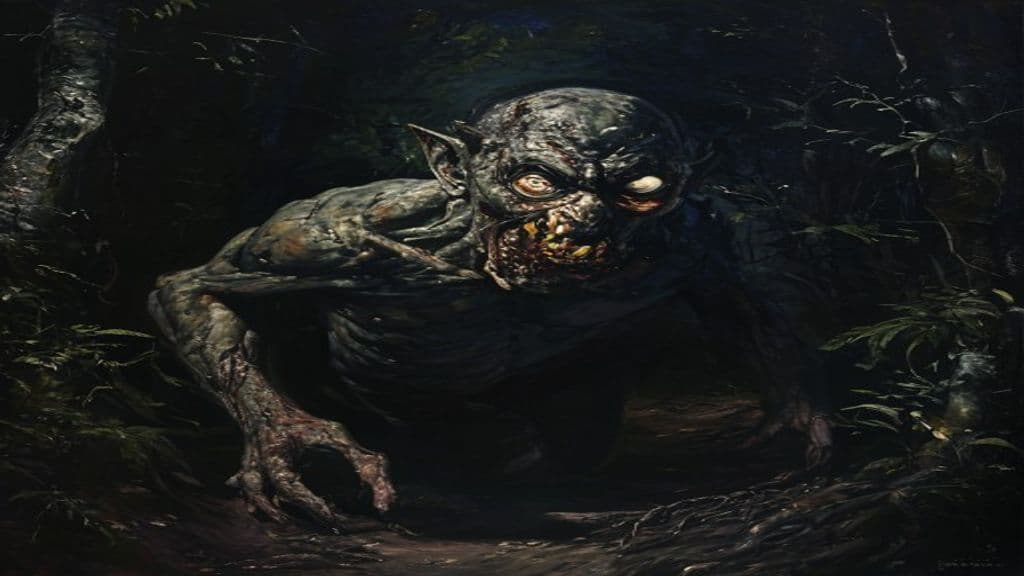
Pishacha
Flesh-eating spirits of Hindu mythology that haunt cremation grounds and are associated with disease, madness, and possession. The lowest class of demon in the Vedic hierarchy.
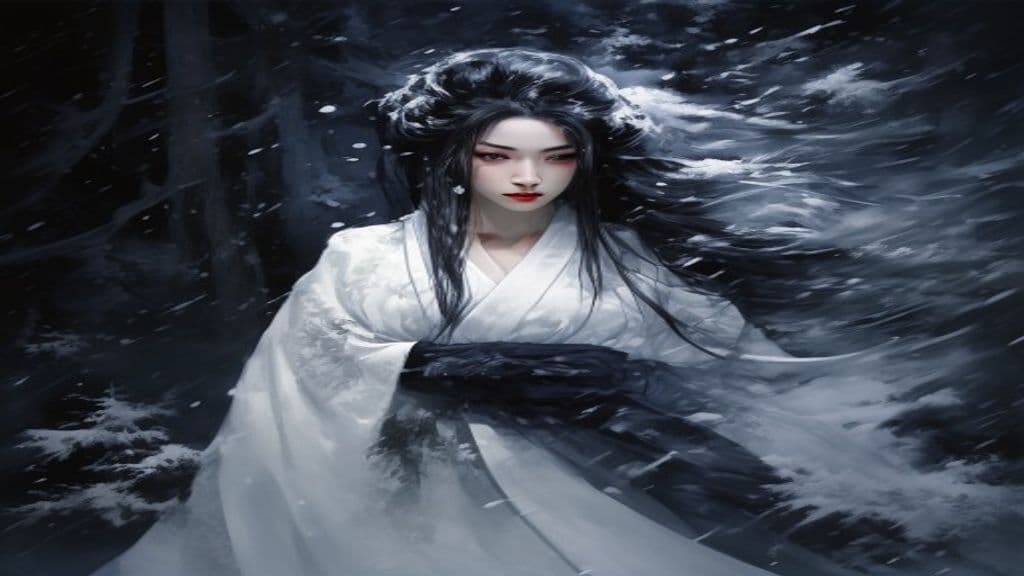
Yuki-onna
The Snow Woman of Japanese folklore — a spirit born of blizzards who appears to travelers lost in snowstorms. Beautiful and lethal, she can show mercy or bring death depending on her mood.

Rakshasa (Himalayan variants)
A Himalayan reception of the pan-Indian rakshasa motif: hostile or disruptive non‑human beings known from Sanskrit epic and Puranic literature, here noted where Himalayan sources and discussions intersect with the broader epic tradition. The supplied sources do not document distinct, well‑attested Himalayan folklore variants; the entry therefore presents primarily the epic/legendary profile as transmitted into Himalayan contexts in general references.
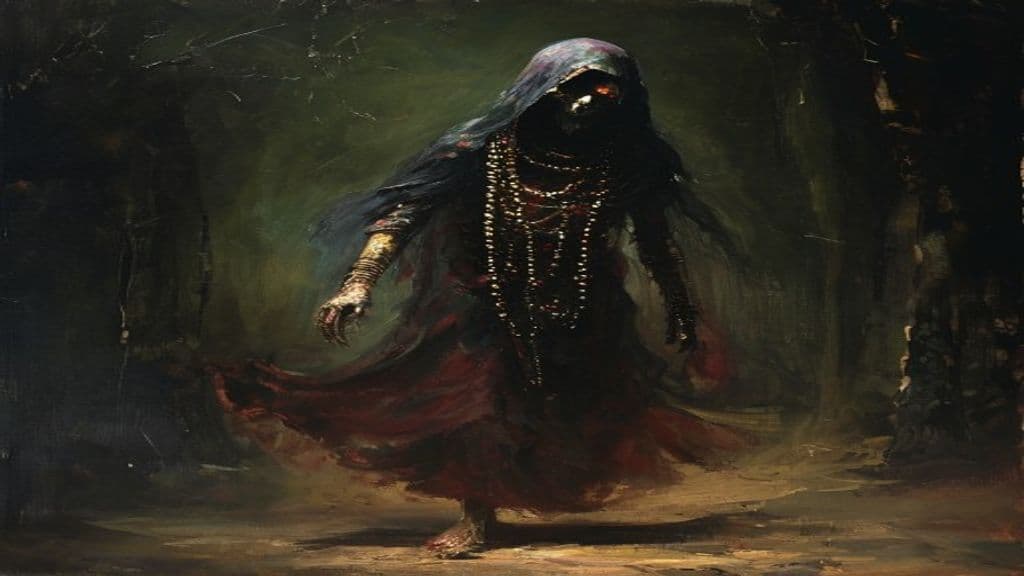
Bhoot (bhoota)
A bhoot (also bhoota, bhoot, bhut) is the culturally specific term across parts of the Indian subcontinent for a perturbed, restless spirit generally understood to be the ghost of a deceased person. Sources describe bhoots as arising when a person's death or post-death circumstances prevent them from moving on — for example violent death, unresolved affairs, or failures in funerary rites — and the term appears frequently in modern South Asian media and discussions.
Cat Grant
Catherine Jane "Cat" Grant is a fictional human character from DC Comics and its screen adaptations, portrayed as a prominent media professional — gossip columnist, on-air personality, manager and executive — whose journalism and public presence affect superheroes' public reputations and the institutions that surround them.
Cat Sídhe
A large black fairy cat of Irish and Scottish tradition with a white spot on its chest, who could steal a corpse's soul before burial if allowed to leap over it.
Cat sìth
A feline supernatural being in Celtic folklore, especially Scottish tradition, described in some accounts as a large black cat with a white spot on its chest associated with the fairy/otherworld; alternative traditions identify it as a witch able to transform into a cat up to nine times.
Catalina Lercaro
Catalina Lercaro is the legendary specter associated with a 16th‑century member of the Genoese Lercaro family who allegedly died by suicide in the family mansion (Casa Lercaro) in San Cristóbal de La Laguna, Tenerife. Tradition holds her ghost walks through the rooms of the mansion (now the Museum of History and Anthropology of Tenerife) and she is widely regarded in local lore as the Canary Islands' most famous ghost.
Catbus (Nekobasu)
Catbus (Japanese: ねこバス, Nekobasu) is a fictional character created by Hayao Miyazaki for the Studio Ghibli film My Neighbor Totoro. Within the film's imagined ecology it is a large, animate cat whose hollow body functions as a passenger bus and which interacts directly with the child protagonists alongside other invented forest spirits.
Catellus
Catellus (Welsh: Kadell map Geraint) is a legendary, pseudo‑historical king of the Britons attested in Geoffrey of Monmouth's Historia Regum Britanniae and in Welsh redactions (Brut y Brenhinedd). He functions as a dynastic/chronological figure used to order genealogies rather than as a supernatural being.
Cath Palug
A monstrous, unusually large cat from Welsh myth later adapted into continental medieval romance (Anglo‑Norman/Old French) as Chapalu/Capalu. Associated with islands, lakes, bogs, and shoreline liminal zones, it functions as a localized animal horror that confronts named heroes (Welsh Cai/Kay; continental sources often transfer the opponent to King Arthur).
Catherine of Alexandria
A Christian virgin-martyr venerated in Eastern Orthodox, Roman Catholic, Anglican and other Western traditions. Presented in hagiography as a learned princess of Alexandria who debated pagan philosophers, suffered miraculous events during imprisonment and execution, and became the focus of a widespread cult centered on Saint Catherine's Monastery at Sinai and numerous liturgical commemorations and artistic depictions.
Catigern
Catigern is a legendary/historical early medieval British warrior-prince remembered chiefly for dying fighting the Saxons at the Battle of Epsford/Aylesford. He appears in medieval chronicles and genealogies (notably the Historia Brittonum and various Welsh pedigrees) as a son or kinsman within ruling lineages and is used in later tradition for dynastic legitimation and local topographical memory.
Catillus
Catillus is a legendary Arcadian founder-figure in Roman tradition. An Arcadian named Catillus (son of Amphiaraus) and his sons — one also named Catillus, Coras, and Tiburtus — are said to have fled Thebes, settled the Aniene plateau, driven off prior inhabitants, and founded Tibur (Tivoli); the younger Catillus and Coras later appear in Virgil's Aeneid as allies of Turnus against Aeneas.
Catoblepas
A legendary Greco‑Roman monstrous beast reported from Ethiopia: a mid‑sized, sluggish quadruped with a heavy head habitually pointed toward the ground and described in sources as possessing lethal properties expressed either as a deadly gaze or poisonous breath.
Catreus
Catreus is a mortal figure in Greek myth, presented in mythographic sources as the eldest son of King Minos and Pasiphaë and a king of Crete whose life is shaped by an oracle predicting that one of his children would kill him; efforts to avoid that fate, and variants of the tale, link him etiologically to later heroic genealogies.
Community Record
- [1]Catgirl — Wikipedia. Wikipedia contributors. 'Catgirl.' Wikipedia, The Free Encyclopedia. https://en.wikipedia.org/wiki/Catgirlwiki
- [2]Anthropomorphic cat — Wikidata entry Q27303706. Wikidata entry Q27303706, 'anthropomorphic cat.' http://www.wikidata.org/entity/Q27303706wiki
- [3]Clare The Catgirl Favorites (Archive item). Archive.org item 'Clare The Catgirl Favorites.' https://archive.org/details/fav-clare_kittyother