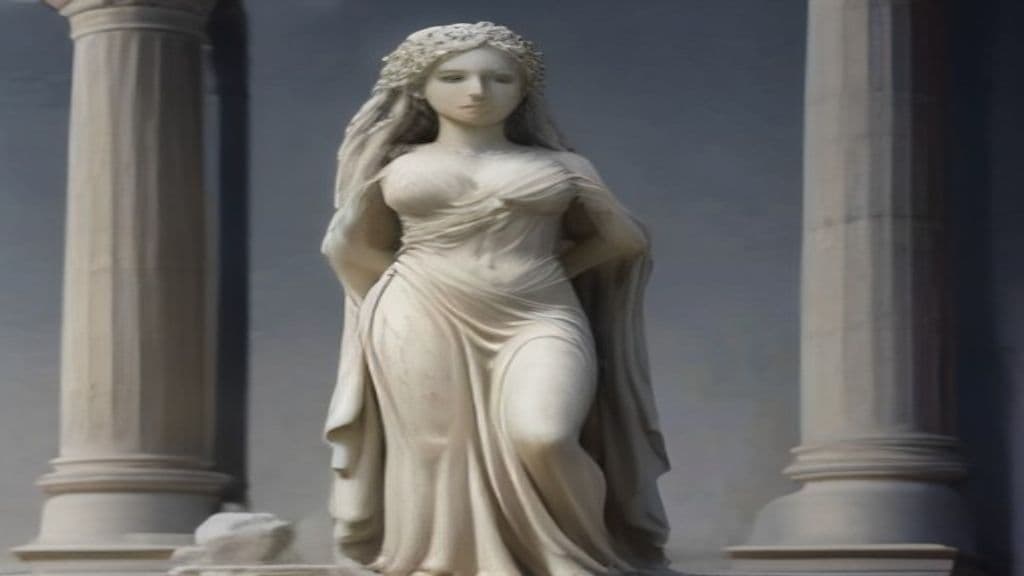
Chloris is attested in Greek mythographic lists and summaries as one of the fourteen children of Amphion and Niobe (the Niobids), situating her in the Theban royal household and the tragic cycle surrounding Niobe's boast and the subsequent slaying of most of her children. Some traditions and later compilers identify or conflate this Chloris with a woman named Chloris who became the wife of Neleus of Pylos; Hyginus, in listings of genealogical connections, names Periclymenus as son of Neleus and Chloris, daughter of Amphion and Niobe, reflecting one strand that integrates the Theban Chloris into Pylian lineage. Other sources (e.g., Apollodorus summaries and modern tertiary accounts) list Chloris among the Niobids without necessarily linking her to Neleus, showing variant local traditions and name-duplication common in Greek mythic repertories.
The available sources do not preserve any physical or iconographic description of Chloris of Thebes. She is known only by name and genealogical placement in lists and summaries; no surviving account in the cited materials describes her clothing, bodily features, or distinguishing attributes. Her identity in the sources is established through familial labels (daughter of Amphion and Niobe; in some traditions wife of Neleus) rather than visual depiction.
The cited materials attribute no supernatural powers or special abilities to Chloris. She functions as a mortal genealogical figure in Greek mythic narratives: a named child in the Niobid group and, in some traditions, a wife and mother within Pylian genealogy. Her role in the sources is primarily connective and memorial — preserving lineage ties between Theban and, in some accounts, Pylian houses — rather than active agency or miraculous deeds. The traditions preserve her as part of family lists (Apollodorus-style compilations; Hyginus' genealogical notes) and do not ascribe magical behavior or cultic functions.
Celaeneus
Celaeneus (Ancient Greek Κελαινεύς, romanized Kelainéus) is a named Mycenaean princely figure of the Perseid genealogies: a son of King Electryon and Anaxo, brother of Alcmena and several princes, and one of the Electryon sons killed in the feud with the sons of Pterelaus. He functions in the tradition as a mortal genealogical figure whose death helps set the stage for the exile of Amphitryon and the circumstances of Heracles' birth.
Cestrinus
Cestrinus (Ancient Greek Κεστρῖνος) is a mythic mortal figure from Greek tradition, presented as a son of Helenus (and in some accounts Andromache) who, according to the sources, seized and settled territory north of the River Thyamis and gave his name to the district Cestrine in Epirus. He functions as an eponymous founder in post‑Trojan War genealogical narratives; an alternative, less‑attested tradition identifies him with a king of the Cimmerian Bosporus called Genger.
Cleolla
Cleolla (Κλεόλλα, also spelled Cleola) is a mortal figure in Greek mythic genealogies, presented as a member of the house of Pelops and variously placed as wife, mother, or grandmother in competing accounts of the ancestry of Agamemnon, Menelaus, and Anaxibia.
Cratieus
Cratieus is a mythological human figure attested in Greek genealogical traditions. He is recorded primarily as the father of Anaxibia in one lineage that links her to Nestor; no narrative deeds, divine status, or ritual role are ascribed to him in the supplied sources.
Timalcus
Timalcus (Ancient Greek: Τίμαλκον) is presented in Greek mythic genealogies as a Megarian prince, son of Megareus and Iphinoe, known primarily as a member of that royal house and as being killed by Theseus during a campaign with the Dioscuri against Aphidnae. Sources are brief and genealogical, and a competing tradition noted by Alcman casts doubt on Theseus' presence in the episode.
Chiwen
Chiwen (蚩吻 / 鴟吻 / 鴟尾 / 螭首) is a Chinese mythic dragon‑child figure and an associated class of roof ornament placed at the ends of roof ridges. As one of the traditional Nine Sons of the Dragon, Chiwen is represented in architecture as a dragon‑head/fish‑body finial that symbolically 'swallows' ill influences and functions as a protective architectural device (waterspout, finial) to guard buildings against fire, floods and other hazards.
Chiyou
Chiyou (蚩尤) is a polyvalent figure in Chinese and related ethnolinguistic traditions: a legendary tribal leader of the Nine Li (九黎) people, a formidable martial/numinous power associated with storms and metal/weaponry, and an ancestor or ritual deity in some southern ethnic cults (notably Miao/Hmong). He is best known as the principal antagonist of the Yellow Emperor in the Battle of Zhuolu narrative and as an incorporated figure in later ritual and material culture.
Chloris
Chloris (Greek Χλῶρις Chlōris) is a personal name borne by multiple female figures in Greek myth—nymphs, queenly wives, and mortal women—whose name derives from the adjective for green/pale and evokes vegetal/fresh imagery. The sources treat Chloris not as a single, uniform supernatural species but as several mythic persons appearing in different genealogies and narratives.
Chloris of Pylos
Chloris of Pylos is a figure in Greek mythic genealogy presented in the supplied sources as a Minyan princess, daughter of Amphion (and in one source, of Amphion and Niobe), wife of Neleus, and mother of Periclymenus. Her attested role is genealogical and dynastic rather than narrative or supernatural.
Chlorus
Chlorus is a mythic genealogical figure attested in brief classical/compilatory sources of Greek tradition. He appears as a link in a lineage (son of Pelasgus, father of Haemon, ancestor of Thessalus) used etiologically to connect eponyms such as Haemonia and Thessaly to named progenitors.
Chnuphis (Kneph / Kmeph)
Chnuphis (Egyptian Kneph or Kmeph) is an ancient Egyptian motif of divinity attested in religious art and later reused in Greco‑Roman Late Antique magical and gnostic contexts. In Egyptian iconography it appears as a winged egg, a globe encircled by serpents, or the serpent form of Amun (Kematef); in Late Antiquity the Greek theonym Chnuphis commonly denotes a lion‑headed serpent figure on magical artifacts.
Chochmah
Chochmah (Heb. חָכְמָה; also Chokmah/Chokhmah) is a metaphysical principle in Jewish Kabbalistic thought: the second of the ten sefirot, described as the primordial point of divine wisdom — the first flash of conscious intellect that issues from Keter and becomes intelligible through Binah.
Community Record
- [1]Chloris (daughter of Amphion of Thebes) — Wikipedia. Wikipedia: 'Chloris (daughter of Amphion of Thebes)'wiki
- [2]The Library of Apollodorus (genealogical summaries) — archive reference materials. Apollodorus, compendial genealogical summaries (as preserved in compilation sources listed)literary
- [3]The Fables of Hyginus — Argonauts / genealogical listings (archive). Hyginus, genealogical listings naming 'Periclymenus, son of Neleus and Chloris, daughter of Amphion and Niobe' (as summarized in the provided extract)literary