Chrysothemis appears in the post-Agamemnon narrative cycle as a daughter of Agamemnon and Clytemnestra. She is attested in classical tragic tradition—most notably in Sophocles' Electra—and in later dramatic and operatic adaptations of the Electra story. The surviving sources portray her as part of the royal household of Argos/Mycenae after Agamemnon's murder, occupying the domestic role of daughter and sister rather than originating any separate cult or supernatural identity.
No canonical physical description is preserved in the cited sources. In the dramatis personae and stage directions of Sophocles' Electra she appears as an ordinary human woman and performs everyday actions (for example, leaving to place offerings at Agamemnon's grave). Modern productions and cast lists treat Chrysothemis as a female stage role but provide no authoritative, detailed iconographic description in the cited materials.
Chrysothemis possesses no supernatural powers in the cited tradition; her notable capacities are social and psychological. In Sophocles' Electra and in derived dramatic/operatic treatments she mourns her father's death, participates in funerary practice (taking offerings to Agamemnon's grave), and urges conciliation with her mother Clytemnestra and Aegisthus as a strategy of self-preservation and household continuity. She embodies a contrasting moral stance to Electra's vengeful resolve.

Electra
Electra (Ancient Greek: Ἠλέκτρα, Ēléktrā) is a Mycenaean princess in Greek myth and drama, daughter of Agamemnon and Clytemnestra, whose primary role across Aeschylus, Sophocles, and Euripides is as an avenger of her father's murder and a focal figure for questions of filial duty, revenge, and ritual consequence.
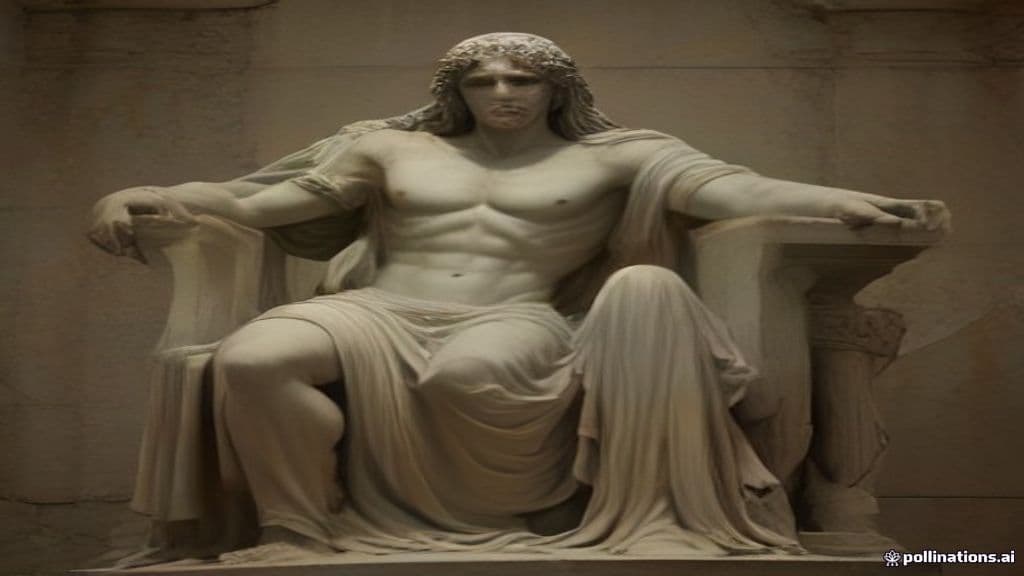
Orestes
Orestes (Ancient Greek: Ὀρέστης) is a mythic Greek prince and later king, son of Agamemnon and Clytemnestra, whose avenging of his father's murder by killing Aegisthus and Clytemnestra leads to pursuit by the Erinyes and a landmark divine-legal resolution (the trial on the Athenian Acropolis). His narrative explores guilt, divine command, ritual purification, and the transition from private vengeance to civic justice.

Clytemnestra
Clytemnestra is a mortal queen of Mycenae in Greek epic and tragic drama, best known for her role in the murder of her husband Agamemnon and for precipitating the cycle of familial vengeance that follows. She appears across Homer and the tragedians (Aeschylus, Sophocles, Euripides) as a politically capable, scheming royal whose actions raise questions of justice, revenge, and social order.

Aegisthus
Aegisthus (Greek Αἴγισθος, Aigisthos) is a mortal member of the House of Atreus in Greek myth who, born of incestuous circumstances and raised by shepherds and a goat, participates in dynastic murder and usurpation — notably the slaying of Atreus in some accounts and the conspiracy (with Clytemnestra) that results in Agamemnon's death — and is later killed by Orestes, an episode that figures in narratives about inherited guilt, vengeance, and the transition from private retribution to public justice.
Community Record
- [1]Chrysothemis - Wikipedia. Wikipedia contributors, 'Chrysothemis,' Wikipedia, The Free Encyclopedia.wiki
- [2]Electra (Sophocles play) - Internet Classics Archive / MIT Classics. Sophocles, Electra, translation and text at The Internet Classics Archive (MIT).literary
- [3]Electra (Sophocles play) - Wikipedia. Wikipedia contributors, 'Electra (Sophocles play),' Wikipedia, The Free Encyclopedia.wiki
- [4]Elektra (opera) and modern performance records (Archive recordings). Performance archive: Richard Strauss, Elektra (Baden-Baden festival recording).other
- [5]Elektra (opera) - Wikipedia. Wikipedia contributors, 'Elektra (opera),' Wikipedia, The Free Encyclopedia.wiki