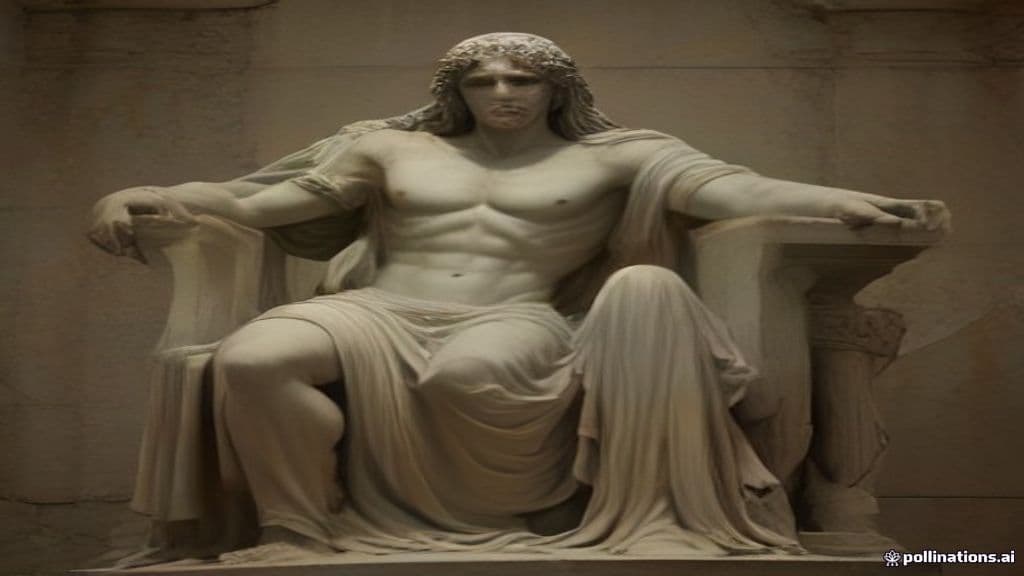
Son of Agamemnon and Clytemnestra of the house of Atreus, Orestes is raised outside Mycenae during the period of his father's absence and murder. Various sources place his upbringing in exile (e.g., in some traditions with Strophius at Phanote on Mount Parnassus). Prompted by Electra and aided by his cousin Pylades, he returns and avenges Agamemnon's death by killing Aegisthus and Clytemnestra, an act that precipitates divine and chthonic repercussions in the post-Trojan War mythic period.
The provided sources give no sustained physical description; Orestes is identified by genealogy and social role (son of Agamemnon and Clytemnestra, brother of Electra and Iphigenia) and later as king of Mycenae and, in some traditions, of parts of the Peloponnese. Classical authors portray him through actions and legal-religious circumstances rather than bodily detail.
Orestes possesses no innate supernatural powers in the cited materials; his significance derives from mortal actions (the revenge killings), obedience to divine commands in some versions (Apollo's instruction), endurance of supernatural pursuit (the Erinyes drive him to madness), and participation in ritual-legal processes (seeking sanctuary, being tried before Athena and twelve judges, and receiving ritual cleansing/propitiation). In Euripides' variant he undertakes a mission to Tauris to carry off a cult statue of Artemis and is involved in recognition scenes that secure escape.
Weaknesses
- conditionHaunted by the Erinyes (madness)
Wards
- ritualSanctuary and supplication at temples (e.g., Delphi)
- ritualFormal trial and adjudication before Athena and twelve judges (Acropolis)
- ritualPropitiation and cult foundation for the Erinyes (conversion to the Eumenides / Semnai Theai) and dedication of altars (e.g., altar to Athena Areia)
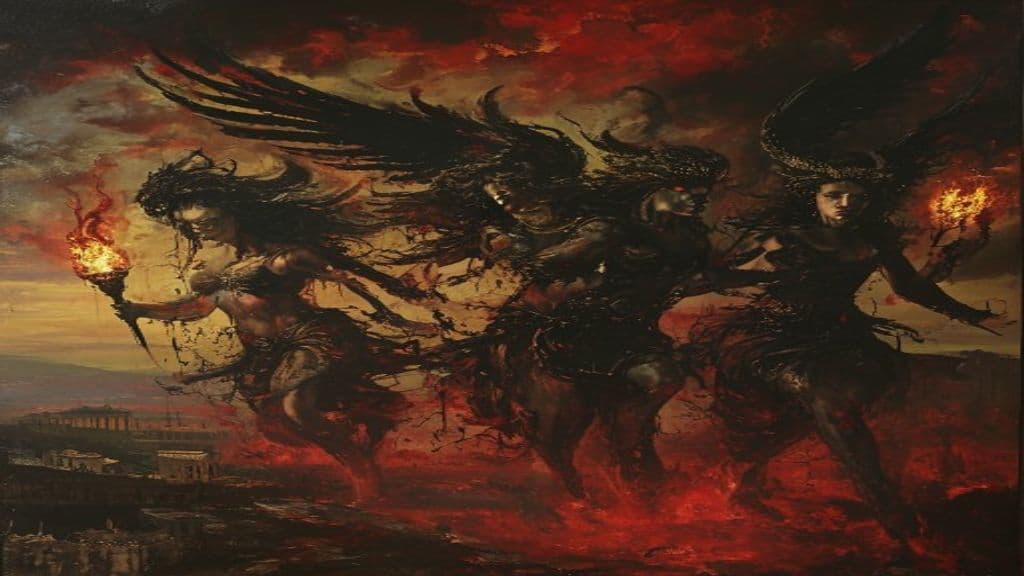
Erinyes
The three avenging Furies of Greek myth — Alecto, Megaera, and Tisiphone — who pursued and tormented those guilty of crimes against blood kin, especially murder of family members.
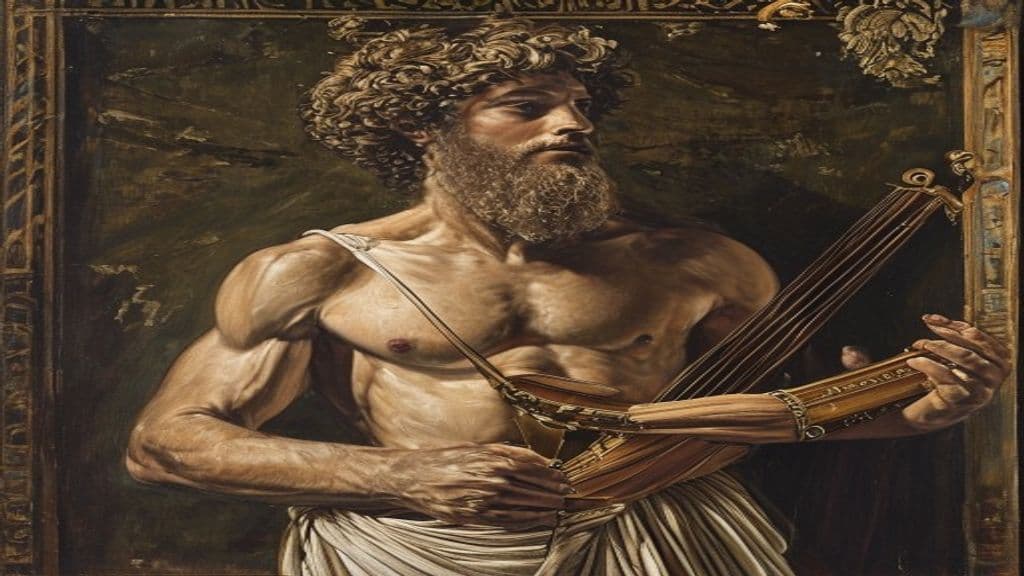
Apollo
Olympian deity of ancient Greek religion associated with prophecy, healing, music, archery, purification, and civic order. Principal patron of the Delphic oracle, protector of youth and flocks, and ambivalently both healer and bringer of plague.

Athena
Athena is a major ancient Greek goddess associated with wisdom, handicraft (notably weaving), and warfare; she serves as a tutelary protector of cities—most prominently Athens—and is central to myth, cult, and civic identity in the Greek world.

Artemis
Artemis is an ancient Greek goddess of hunting, the wilderness and wild animals, transitions (especially childbirth and puberty), vegetation, and chastity. Twin sister of Apollo and daughter of Zeus and Leto, she functions as a protector of young children and maidens while also capable of inflicting disease or punishment for transgressions against her sacred laws.
Community Record
- [1]Orestes - Wikipedia. Wikipedia: 'Orestes... was the son of Agamemnon and Clytemnestra' and summaries of matricide, pursuit by the Furies, refuge at Delphi, and the Aeschylus trial.wiki
- [2]Wikidata entry for Orestes. Wikidata: entry noting Orestes as a male given name and mythic figure.other
- [3]Summaries of Aeschylus' Eumenides and Euripides' Tauris episodes (compiled in research notes). Research summaries: Aeschylus' account of trial on the Acropolis (Athena's vote, conversion of Erinyes to Eumenides) and Euripides' Tauris episode (mission to carry off Artemis' statue, recognition with Iphigenia).literary