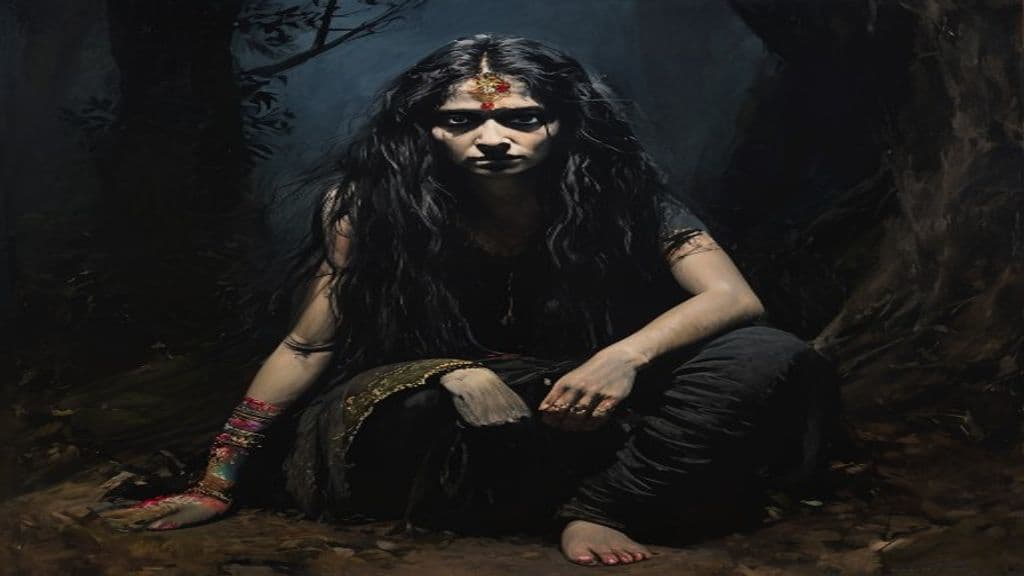
In the materials provided the chudail/churel is described as a class of female revenant that arises after a woman's violent, unjust, or traumatic death (for example rape, murder, or mistreatment). Rather than a single named individual, the term denotes a recognizable type of supernatural female being whose return is culturally framed as response or reparation for unresolved transgression; modern cinematic plots (e.g., the film Chudail No. 1) dramatize the revenant returning to possess and avenge her death when human institutions fail.
Folkloric and cinematic descriptions commonly depict the chudail as a woman with long, scruffy hair and feet turned backwards — visual markers widely recognized in South Asian portrayals. Cinematic and regional variations exist: films and popular media adapt the figure’s look for horror, comic, or sympathetic effect, so appearance can vary by production and local storytelling.
Across folklore commentary and film summaries the chudail is portrayed as a vengeful agent who haunts or attacks those responsible for her death, can possess living persons (film example: the vengeful ghost possesses a wife to kill perpetrators), and disrupts social life (marriages, relationships, community order). Academic analyses emphasize that haunting, possession, and targeted vengeance are common portrayals in both folk narratives and contemporary cinema rather than a single canonical power-set.
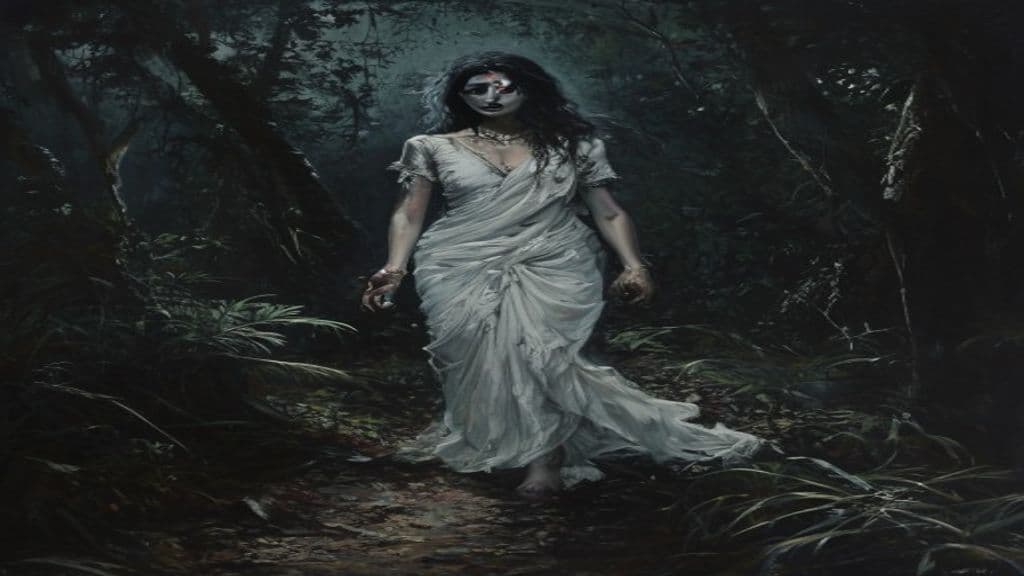
Churel
The vengeful ghost of a woman who died during childbirth, pregnancy, or postpartum, unable to pass on due to the injustice of her death. She preys on young men of her family line.
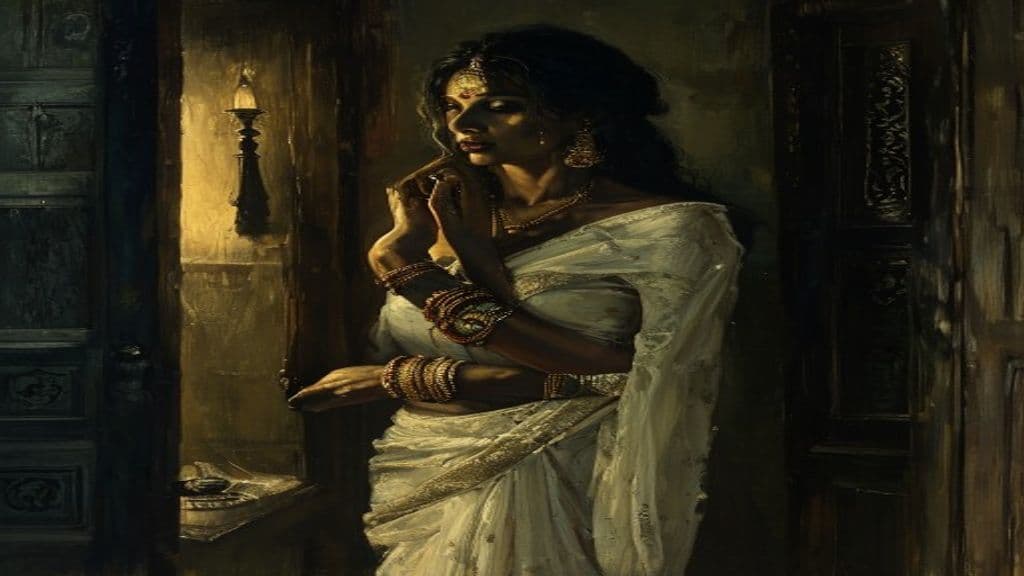
Shakchunni
Bengali ghost of a married Brahmin woman who died before her husband — identifiable by her white sari and conch-shell bangles, she possesses living married women and refuses to relinquish domestic life.
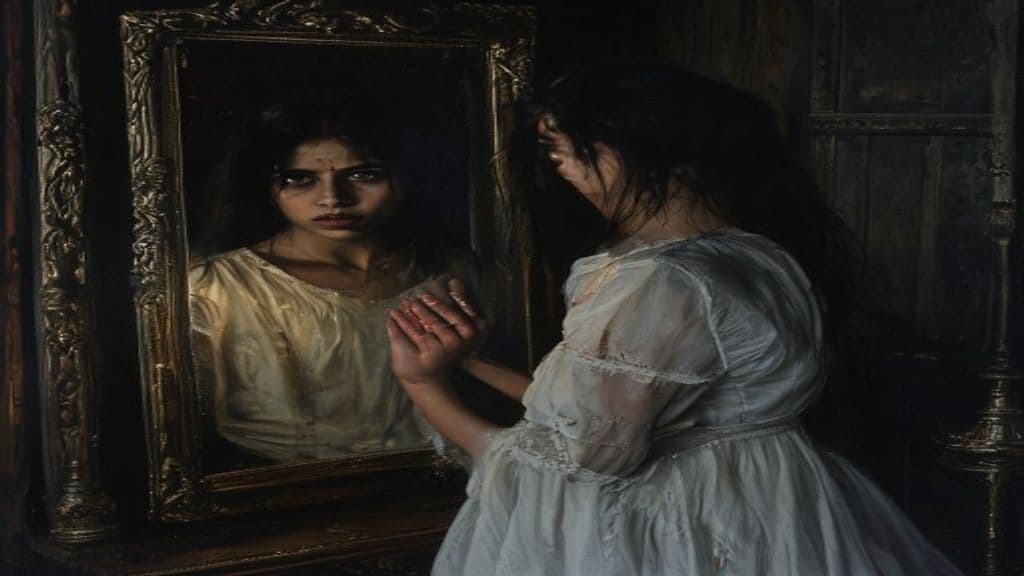
Petni
The female equivalent of the Bengali bhoot — the ghost of a young woman who died unmarried or before fulfilling her expected life. The Petni is more volatile and less predictable than the Shakchunni (married woman's ghost), driven by the particular bitterness of a life foreclosed rather than interrupted.
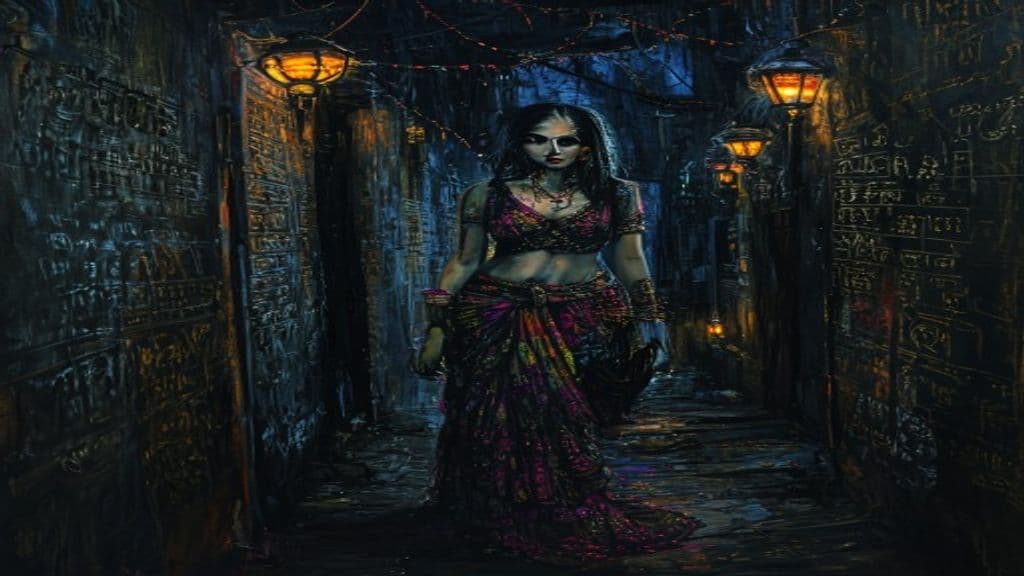
Stree
A vengeful female spirit from Chanderi who abducts men during festival nights. Warded off by the inscription 'O Stree, kal aana' — her legend, still practised on walls across Madhya Pradesh, inspired the 2018 Bollywood horror-comedy.
Community Record
- [1]Chudail No. 1 (film) — Wikipedia. Wikipedia, 'Chudail No. 1' (film summary noting the vengeful ghost possesses Vicky's wife and murders the goons)wiki
- [2]Churel — Wikipedia. Wikipedia, 'Churel' (entry listing regional occurrence and variant names Petni and Shakchunni)wiki
- [3]From Chudail to Devi: Analysing Death, Evil, and Monstrous Femininity in Bulbbul. Revenant journal article (academic commentary describing the chudail as 'a woman with scruffy long hair and backwards-turned feet' and analyzing its function in cultural discourse on gendered violence)academic
- [4]How Is The Representation Of 'Chudail' In Bulbbul Different From Bhool Bhulaiyaa's Monjolika?. Feminism in India article (popular-analytical commentary on modern cinematic representations and the figure's relation to social critique)other
- [5]Stree 3 in Hyderabad: Is a ‘chudail’ roaming around near RGIA? - Telangana Today. News article referencing contemporary popular uses of the chudail motif in media and local discourseother