In classical Greek cultural vocabulary the word komos named the nocturnal revel or procession; from that social phenomenon a personified spirit, Κῶμος (Kōmos), appears in later antiquity as one of the minor attendants of Dionysus who embodies the mood of the drinking-bout. This figure is attested in descriptions of Bacchic retinues in which Comus appears alongside satyrs, bacchantes, Gelos (Laughter) and Silens. In the early modern reception John Milton dramatically reinvents Comus for his 1634 masque, giving him a literary genealogy (Milton names him son of Bacchus and Circe) and recasting the personification into an individual tempter who kidnaps and attempts to seduce a virtuous lady, thereby transforming a communal spirit into a moral antagonist within an allegorical drama.
Classical descriptions (summarising Philostratus) represent Comus as a youthful Bacchic figure—a winged youth or child-like satyr—often depicted as a young man nearly unconscious from drink, wearing a wreath of flowers. Renaissance and Miltonic portrayals adapt and expand the imagery: Milton's masque and subsequent art visualize Comus as a licentious, seductive figure (artists such as Blake, Palmer, and Landseer produced postcard and painting motifs) sometimes combining satyric and human features and set in moonlit natural clearings.
In classical context Comus functions as the embodiment and instigator of binge-drinking, nocturnal revels and the looseness of social restraint characteristic of komos; he 'leads Gelos and Komos' among Dionysus's mixed throng. In Milton's masque the figure is dramatized as an agent of temptation and enchantment: he attempts to seduce and corrupt a kidnapped Lady and is credited in the drama and its pictorial captions with placing her under a 'spell.' Sources limit claims of magical casting to Milton's literary treatment rather than to ancient cult practice.
Weaknesses
- conditionmoral steadfastness (chastity and courage as depicted in Milton)
- otherintervention by benevolent supernatural aid (the nymph Sabrina in Milton)
- otherhuman kinship action (the Lady's brothers in Milton)
Wards
- conditionvirtue and prudence (literary means of resisting Comus's temptations in Milton)
- otherappeal to or arrival of a benevolent spirit (Sabrina releasing the Lady from her spell in artistic/literary tradition)
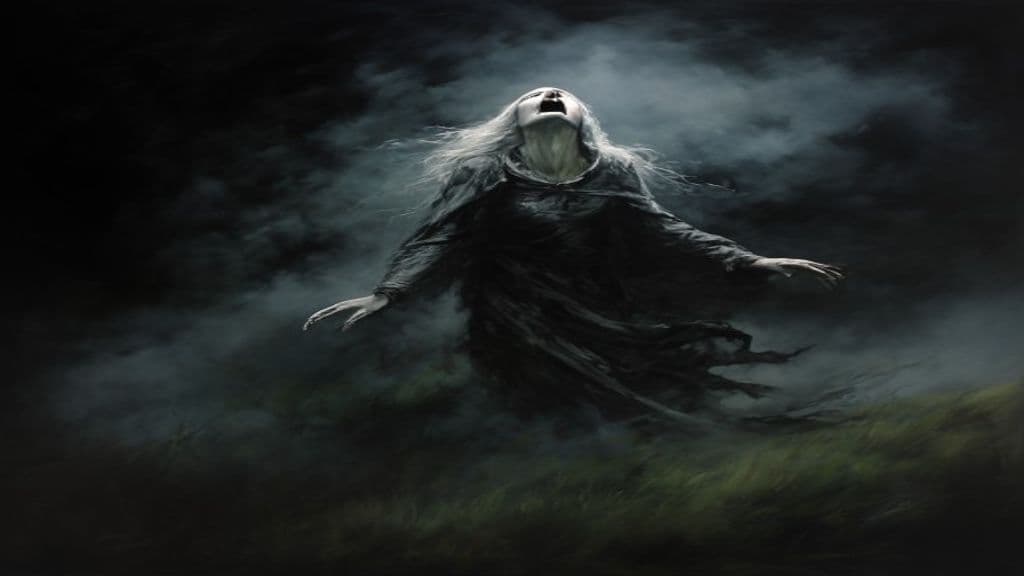
Banshee
A female spirit of Irish and Scottish folklore whose wail heralds an impending death in a family of Gaelic descent. Not a cause of death — a witness to it.
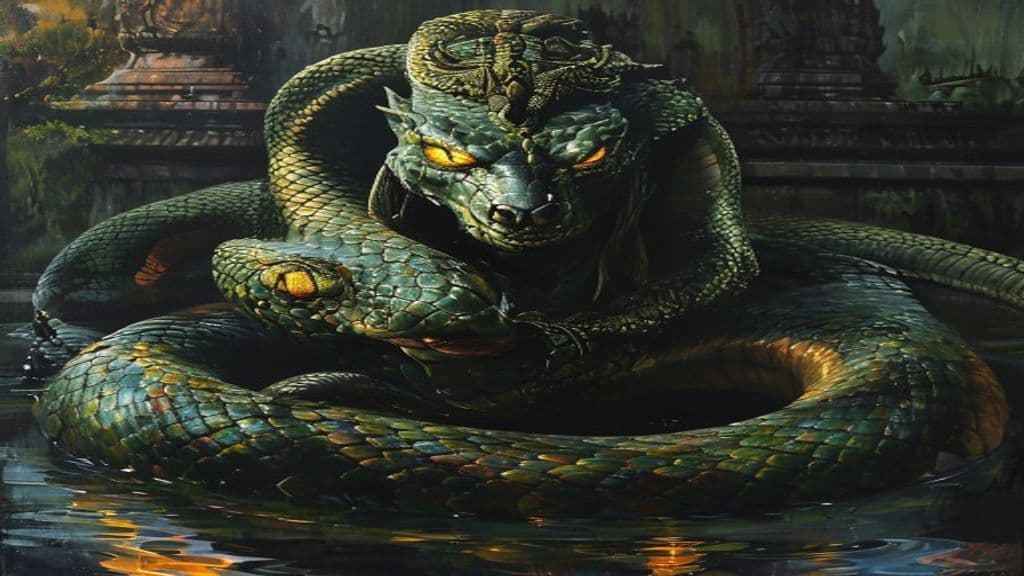
Naga
Divine serpent beings of Hindu, Buddhist, and Jain cosmology — powerful guardians of water, earth, and underground treasures. Revered as deities in South and Southeast Asia.

Djinn
The class of supernatural beings created from smokeless fire in Islamic cosmology — a parallel civilization to humanity, capable of belief or unbelief, with their own prophets, society, and judgment before God.
Community Record
- [1]Comus - Wikipedia. Wikipedia contributors, 'Comus,' Wikipedia, The Free Encyclopedia.wiki
- [2]Comus (Milton) - Wikipedia. Wikipedia contributors, 'Comus (Milton),' Wikipedia, The Free Encyclopedia.wiki
- [3]Comus by John Milton (Project Gutenberg). Milton, John. Comus (1634). Project Gutenberg edition.literary
- [4]Milton's Comus, by William Bell, M.A.. Bell, William. Commentary on Milton's Comus.literary
- [5]Blending Classical, Pastoral, and Religious Imagery in Comus. Critical essays on Milton's Comus (University of Maryland McLuhan Project).academic
- [6]John Ogborne and Richard Westall - Comus: Sabrina Releasing the Lady from her Spell. Art reproductions and captions relating to Miltonic Comus motifs.other
- [7]Twenty-Seven Drawings by William Blake (Project Gutenberg). Blake's designs for Miltonic subjects including Comus.literary