Mythic: In Greek myth Crantor is presented as a son of Amyntor who was given to Peleus and later is said to have been killed fighting alongside Peleus during the Centauromachy, situating him within the heroic cycle surrounding Peleus and the centaurs (Sources 6, 8). Historical: Crantor of Soli (Κράντωρ) was a 3rd‑century BC philosopher from Soli in Cilicia who studied in Athens in the Old Academy under Xenocrates, wrote influential ethical and exegetical works (including a consolatory treatise On Grief), and died in 276/5 BC (Sources 1, 4). Astronomical: The modern minor planet 83982 Crantor was named after the mythic figure; it orbits the Sun with a semi‑major axis of c. 19.5 AU and is characterized in dynamical studies as a transient Uranian co‑orbital (Sources 3, 7).
No systematic physical or iconographic description of the mythic or historical Crantor is preserved in the supplied sources. The mythic figure is attested only as a named mortal (son of Amyntor) and as a casualty of the Centauromachy (Sources 6, 8). The historical philosopher is described in biographical and literary terms (teacher, writings, death) but sources do not supply physical appearance or portraiture (Source 1). The astronomical Crantor is a small Solar System body whose appearance is given only by orbital elements in scientific descriptions (Sources 3, 7).
Mythic Crantor is attested as a mortal warrior companion of Peleus who fought against the centaurs and was killed in that battle; the sources present no supernatural powers (Sources 6, 8). Historical Crantor's 'abilities' are intellectual: he is credited as the first philosopher to write commentaries on Plato, authored moral literature including the popular work On Grief, and produced extensive commentaries noted by ancient biographers (Source 1). Astronomical Crantor's 'behavior' is dynamical: as 83982 Crantor it follows an eccentric orbit with a semi‑major axis of ~19.5 AU and exhibits transient co‑orbital dynamics with Uranus as described in dynamical studies (Sources 3, 7).
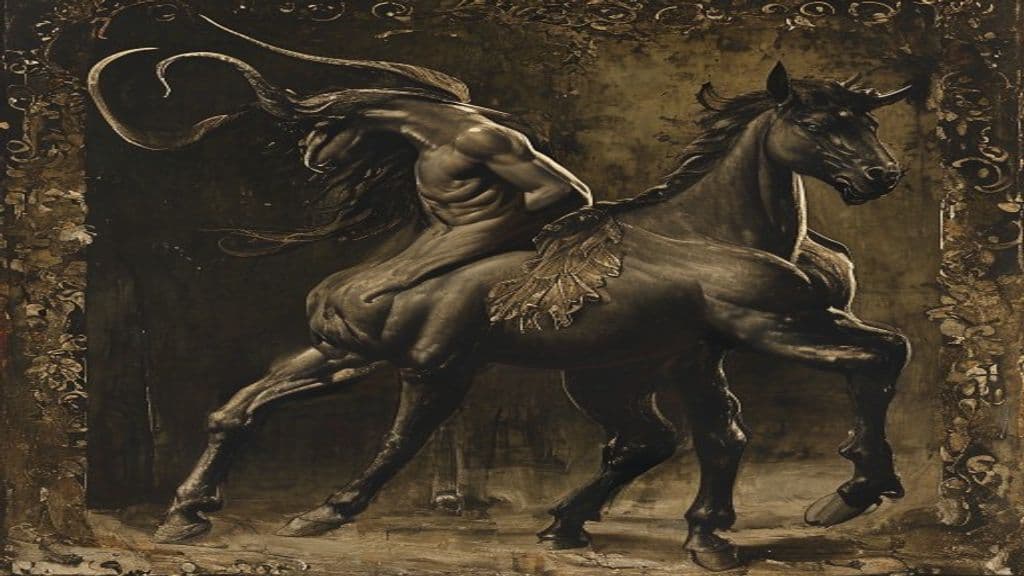
Centaur
A mythic hybrid from ancient Greek tradition with the upper body of a human and the lower body and legs of a horse. Centaurs appear as a tribal population associated with mountainous and wooded regions of Greece and embody tensions between human social order and untamed nature.
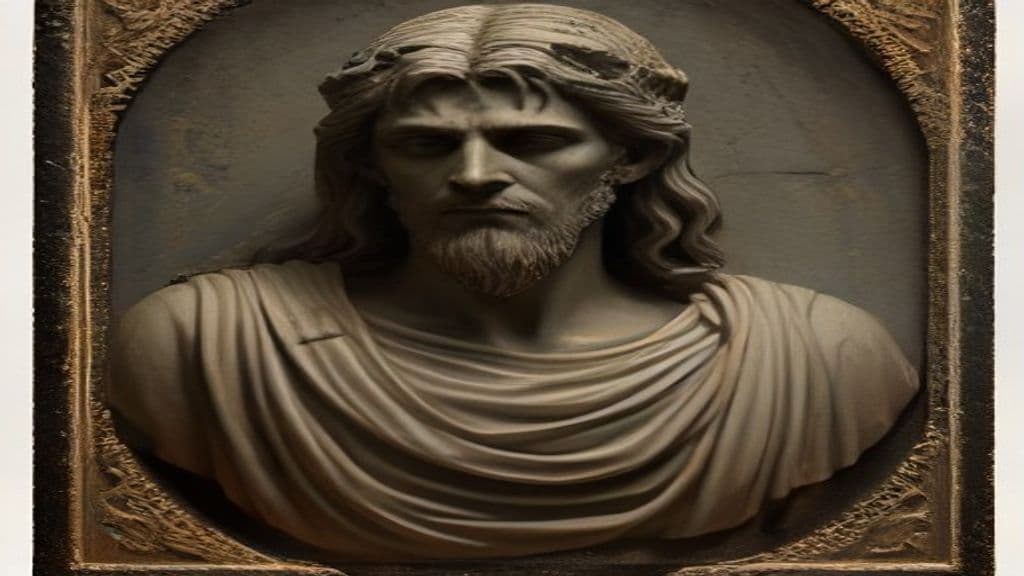
Peleus
Peleus (Ancient Greek Πηλεύς) is a mortal heroic king of the Greek heroic age—son of Aeacus and an oread, husband of the sea-nymph Thetis, and father of Achilles—figuring as a founder-ancestor and culted hero in later local practice. He is portrayed in epic narrative as a warrior-king, Argonaut, and participant in the web of marriages and purifications that link human rulership to divine beings.
Community Record
- [1]Crantor. Wikipedia, 'Crantor'wiki
- [2]Crantor (mythology). Wikipedia, 'Crantor (mythology)'wiki
- [3]83982 Crantor. Wikipedia, '83982 Crantor'wiki
- [4]Comparative orbital evolution of transient Uranian co-orbitals: exploring the role of ephemeral multibody mean motion resonances. de la Fuente Marcos & de la Fuente Marcos (arXiv): study of transient Uranian co-orbitals including 83982 Crantoracademic
- [5]The heirs of Plato : a study of the Old Academy, 347-274 B.C.. Dill, 'The Heirs of Plato' (study of the Old Academy; discusses Crantor of Soli)academic
- [6]Amyntor in Greek Mythology - Greek Legends and Myths. GreekLegendsAndMyths.com, 'Amyntor' (references Crantor as son of Amyntor)other