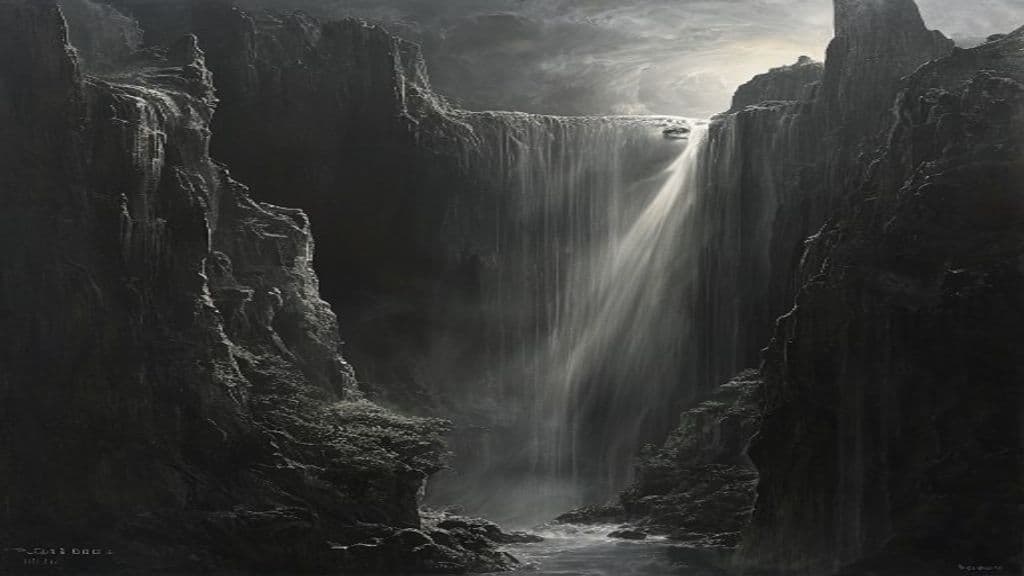
According to the provided mythological source material, Echo is classed as a mountain nymph in Greek mythology whose ability to speak was cursed so that she could only repeat the last words spoken to her. The supplied excerpts do not provide a fuller narrative, genealogy, cultic context, or ritual about this figure; the description in the available sources is therefore limited to her classification as a mountain nymph and the stated speech curse. Separately, the English word "echo" derives from Greek ἠχώ (ēchō) from ἦχος (ēchos) meaning "sound," establishing an etymological link between the technical term and the mythic proper name as presented in the sources.
For the acoustic phenomenon, there is no corporeal appearance: an echo is the perceptual return of sound caused by reflected sound waves; its "form" is acoustic (delay, strength) rather than visual. For the mythic Echo, the supplied sources identify her simply as a mountain nymph and do not provide physical description, clothing, or iconographic detail. Artistic or literary depictions beyond this identification are not documented in the provided material.
Acoustic echo: physically reflects sound waves so that a delayed copy of the original sound arrives at a listener; the delay is proportional to the distance to reflecting surfaces and the echo's strength may be measured relative to the direct sound. Echoes are exploited by animals (cetaceans and bats) for echolocation and by human technologies (sonar, echo sounding, ultrasonography). Mythic Echo: the only behavior recorded in the supplied mythological excerpt is the curse on her speech, leaving her able only to repeat the last words spoken to her; no further powers or behaviors are documented in the provided sources.
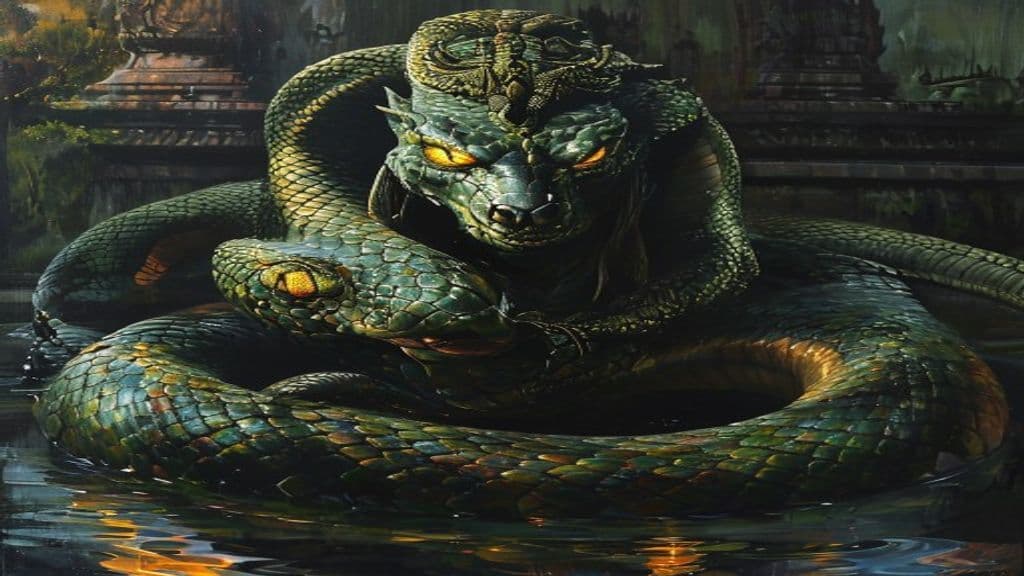
Naga
Divine serpent beings of Hindu, Buddhist, and Jain cosmology — powerful guardians of water, earth, and underground treasures. Revered as deities in South and Southeast Asia.
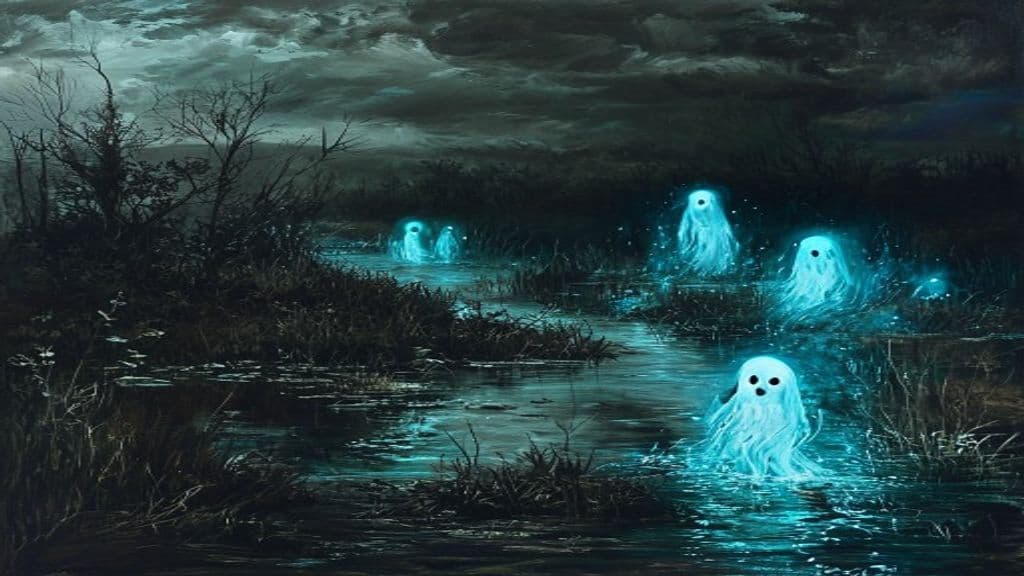
Will-o'-the-Wisp
A wandering light seen over marshy ground at night, leading travellers astray into bogs and fens. Possibly a spirit, possibly the soul of the unbaptised dead, possibly the devil himself.

Rusalka
Water spirits in Slavic folklore — the spirits of young women who died by drowning or suicide, bound to rivers and lakes. Beautiful and dangerous, they can bewitch men to their deaths.
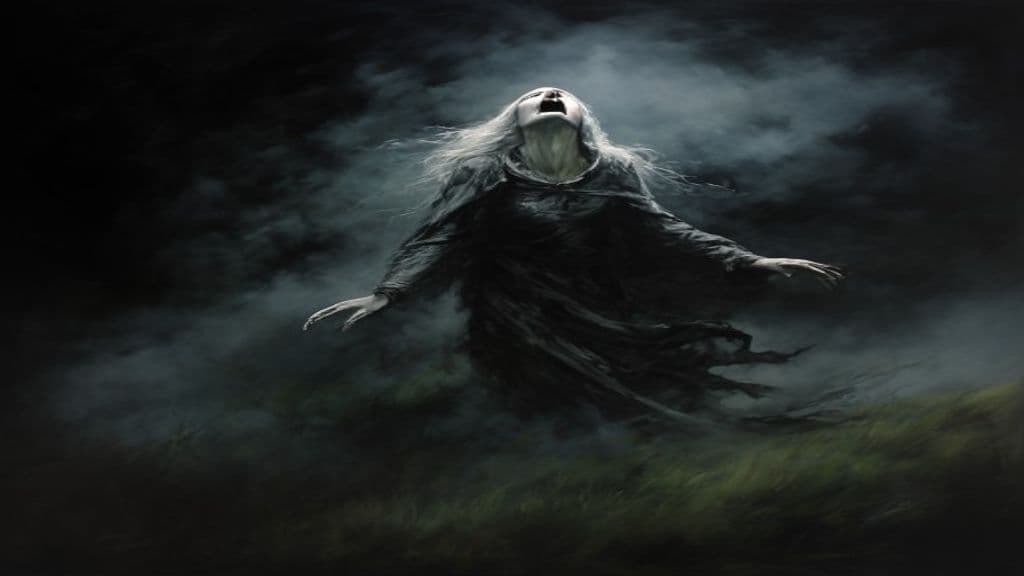
Banshee
A female spirit of Irish and Scottish folklore whose wail heralds an impending death in a family of Gaelic descent. Not a cause of death — a witness to it.
Abas
Abas (Ancient Greek: Ἄβας, gen.: Ἄβαντος) is not a single mythic being but a recurring personal name borne by multiple mortals and minor mythic figures in Greek epic and genealogical traditions — kings, founders, seers, warriors, attendants, a centaur, and a youth transformed by a goddess. The name is glossed in the sources as 'guileless' or 'good-hearted' and appears across Argive, Theban, Trojan, Euboean, and other local cycles.
Acheilus
Acheilus (also spelled Akheilos/Achilleus in some sources) is a minor figure of Greek myth described as a mortal son of Zeus who was transformed into a shark and thereafter called a 'shark-formed sea daimon.' Surviving summaries frame his story as a hubris metamorphosis: boasting about his beauty led a goddess to change him into a marine monster.
Achelois
Achelois (Ancient Greek: Ἀχελωίς, 'she who drives away pain') is an attributive name or epithet used in ancient Greek mythic contexts rather than a single, consistently characterized being. The term appears applied to several different figures — a surname of the Sirens, a general name for certain water-nymphs (Acheloides), and as the name of a daughter of Pierus — and functions within Greek naming practice as a descriptive label rather than a fixed ontological office.
Achilles (son of Zeus)
A minor figure in Greek myth named Akhilleus (Ancient Greek: Ἀχιλλεύς), presented in some traditions as a son of Zeus and the Lamia who was famed for irresistible beauty, won a beauty contest judged by Pan, and was transformed into ugliness by Aphrodite. This Akhilleus is distinct from the Homeric hero of the Trojan War.
Achiroe
Achiroe (variants Anchirrhoë, Anchinoë/Ankhinoe) is a minor Greek mythological figure: a Naiad associated with the river Nile, daughter of the river-god Nilus, who becomes the wife of the Egyptian king Belus and mother of mythic progenitors such as Aegyptus and Danaus (with some accounts also naming Cepheus and Phineus). She functions primarily as a genealogical link between river-divinity and royal lineages rather than as an active agent in surviving myths.
Acontes
Acontes (Ancient Greek: Ἀκόντην) is an Arcadian prince in Greek mythology, counted among the fifty sons of the impious King Lycaon. He appears in the Lycaon narrative as a participant in a sacrilegious meal prepared for Zeus (disguised as a peasant) and is destroyed by the god's lightning as punishment.
Actaea
Actaea is a named sea‑nymph in Greek mythic lists, identified in the provided sources as the personification or eponym of the seashore. She appears primarily in onomastic and catalogue contexts (lists of nymphs/Nereids) and has no surviving independent narrative or cultic rites attested in the cited material.
Acte (Akte)
Acte (Ancient Greek Akte, sometimes rendered Acme) is a divine personification in Greek myth: one of the Horae who embodies a particular hour of the day — specifically the hour of eating and pleasure, a designated afternoon work-hour — and functions chiefly as a temporal marker rather than an active mythic agent.
Adonia
The Adonia festival is a ritual mourning celebration for Adonis, the consort of Aphrodite in ancient Greek mythology. (Note: 1. The draft claims that the article is about a "ritual mourning celebration", but the source only mentions the festival as a mourning celebration. 2. Power tier should be Primordial or Ancient since )
Aega
Aega is attested in modern reference works as a mythological name from the Greek tradition; the string 'Aega' is used for more than one minor figure or entry in Greek mythic catalogs. Surviving provided sources give no coherent myth, iconography, or rituals tied to a single, identifiable deity or spirit named Aega.
Aegaeus
Aegaeus (Ancient Greek: Αἰγαῖος) appears in Greek myth as (1) a local river-god associated with the island called Scheria (traditionally associated with Corfu) and father of the nymphs Aigaiides and of Melite (who in some sources bore Heracles a son, Hyllus), and (2) as a toponymic surname/epithet of the sea-god Poseidon derived from the town of Aegae in Euboea.
Aegesta
Aegesta is an ancient place-name and eponym recorded in Greek and Roman sources as an alternate form of Segesta, an Elymian city in northwestern Sicily, and as a mythic personal name (Aegestus/Aegesta) tied to Trojan foundation legends rather than a supernatural being.
Community Record
- [1]Echo — Wikipedia. Wikipedia contributors. "Echo." Wikipedia, The Free Encyclopedia.wiki
- [2]Echo (Q207368) — Wikidata. Wikidata entry Q207368, "Echo."wiki
- [3]EoTrance #26 - Energy of Trance - hosted by DJ BastiQ (archive item illustrating modern cultural use of the word). Archive.org item listing tracks and show notes that use "Echo" in modern music contexts.other
- [4]Dictators gonna dictate (archive item illustrating modern cultural use of the word). Archive.org item featuring titles employing the term "Echo".other
- [5]Armin van Buuren - A State of Trance 970 [25.06.2020] (archive item). Archive.org program listing using "Echo/ Echoes" in cultural media.other