
In the sources assembled, El Silbón is presented primarily as a legend rooted in the Los Llanos region of Venezuela and known throughout the eastern Colombian plains. The figure is repeatedly characterized as a "lost soul" in popular summaries and encyclopedia-style entries; this framing places its origin in oral storytelling traditions of the Llanos rather than in an organized religious cosmology. Source accounts emphasize the story's linkage to open-plain landscapes and its role within lists and media projects that collect regional specters, showing how the tale functions as a locally emblematic fright legend transmitted through popular and digital media.
The provided corpus does not supply a consistent, detailed physical description beyond depicting El Silbón as an anthropomorphic or humanlike "lost soul" associated with whistling. Summary sources and popular retellings identify it as a figure or apparition encountered in the plains, but they do not furnish agreed-upon specifics such as dress, exact bodily attributes, or distinctive iconography in the excerpts given. Where fuller visual motifs exist in wider retellings, those details are not documented in the supplied material and therefore are not asserted here.
Within the available sources, El Silbón's defining trait is its whistle: the legend circulates around a distinctive whistling that announces the presence of this wandering lost soul. The accounts portray it as a spectral, roaming presence that frightens people in the Llanos; beyond whistling and general haunting behavior, the provided sources do not specify further supernatural powers, methods of harm, or elaborate behavioral rules.
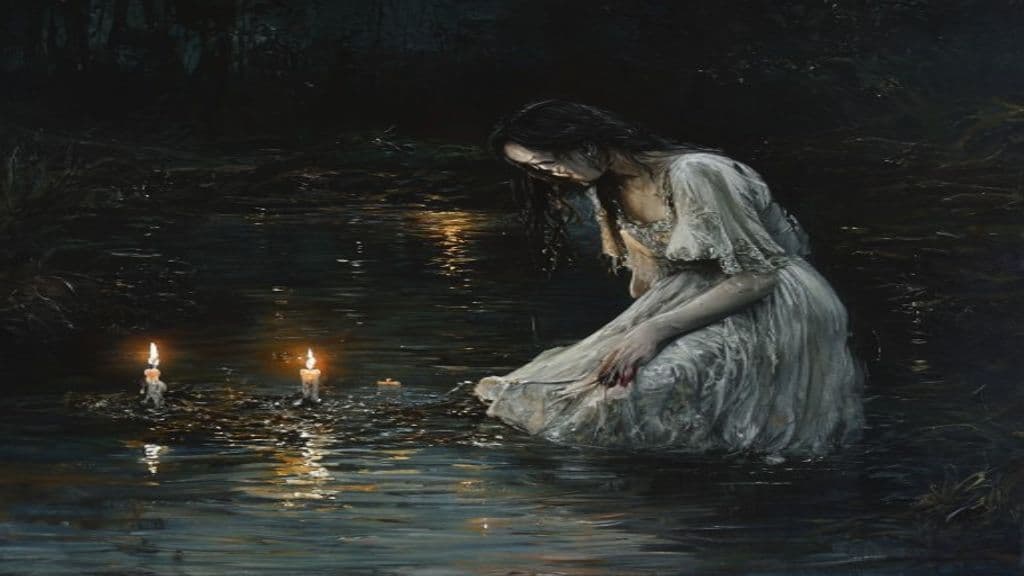
La Llorona
The Weeping Woman of Mexican folklore — the ghost of a mother who drowned her children and now wanders rivers and lakes, weeping for them and taking other children she finds at night.
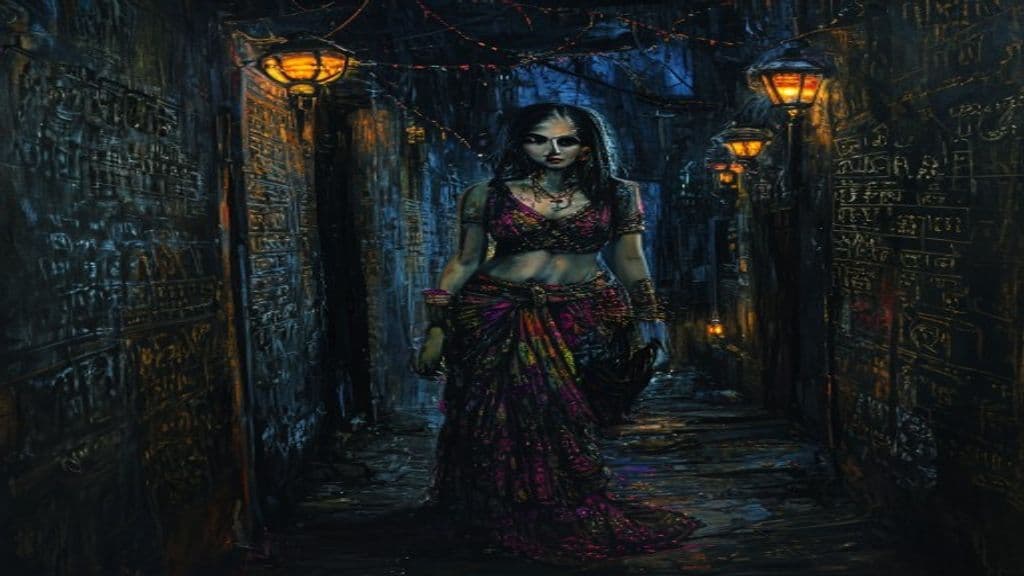
Stree
A vengeful female spirit from Chanderi who abducts men during festival nights. Warded off by the inscription 'O Stree, kal aana' — her legend, still practised on walls across Madhya Pradesh, inspired the 2018 Bollywood horror-comedy.
El Bilga Khatun
El Bilga Khatun was the wife of Ilterish (Ilterish Qaghan), founder of the Second Turkic Khaganate, and mother of Bilge Qaghan and Kul Tigin. She appears in the Orkhon inscriptions and later historiography as a political partner and honored elite figure of the 8th-century Göktürk polity.
El Borak (Francis Xavier Gordon)
El Borak is a fictional American adventurer created by Robert E. Howard, known by the Arabic epithet meaning "The Swift" for his exceptional speed, martial skill, and guile. Set in early 20th‑century pulp adventure contexts across Afghanistan and adjacent regions, he is portrayed as a legendary human operative whose reputation mediates tribal and political conflict rather than a supernatural being.
El Caganer
El Caganer is a small, conventional figurine placed within Catalan and neighbouring nativity scenes (pessebres), typically depicted squatting and defecating. It functions as a recurring, recognisable character in the constructed visual landscape of the Christmas nativity, carrying symbolic roles including fertility symbolism, social satire, and a playful family custom of hiding and seeking.
El Cucuy
El Cucuy (also rendered Coco or Cucuy) is a Spanish‑language/Latinx folkloric figure functioning as the regional equivalent of the Boogeyman, invoked in lullabies and parental warnings to frighten or discipline children; modern media and paranormal accounts reinterpret it variably as a vigilante creature or an intrusive spirit. Sources show a diffuse folk role rather than a fixed theological identity.
El Naddaha
El Naddaha (Arabic النداهة, "the caller") is an Egyptian popular-legend female water spirit associated with the Nile and its canals. She is portrayed as an alluring, voice-centered figure who calls men—often by name—with a hypnotic voice, drawing them toward the riverbank where they are believed by locals to disappear or drown.
El Shaddai
El Shaddai (Hebrew: אֵל שַׁדַּי, ʾĒl Šadday) is a theonym used in the Hebrew Bible for the God worshipped by the patriarchs and Israel. The compound name is attested across Genesis, Exodus, Job and prophetic texts and has a contested etymology variously read as mountain‑, wilderness‑, destructive, or fertility‑related imagery rather than a single fixed English equivalent.
El Sombrerón
El Sombrerón is a legendary folk character best known from Guatemala and also attested in Mexican and Colombian/Venezuelan collections; portrayed as a nocturnal suitor-like figure who courts or troubles young women, braids animal manes and tails, and travels neighborhoods at dusk with a string of mules carrying coal.
El Tío
El Tío ('The Uncle') is the subterranean lord and local spiritual power of mines in the Bolivian Altiplano (especially Cerro Rico, Potosí). Miners propitiate him with statues and offerings because he is believed to both protect and punish; his identity overlaps with the indigenous Supay and is shaped by colonial and mining contexts.
Elagabal/El‑Gabal (Elagabalus, Heliogabalus)
Elagabal (El‑Gabal), Latinized as Elagabalus and syncretized as Heliogabalus, is the Emesene mountain and sun god represented by a sacred cult‑stone (baetyl). A local Baal‑type deity of Emesa (modern Homs), the cult was historically notable for its transplantation and promotion to Rome during the reign of the emperor commonly called Elagabalus (218–222 CE).
Elaine
Elaine is a personal name applied to several female characters in the Arthurian literary cycle (for example Elaine of Astolat, Elaine of Corbenic, and a Queen Elaine of Garlot). In the cited materials these Elaines are legendary human figures — queens, lovers, or nuns — whose roles vary by tale rather than a single supernatural being.
Elaine of Astolat
Elaine of Astolat is a mortal noblewoman from Arthurian romance who dies of unrequited love for Sir Lancelot; her body is set adrift in a small boat clutching a lily and a final letter and is discovered at Camelot. Her episode appears in multiple medieval variants and was later reworked in Victorian poetry and visual art.
Elaine of Corbenic
A noblewoman in the Arthurian Grail-cycle who functions as the Grail Maiden/Grail Bearer; daughter (in many accounts) of King Pelles of Corbenic, she shows the Holy Grail to Lancelot, engineers (with aid) the conception of Galahad, and later brings a mad Lancelot to the Grail to be healed.
Community Record
- [1]El Silbón. Wikipedia, 'El Silbón' entrywiki
- [2]El Silbon : The Whistling Phantom - Mythlok. Mythlok, 'El Silbon : The Whistling Phantom'folk
- [3]Wikidata: El Silbon. Wikidata entry for El Silbónother
- [4]Los 7 espectros de los mitos populares más aterradores (archive). Archive.org listing: 'Los 7 espectros de los mitos populares más aterradores'other
- [5]Leyendas Urbanas OPENING DEMO (archive). Archive.org: 'Leyendas Urbanas' animation project listing that groups El Silbón with other Venezuelan legendsother
- [6]ALADA ORILLA / WINGED SHORE (archive). Archive.org related media referencing Venezuelan legendsother
- [7]Latin American Myths and Legends | Latinolife. Latinolife overview of regional myths including El Silbónfolk
- [8]Folk Horror’s Global Roots: Beyond the British Countryside. Essay referencing global folk-horror including Latin American spectersother