Accounts vary: Eumolpus (Ancient Greek Εὔμολπος, 'good singer') is presented in classical mythographic tradition as a son variously attributed to Poseidon and Chione or otherwise associated with divine parentage; one strand relates that he was cast into the sea and brought ashore in Ethiopia where he was raised (Benthesikyme is named in some versions), while other traditions emphasize Thracian or Libyan origins. In the dominant Eleusinian tradition he becomes one of the first priests of Demeter, receives sacred rites (the goddess teaches him), and transmits them to figures such as Triptolemus, Diocles, and Celeus. He is also tied to a legendary war between Eleusis and Athens in which he leads Thracian forces; sources preserve conflicting accounts of his death and of the divine consequences that follow. These variant genealogies and locales indicate multiple local traditions and later literary reinterpretations.
Ancient literary sources provide no detailed physical portrait beyond his social roles as priest, singer, and leader. Modern scholars Vinzenz Brinkmann and Ulrike Koch-Brinkmann have suggested (as a scholarly attribution, not an ancient attestation) that the 5th-century bronze statue known as Riace B might represent Eumolpus; this hypothesis rests on the statue's original hold of a bow and arrow—an attribute associated with Thracian warriors—and is interpretive rather than textually documented. Classical texts emphasize functional attributes (musician, aulos and lyre player, priest-king) rather than fixed corporeal description.
Eumolpus is credited with ritual and cultural competencies: he is taught the sacred rites of Demeter by the goddess herself and is named among the founders/early priests of the Eleusinian Mysteries, acting as transmitter of liturgical knowledge to later cultic figures. In some sources he is also linked to Dionysian rites. Literary traditions describe him as an excellent musician and singer who played the aulos and the lyre and as a victor in musical contests. Certain accounts credit him with introducing cultivation of the vine and fruit-trees. He is furthermore portrayed in myth as a political and military leader—commander of Thracian bands in the Eleusis–Athens conflict—and in Roman satire his name is reused as a poetical persona (e.g., Petronius' Satyricon), showing a distinct literary function separate from the ritual-founder tradition.
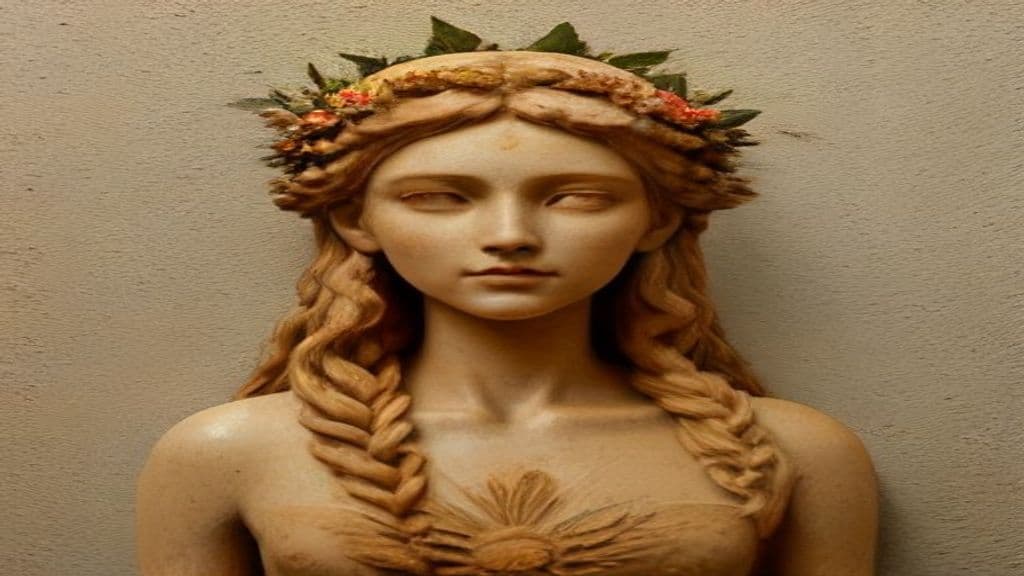
Demeter
Demeter is an Olympian goddess of ancient Greek religion who presides over agriculture, grain, and the fertility of the earth. She functions as a divine mother-figure and guardian of social customs, sacred law, and the cycle of life and death, and is central to the Eleusinian Mysteries alongside her daughter Persephone.

Dionysus
Dionysus (Ancient Greek: Διόνυσος) is a major ancient Greek deity associated with wine and winemaking, vegetation and fertility, festivity and theatre, ritual ecstasy and possession, and liminal links with death and the underworld. He is an epiphany-god who travels between worlds, whose cult includes ecstatic rites and mystery initiation.
Community Record
- [1]Wikipedia: Eumolpus. Wikipedia article 'Eumolpus' (compiled classical sources summary)wiki
- [2]Wikidata: Eumolpus. Wikidata entry for Eumolpuswiki
- [3]Eumolpus (beetle). Wikipedia article noting taxonomic use of the namewiki
- [4]Petronius, The Satyricon (extracts mentioning 'Eumolpus'). Petronius, Satyricon (translations available online) — examples of Roman literary use of the nameliterary
- [5]Petronius, The Satyricon (Part VIII). Petronius, Satyricon (further references to Eumolpus as a poetic persona)literary
- [6]Archive: Athenian Fables (LP0019). Archive compilation referencing Athenian mythic materials (context for Eleusinian traditions)other
- [7]Dialogues / Eleusis resources. Online resources on Eleusis and related traditions (contextual support for cultic role)other