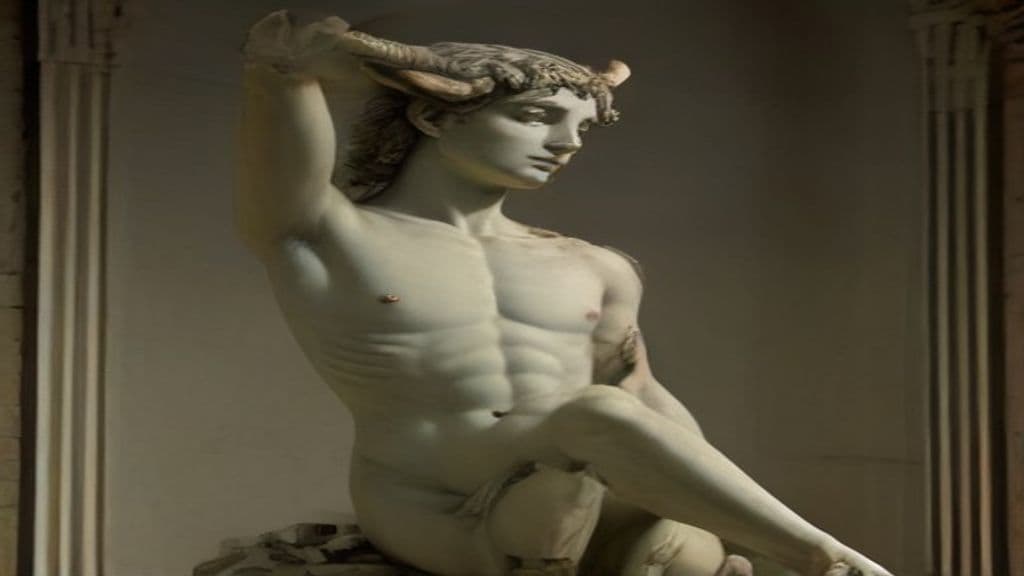
In Roman tradition fauns began as genii or ghosts of rustic places—local, lesser spirits attached to fields, groves, and other rural sites and understood as lesser counterparts to the god Faunus. Over time, through contact with Greek mythic types and later artistic conventions, fauns became visually and conceptually conflated with Greek satyrs and the god Pan, producing the familiar half-goat, half-human pastoral figure that entered Renaissance and modern literature and art.
Descriptions vary by period: early Roman representations could appear as simply naked human figures (e.g., classical statues such as the Barberini Faun); with Hellenic influence and in later art they are commonly depicted as two‑footed humanoids with the horns, legs, tail, and hooves of a goat, pointed ears, and a human torso and head. Earlier Greek satyr influence sometimes included part-horse features, so the faun's visual form is historically fluid.
Classical sources and summaries portray fauns as ambivalent rural spirits: Roman belief held they could stir fear in travelers through lonely or wild places but could also guide men in need, reflecting their role as localized genii of the countryside. They are associated symbolically with peace and fertility and participate in the wider pastoral/Dionysian complex (linked to Pan, satyrs, and Silenus). Late literary and artistic treatments emphasize revelry and pastoral sensuality. Classical distinctions in behavior are noted in source material: fauns were characterized as more foolish and less woman-pursuing than satyrs, whereas satyrs tended toward slyness and greater sexual appetite.

Faunus
Faunus is an ancient Roman rustic deity and tutelary nature god of forests, plains, and fields, protector of agriculture and cattle. He functions as an oracular and fertility power, head of a plurality of lesser fauni (place-spirits), and was celebrated in festivals such as the Faunalia and associated with the Lupercalia rites.
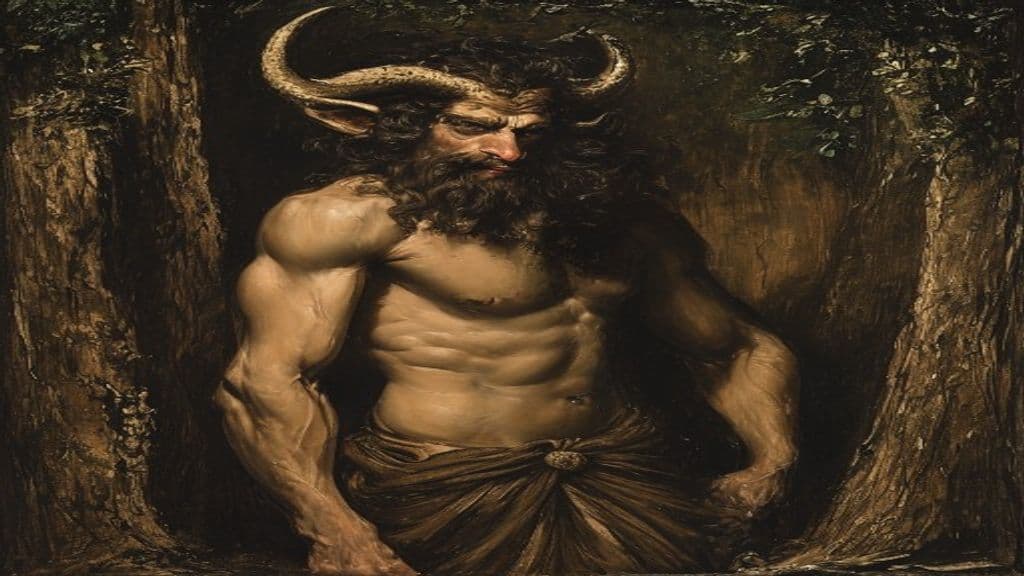
Satyr
In ancient Greek tradition a satyr (σάτυρος, sátyros) is a male nature spirit of woodlands, mountains, and pastures who accompanies Dionysus (and is later identified with Pan/fauns). Satyrs embody ribaldry, music, dance, and unrestrained sexuality and appear collectively (as a chorus) in the satyr play as well as individually in mythic episodes (e.g., Marsyas, Silenus).
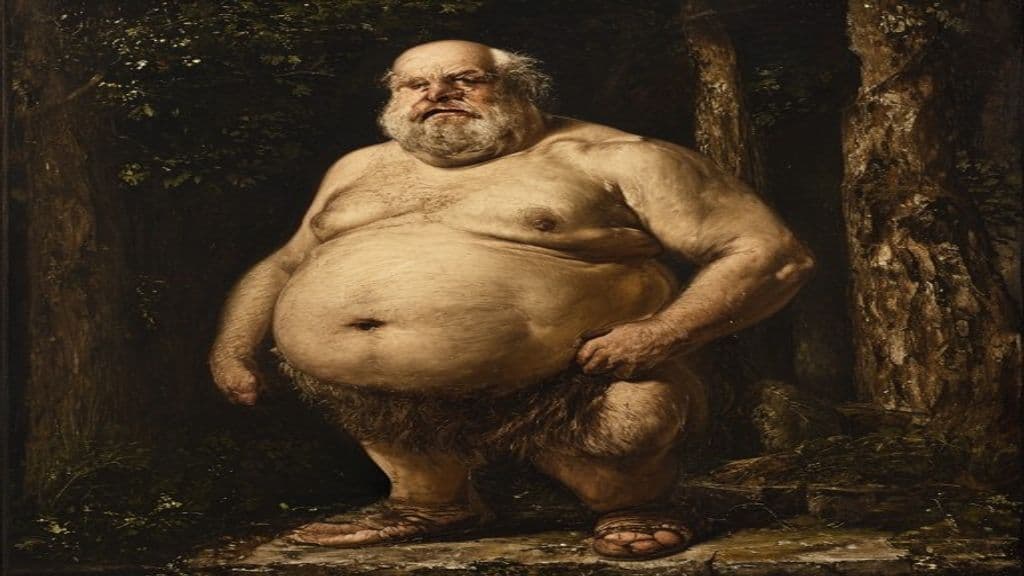
Silenus
Silenus is the elderly, often drunken companion and tutor of Dionysus/Bacchus in Greek and Roman tradition. He appears both as an individual mythic personality and as a type (sileni), serving in theatrical, cultic, and artistic contexts as a comic rustic figure who, when intoxicated, may speak prophetic or bitter wisdom.
Community Record
- [1]Faun (Wikipedia). Wikipedia contributors, 'Faun', Wikipedia, The Free Encyclopediawiki
- [2]Faunis (Wikidata). Wikidata entry Q785054wiki
- [3]The Marble Faun; Or, The Romance of Monte Beni - Nathaniel Hawthorne. Nathaniel Hawthorne, The Marble Faun (Project Gutenberg edition)literary
- [4]Rambles.NET: Faun, Renaissance. Rambles.NET, 'Faun, Renaissance' (discussion of Renaissance depiction)other
- [5]The Dancing Faun - Florence Farr. Florence Farr, 'The Dancing Faun' (Project Gutenberg edition)literary
- [6]Archive: Introducing: The Antiquarium of Sinister Happenings - Lot 001 : I Was The Hitchhiker. Archive.org item referencing cultural uses of the faun motifother