In the Arthurian corpus the Fisher King appears as the latest in a dynastic line charged with custody of the Grail. Robert de Boron historicizes this by linking the Grail to Christ and Joseph of Arimathea, who founds a community that travels to Britain and entrusts the Grail to Bron (the 'Rich Fisher'), initiating a lineage of Grail keepers that includes later named kings such as Pelles and Pellehan. Literary scholarship traces motifs that underlie the Fisher King—wounding, a cauldron or sacred vessel, and a sovereign whose fate is bound to the land—to earlier Welsh material (e.g., Brân the Blessed in the Mabinogion), and the figure first appears in Chrétien de Troyes's Perceval before being elaborated by later authors such as Wolfram von Eschenbach (who names him Anfortas) and the Vulgate cycle.
Across medieval variants the Fisher King is presented as physically maimed—wounded in the groin, thigh, or leg—and often so incapacitated that he cannot ride or walk. Narrative descriptions emphasize a suffering, immobile sovereign who spends long periods fishing while seated, symbolic of his custodial function and passive waiting. Some related Welsh-derived episodes in the broader narrative complex include grisly motifs (for example, severed heads presented on platters) that form part of the same thematic material, while Wolfram's Parzival gives an especially detailed, pain-focused depiction of Anfortas's wound.
The Fisher King's primary role is custodial and symbolic rather than explicitly miraculous: he is the guardian of the Holy Grail (in later works explicitly tied to Christic relic narratives) and his bodily condition narratively indexes the fertility and well-being of his realm. The tradition frames healing as contingent on the actions of a questing hero—asking the 'healing question' or completing the Grail quest—rather than on independent magical agency exercised by the king. In some tellings the wound is a punitive consequence of moral transgression related to Grail custody, adding a moral-judicial dimension to his condition.
Weaknesses
- conditionHealing depends on quester's actions (asking the correct question or completing the Grail quest)
Wards
- conditionDynastic custodial norms and moral conduct of Grail-keepers
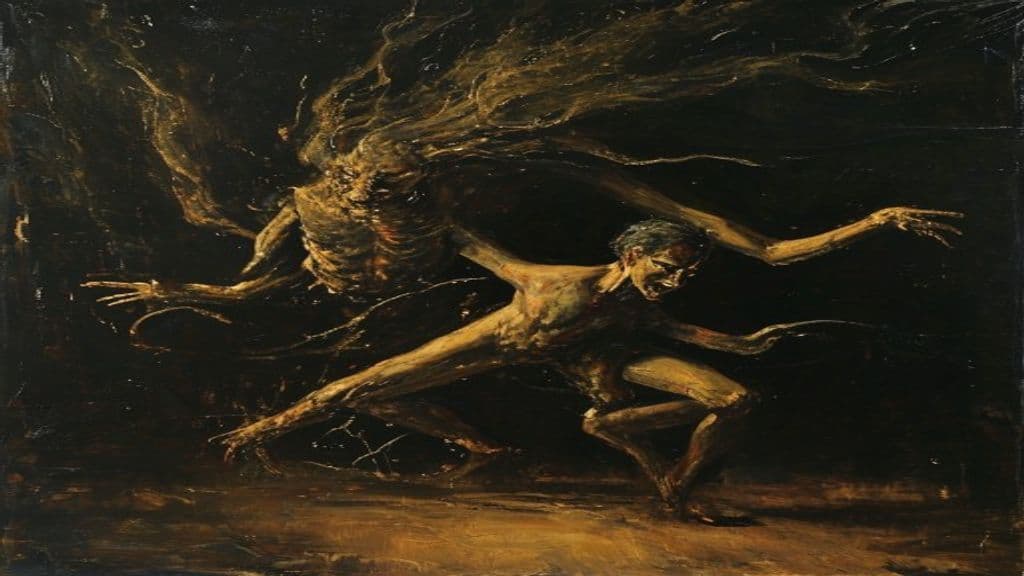
Pishacha-graha
The possessing variety of pishacha described in classical Ayurvedic and tantric texts — a grasping spirit (graha) that seizes the body of a victim, producing symptoms of madness and compulsion.
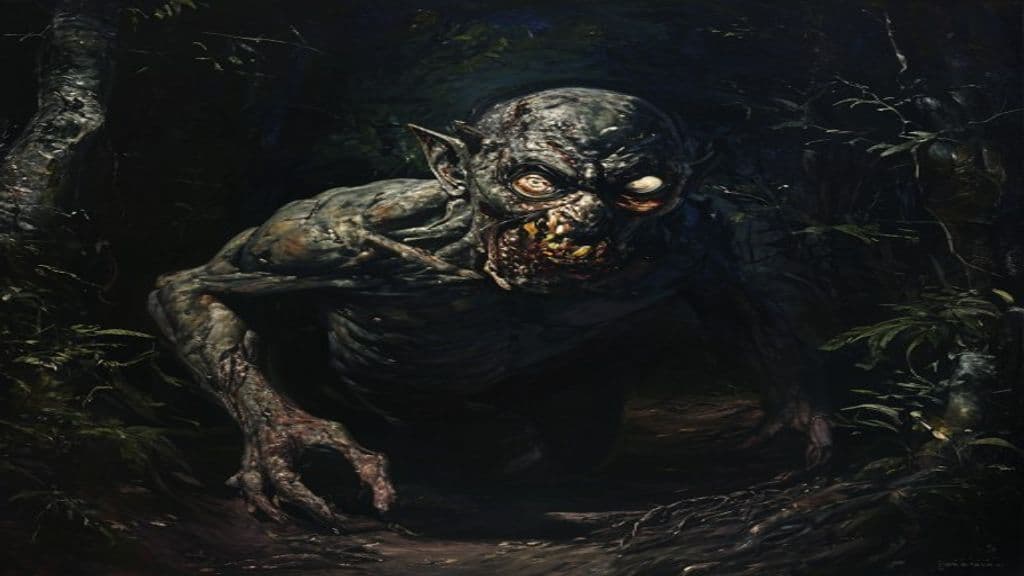
Pishacha
Flesh-eating spirits of Hindu mythology that haunt cremation grounds and are associated with disease, madness, and possession. The lowest class of demon in the Vedic hierarchy.
Community Record
- [1]Fisher King. Wikipedia, 'Fisher King' (accessed via provided research notes)wiki
- [2]Wikidata: Fisher King (Q125534415). Wikidata entity record for 'Fisher King' (noting unrelated company references in dataset)other