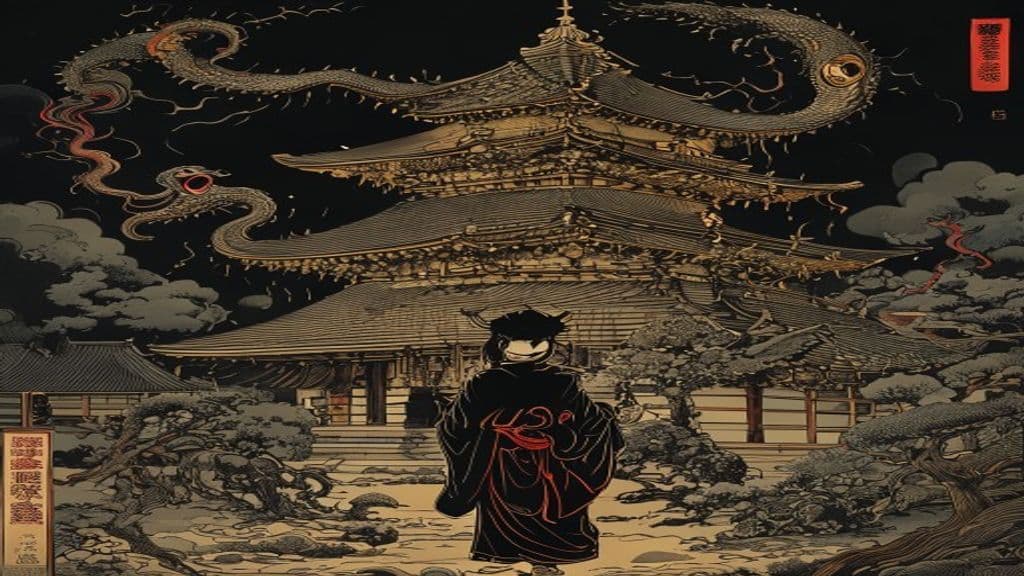
In Heian-period narrative material summarized in modern references (Nihon Ryōiki / Honchō Monzui as reported), an extraordinary child born after an encounter with a thunder spirit later became an attendant at Gangō-ji. Later, attendants at Gangō-ji's bell tower began dying almost every night. The tale identifies the nightly attacker as an oni; when pursued at dawn its head hair had been torn off and the pursuers followed tracks to the grave of a ruffian manservant of the temple, whose dead spirit is said in the narrative to have appeared as a demonic being. The name 'Gagoze' thus became associated with the temple's nocturnal oni-attacker in classical accounts and with subsequent pictorial and theatrical portrayals.
Toriyama Sekien's Gazu Hyakki Yagyō and later pictorial sources depict Gagoze as an oni with the appearance of a monk. The Heian tale that is linked to the name also describes an extraordinary thunder-born child with snakes around the head and a tail at the back of the head; that specific description pertains to the child in the narrative rather than to a fixed canonical form for the temple-attacker. Kabuki and ukiyo-e representations (e.g., roles named Gagoze Akaemon) present stylized stage images that vary from textual descriptions.
Attested behaviors in the source narratives include violent nocturnal attacks on bell-tower attendants (multiple deaths reported 'almost every night'), superhuman physical strength (the thunder-born child is said to have had enormous strength, defeating a famous prince in a contest by age ten), self-concealment and nocturnal-only appearance (scholar-cited observation that the being would only appear at night and could not be inspected without approaching a light), and a narrative detail in which the fleeing attacker was found at dawn with its head hair torn off, leading pursuers to a grave identified as the spirit's origin.
Weaknesses
- conditionExposure to controlled light (revealing by approaching/opening lamps)
Wards
- ritualControlled lighting of bell tower corners
Oni
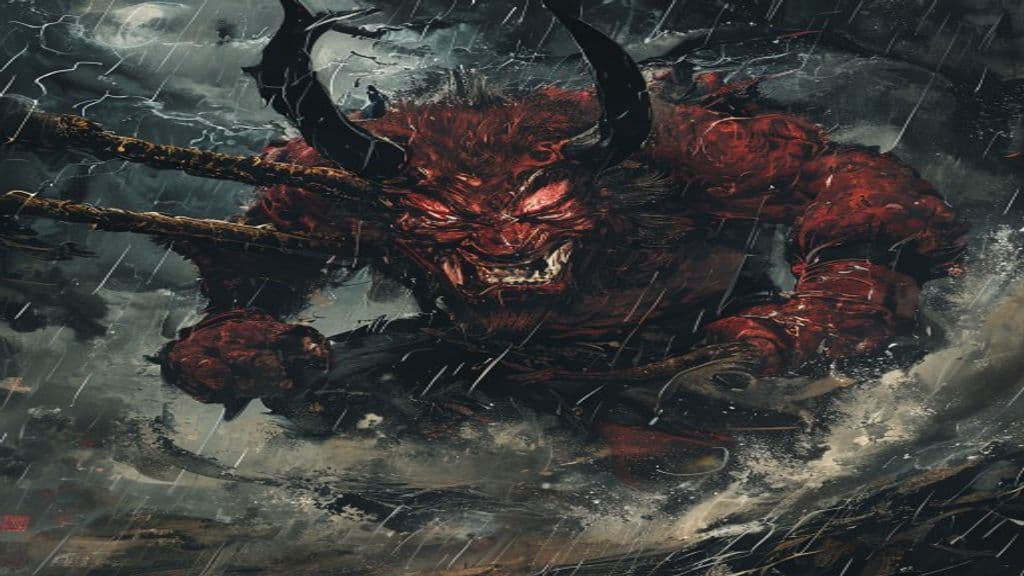
Powerful supernatural beings of Japanese folklore — associated with misfortune, disease, and the punishment of sinners in hell. Fearsome, often depicted as guardians of the underworld.
Stree
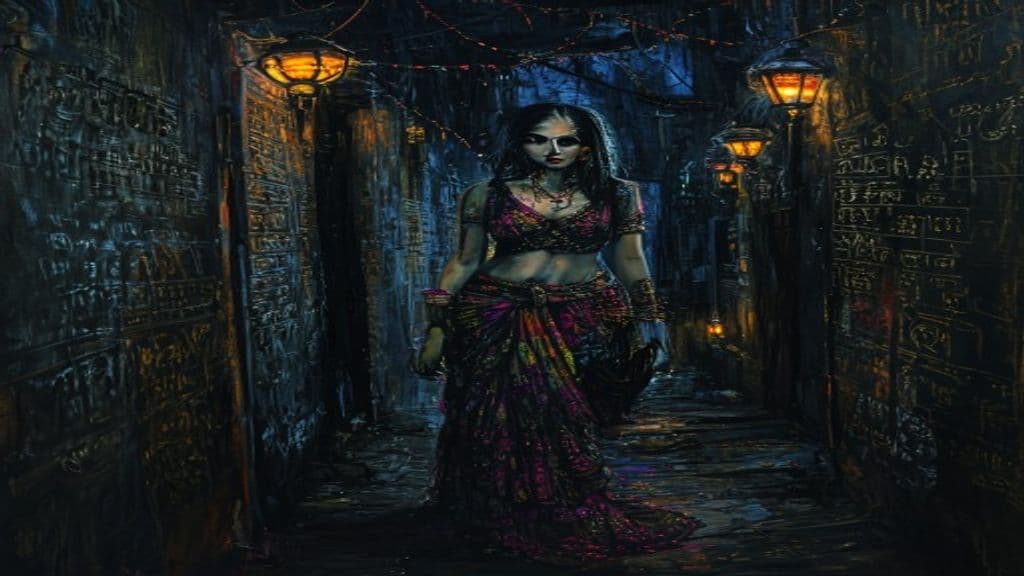
A vengeful female spirit from Chanderi who abducts men during festival nights. Warded off by the inscription 'O Stree, kal aana' — her legend, still practised on walls across Madhya Pradesh, inspired the 2018 Bollywood horror-comedy.
Bhoot (bhoota)
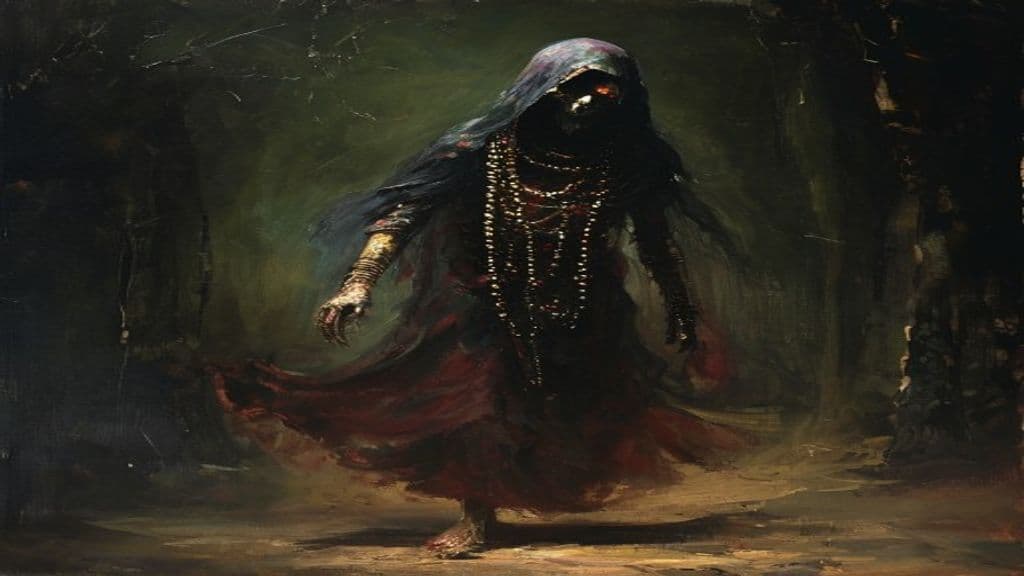
A bhoot (also bhoota, bhoot, bhut) is the culturally specific term across parts of the Indian subcontinent for a perturbed, restless spirit generally understood to be the ghost of a deceased person. Sources describe bhoots as arising when a person's death or post-death circumstances prevent them from moving on — for example violent death, unresolved affairs, or failures in funerary rites — and the term appears frequently in modern South Asian media and discussions.
Abumi-guchi
A Japanese yōkai classed as a tsukumogami: an animated stirrup (abumi) depicted in Sekien Toriyama's Gazu Hyakki Tsurezure Bukuro. Traditional accounts say it is formed from a stirrup that belonged to a soldier who fell in battle and that it waits where the stirrup lies for its dead owner to return.
Abura-sumashi
A yōkai spirit from the Amakusa region of Kumamoto Prefecture, Japan, said to inhabit mountain passes. Traditionally explained as the ghost of a person who stole oil, it appears to surprise travelers and is represented in modern media with a straw-coat body and a potato- or stone-like head.
Akaname
Akaname is a Japanese yōkai associated with baths, bathtubs, toilets, and other places where scum and filth accumulate. Traditionally depicted as a child-like creature that licks grime, it functions in folklore as a cautionary figure tied to cleanliness; a few narrative variants cast it as dangerously predatory.
Akateko
Akateko (赤手児, lit. 'red child's hand') is a yōkai from Japanese folklore commonly told as a small, red, disembodied child's hand that appears from trees—especially the Japanese honey locust—and startles travelers; in some regional variants it is accompanied by a specter of a young woman or manifests as paired foot- or leg-like apparitions. Accounts vary between mostly harmless trickster apparition and a violent variant that attacks humans.
Akubōzu
Akubōzu (灰坊主, Akubōzu) is a household yōkai from parts of Akita and Iwate Prefectures in northern Japan said to live in the ashes of the hearth. Sources say they appear when people (notably children) play with or dig in hearth/furnace ash; the figure is cited as part of a broader Tōhoku motif warning against disturbing ash.
Akuma
Akuma (悪魔/あくま) in Japanese sources is an evil spirit, devil, or demon associated with misfortune and mental disturbance. The term appears in Buddhist texts and Heian-period literature and was later used to translate the Christian figure of Satan, as well as the Buddhist Mara.
Akurojin-no-hi
Akurojin-no-hi (悪路神の火, "fire of the god of the bad road") is a flamelike ghost from the folklore of Mie Prefecture, Japan. It is reported to appear on rainy nights; those who encounter it and do not run away are said to become gravely ill. The phenomenon is sparsely documented and is usually compared to will-o'-the-wisp type ghost-lights.
Amabie
Amabie is a mid-19th-century Japanese yogenjū-type wondrous creature attested in kawaraban and related pamphlet culture that emerges from the sea (in canonical accounts) to prophesy about harvests and epidemics and prescribes that its image be drawn and shown to the sick as a protective measure.
Amanojaku
Amanojaku (天邪鬼 / あまのじゃく) is a Japanese yōkai-type being portrayed as a contrarian, heart-reading trickster. Treated in different contexts as a small ogre (ko-oni), a wicked demon (jaki) in Buddhist iconography, and a folkloric spirit that provokes human vice, it appears across regional tales with variable roles from malicious kidnapper to household oddity.
Amefurikozō
Amefurikozō (雨降小僧 or 雨降り小僧) is an Edo-period yōkai figure depicted in classical illustrated and popular print culture as a youthful attendant associated with rain. Classical sources (notably Sekien Toriyama's Konjaku Gazu Zoku Hyakki) present it as a kozō-type servant linked by captional wordplay to a rain deity; later popular literature elaborates its rain-producing role and playful mischief on rainy nights.
Ameonna
Ameonna (雨女, "rain woman") is a figure in Japanese folklore treated as a yōkai associated with rain. Sources depict her both as a rain-calling supernatural being (sometimes helpful in drought) and as a folk label for an unlucky person whom rain seems to follow; a key pictorial source is Toriyama Sekien's Konjaku Hyakki Shūi.
Amorōnagu
Amorōnagu (Amorōnagu / 天降女子) is a tennyo or celestial maiden figure in the folklore of Amami Ōshima (Kagoshima Prefecture, Japan). Attested sources describe her as a heavenly woman who bathes in pools and waterfalls in ravines on the island.
Community Record
- [1]Gagoze (Wikipedia). Wikipedia contributors, 'Gagoze,' Wikipedia, The Free Encyclopediawiki
- [2]Gangoji (official site) — About Gangoji. Gangoji temple official site, 'About Gangoji'other
- [3]Gazu Hyakki Yagyō (Toriyama Sekien) — depiction reference. Summary reference to Toriyama Sekien's Gazu Hyakki Yagyō as cited in modern summaries of Gagoze imageryliterary
- [4]Nanatsu Men / kabuki references (Gagoze portrayals). Kabuki21, 'Nanatsu Men' (discussion of kabuki plays/roles involving Gagoze imagery)other
- [5]Ukiyo-e print: Ichikawa Danjuro IX as Gagoze Akaemon in Nanatsumen (Torii Kiyosada). Ukiyo-e print catalog entry for Torii Kiyosada's depiction of Gagoze roleother