
Gilgamesh appears in Sumerian royal tradition as an early king of Uruk (attested in king lists and Early Dynastic inscriptions) whose life became the basis for multiple Sumerian poems. Over time these poems and other traditions coalesced into a broader Akkadian epic tradition; the canonical standard Akkadian epic is attributed to Sîn‑lēqi‑unninni in the late second millennium BC. Scholarly reconstructions place a probable historical core to Gilgamesh in the Early Dynastic period (broadly c. 2900–2350 BC, with some proposals c. 2800–2500 BC), while the mytho‑literary Gilgamesh was worshiped and occasionally treated as a divine patron in later periods (for example, King Utu‑hengal of Uruk adopting Gilgamesh as patron and references among Third Dynasty of Ur rulers).
Literary texts characterize Gilgamesh as part divine and part human — commonly described in epic tradition as effectively a demigod (often summarized as two‑thirds god and one‑third man in later paraphrase) and as possessing kingly regalia befitting the ruler of Uruk. The epic emphasizes his superhuman physique and prowess rather than an exhaustive physical catalogue: he is presented as extraordinarily strong and imposing in action, a builder credited with constructing the great walls of Uruk, and as a companion figure to Enkidu whose presence signals heroic kingship and royal authority.
Gilgamesh is depicted with superhuman strength and heroic martial skill: together with Enkidu he defeats monstrous opponents such as Humbaba (Huwawa) of the cedar forest and the Bull of Heaven sent by Ishtar/Inanna. He exercises royal authority as king of Uruk and is credited in tradition with building the city's walls. Narrative episodes show he can negotiate with gods (rejecting Ishtar's proposal and surviving divine retaliation) and that his adventures take him beyond ordinary human bounds — most notably his long quest to find Utnapishtim and the means of immortality after Enkidu's death. The literary Gilgamesh functions both as exemplar of heroic conduct and as an interlocutor with theological themes of fate, mortality, and the underworld.

Enkidu
Enkidu is a legendary Mesopotamian 'wild man' figure from Sumerian and Akkadian Gilgamesh-cycle compositions, created to oppose Gilgamesh and later becoming his companion; his death and subsequent role as a shade shape Gilgamesh's reflections on mortality.
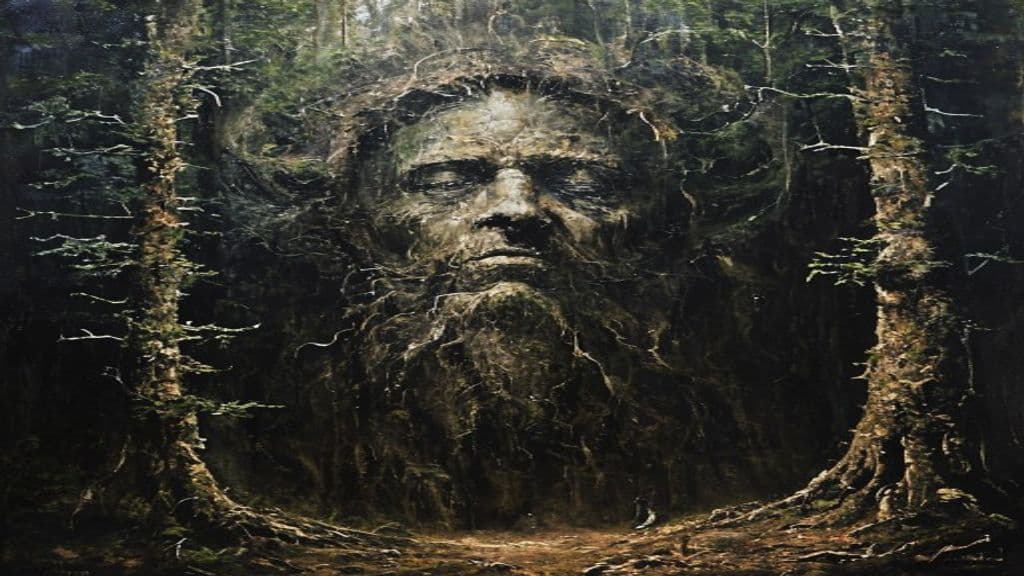
Humbaba
The divine guardian of the Cedar Forest appointed by Enlil, a terrifying giant whose roar was the flood, whose breath was fire, and whose gaze was death — slain by Gilgamesh and Enkidu.

Bull of Heaven
A colossal mythic bull in ancient Mesopotamian literature, released by the goddess Inanna/Ishtar as an instrument of divine wrath and identified with the constellation Taurus. It appears in epic narratives (notably the Epic of Gilgamesh) as a world‑ravaging beast whose slaying carries grave divine consequences.

Inanna
Inanna is a major ancient Mesopotamian goddess, primarily worshipped in Sumer and later identified with the Akkadian Ishtar. Her domains include love, sex, war, political power, divine law and procreation; she is a principal cult figure of Uruk and bearer of the mes, the decrees of civilization.
Community Record
- [1]Gilgamesh. Wikipedia article 'Gilgamesh'wiki
- [2]Epic of Gilgamesh (Old Babylonian version). An Old Babylonian Version of the Gilgamesh Epic, Project Gutenbergliterary
- [3]Epic of Gilgamesh (collection of translations/editions). AncientTexts.org, Epic of Gilgameshliterary
- [4]Archive: Ep 126: The Epic of Gilgamesh w/Dr. Stanley Lombardo. Archive.org lecture/podcast on the Epic of Gilgameshother
- [5]Archive: An Old Babylonian Version of the Gilgamesh Epic (Project Gutenberg mirror). Project Gutenberg edition mirrorliterary