Harsomtus is presented in temple theology as a divine child whose emergence from a lotus (or as a serpent from a lotus) symbolizes renewal and the sunrise; he is treated as a youthful form within the Horus/Ra/Amun divine network rather than as an independent originator. In local temple configurations he appears as the son of Hathor and Horus (for example in triads at Edfu) and, in some Theban contexts of the late New Kingdom, was identified in certain contexts as the firstborn son of Amun and Hathor‑chief‑of‑Thebes.
Typically depicted as a naked child seated upon a lotus flower, Harsomtus also appears in reliefs as a serpent emerging from a lotus. Because of his Horus connections he can be shown in child form with a falcon head in some iconographic variants.
Sources describe Harsomtus in theological and cultic terms: he embodies solar, primordial and creator aspects and functions as a symbol of birth, renewal and the maintenance of cosmic order. His role is primarily symbolic and ritual within temple contexts (mammisi, lower crypt texts and cult imagery) rather than described as narratively active supernatural interventions in the surviving summaries.

Ihy
Ihy is an ancient Egyptian child-god associated with the sistrum, ritual music, joy, and fertility. Centered on the Dendera (Iunet) cult, he appears in temple art and fertility 'mystery plays' connected to Hathor and Horus and is depicted as the youthful divine offspring bound to Hathor's cultic roles.
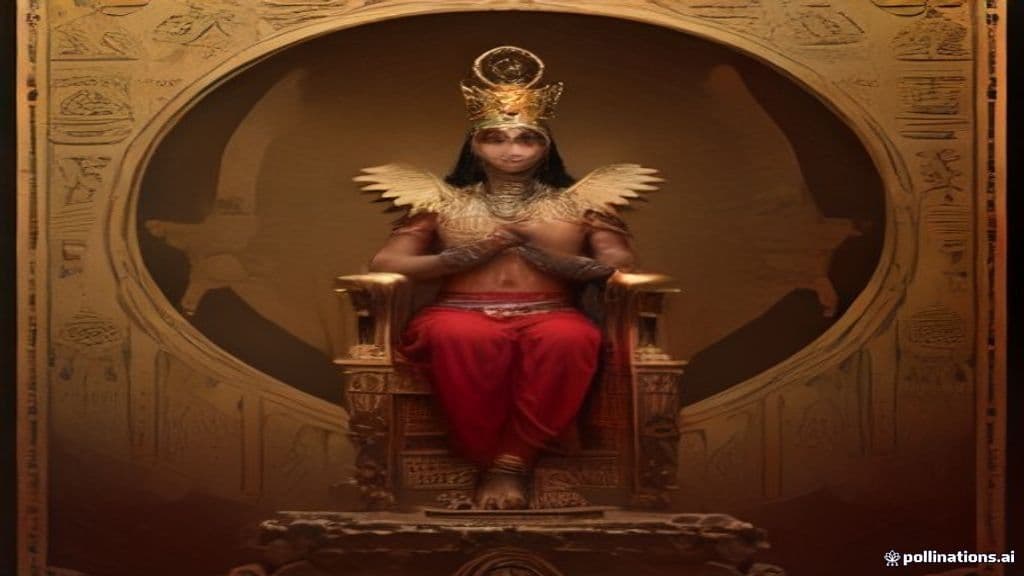
Horus
Horus (Ancient Egyptian ḥr.w) is a major Egyptian deity associated with the sky, the sun and moon, kingship, protection, and healing. He appears in multiple local and chronological manifestations (e.g., Horus the Elder, Horus the Younger) and serves as the divine model of the living pharaoh and avenger/heir of Osiris.

Amun
Amun is a major ancient Egyptian deity whose name (imn) means 'the hidden one.' Originating as a local Theban tutelary god, he rose to national prominence and was syncretized with the sun‑god Ra (Amun‑Ra), becoming a transcendent, self‑created creator and king of the gods closely tied to royal legitimation and personal petitionary religion.
Community Record
- [1]Harsomtus — Wikipedia. Wikipedia contributors. "Harsomtus." Wikipedia, The Free Encyclopedia.wiki
- [2]Harsomtus — Wikidata. Wikidata entry Q1586994 (Harsomtus).wiki