In the best-known tradition recorded in Egyptian myth, Isis and Osiris are the parents of Horus: after Set murders Osiris, Isis uses magical means to conceive and raise Horus, who grows to contest Set for rulership of Egypt. The prolonged legal and physical contest (the Contendings of Horus and Seth) culminates in Horus's vindication as heir. Parallel and older traditions present an elder Horus (Heru-ur / Hrw-wr) as a primordial figure belonging to an earlier generation; Egyptian religion treats these as distinct, complementary forms rather than a single, fixed personality.
Horus is most frequently depicted as a falcon or as a man with a falcon's head, often shown wearing royal regalia such as crowns (including the Double Crown) that mark kingship. In some iconographic contexts he appears as a youthful child seated on a lotus with a finger to his mouth alongside Isis (the form later received by Greco-Roman writers as Harpocrates). As a sky deity he is imagined as a falcon traversing the sky, with the Sun and Moon conceptualized as his eyes. Modern sources commonly identify the depicted falcon species as a lanner or peregrine, though ancient Egyptian texts simply render the hieroglyph ḥr.w as 'falcon.'
Horus functions cosmically as a sky deity who contains or bears the Sun and Moon—the Sun conceived as his right eye and the Moon as his left—and his flight across the heavens explains their daily movement. Mythically he is the avenger and heir of Osiris whose contest with Set includes the loss and later restoration of his eye; the Eye of Horus (Udjat) becomes an enduring symbol of protection, royal power, and healing. Socially and ritually Horus is the divine model of the living pharaoh, invoked to guarantee royal legitimacy and to protect the king and realm.
Weaknesses
- otherInjury to the eye (mythic wounding/gouging of Horus's eye in the conflict with Set)
Wards
- symbolEye of Horus (Udjat) — protective and healing symbol derived from Horus's mythic eye
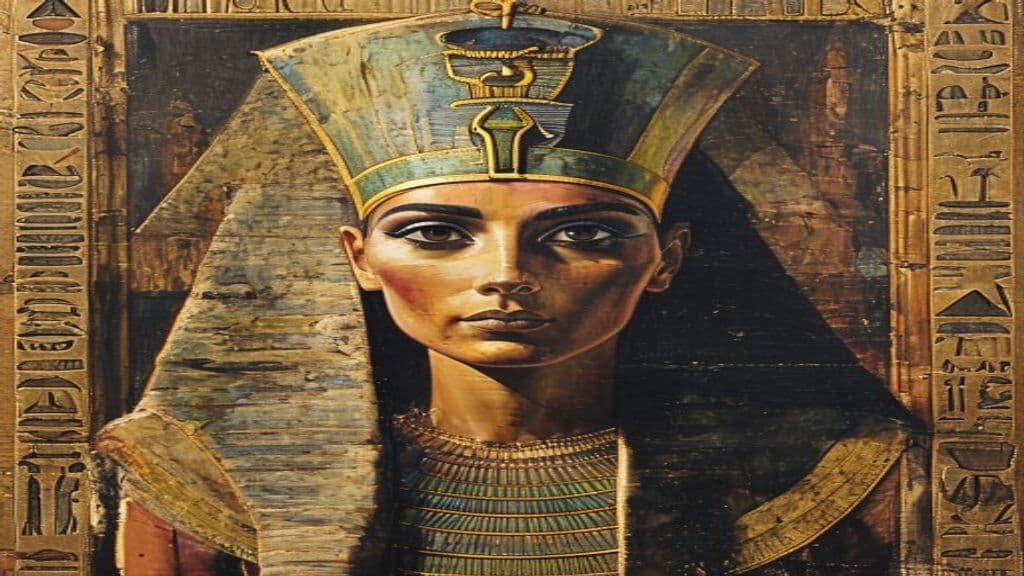
Isis
Isis is a major goddess of ancient Egyptian religion, a member of the Heliopolitan Ennead who functions as sister and consort of Osiris, mother and protector of Horus, a funerary and royal protector, and a locus of potent magic whose cult spread through the Hellenistic and Roman Mediterranean.
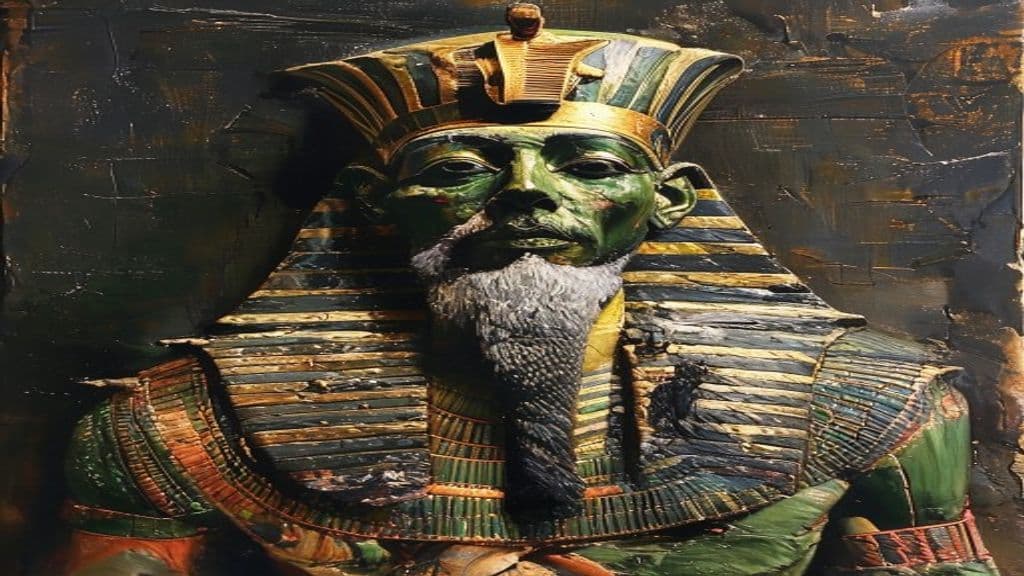
Osiris
Osiris is the major ancient Egyptian god of fertility, vegetation, death, resurrection, and the afterlife. He functions as sovereign of the realm of the dead, a guarantor of postmortem renewal and agricultural fertility, and the archetypal divine figure with whom deceased kings and mortals ritually unite to gain continuity after death.
Community Record
- [1]Horus. Wikipedia contributors. "Horus." Wikipedia, The Free Encyclopedia.wiki
- [2]Horus name. Wikipedia contributors. "Horus name." Wikipedia, The Free Encyclopedia.wiki
- [3]Horus and Seth (The Contendings of Horus and Seth excerpts). Excerpt: Contendings of Horus and Seth, translated excerpt hosted by Hanover College history resources.other
- [4]Horus (Wikidata entry — name homonym noted). Wikidata entry Q3140875 (includes modern homonym usages; not a primary religious source).other
- [5]Horus - Alchetron. Alchetron entry on Horus.other
- [6]Horus - The Edkins Site. The Edkins. "Horus." Online overview of Egyptian myth and iconography.other
- [7]Horus - Ancient Egypt: the Mythology. Ancient Egypt: the Mythology. "Horus."other
- [8]Horus - Biblical Cyclopedia. Biblical Cyclopedia. "Horus."other