
The sources provide a biological and paleontological account rather than a mythic origin. Genetic and taxonomic studies recognize the Hawaiian hoary bat as Lasiurus semotus, an endemic vespertilionid; earlier treatments considered it a subspecies of the mainland hoary bat (Lasiurus cinereus), but multiple recent studies support its recognition as a distinct taxon. Fossil research documents a separate extinct endemic vespertilionid bat species present in the islands by ~320,000 years before present and surviving until at least ~1100 years ago, indicating a longer paleontological history of bats in Hawaiʻi. Some genetic studies have proposed two colonization events and possible historical sympatry of mainland and Hawaiian lineages, while later genetic work supports L. semotus as the sole extant endemic — the literature therefore contains differing scientific interpretations on colonization history (uncertain).
Medium‑small vespertilionid with reddish‑brown to brown fur and a distinctive silvery or 'frosted' tint on the dorsal fur, ears, and neck that yields a hoary appearance. The face transitions to yellowish brown; ears are rounded with black edging. The Hawaiian name ʻōpeʻapeʻa ('half‑leaf')—also likened to the shape of a traditional Hawaiian sail—refers to the bat's body outline resembling half a taro leaf. Adults typically weigh about 14–18 g, with wingspans roughly 27–34 cm; females are generally larger than males.
Nocturnal, aerial insectivore that forages by echolocation on moths, beetles, crickets, mosquitoes, termites and other insects; diet composition varies with habitat. Foraging occurs along forest edges, above canopies, over open pasture and developed areas, and occasionally over open ocean in some records. Individuals are solitary roosters (do not form colonies). Seasonal movements include lowland use during pregnancy and pup rearing and movement to higher elevations during mating season/winter. Reproductive timing documented in sources: pre‑pregnancy November–April, breeding after that, pregnancy May–June, pups born around late August and typically independent by 6–7 weeks; females often give birth to twins. Foraging distance in some records can extend up to ~12 miles in a night. Ecologically, the species consumes agricultural pest insects and provides pest‑control benefits. Population size and many aspects of life history remain incompletely known due to solitary roosting and limited detectability.
Weaknesses
- conditionsensitivity to habitat loss and roost disturbance
- conditionvulnerability to collisions with man‑made structures (wind turbines, barbed wire)
- substanceindirect harm from pesticides that reduce insect prey and cause toxic exposure
Wards
- conditionlegal protection under the U.S. Endangered Species Act and state regulations (conservation/mitigation measures)
- ritualhabitat protection and land‑use planning measures (avoid tree cover reduction and roost disturbance)
- conditionsiting and operational practices to reduce collisions (wind turbine siting/operation guidance, barbed wire mitigation)
- otherpesticide reduction and integrated pest management to maintain prey availability

Djinn
The class of supernatural beings created from smokeless fire in Islamic cosmology — a parallel civilization to humanity, capable of belief or unbelief, with their own prophets, society, and judgment before God.

Jann
The weakest class of djinn in Islamic tradition, associated with desert winds and taking the form of snakes or whirlwinds, dwelling in empty wilderness and posing little threat to those who know the proper invocations.
Shaitan
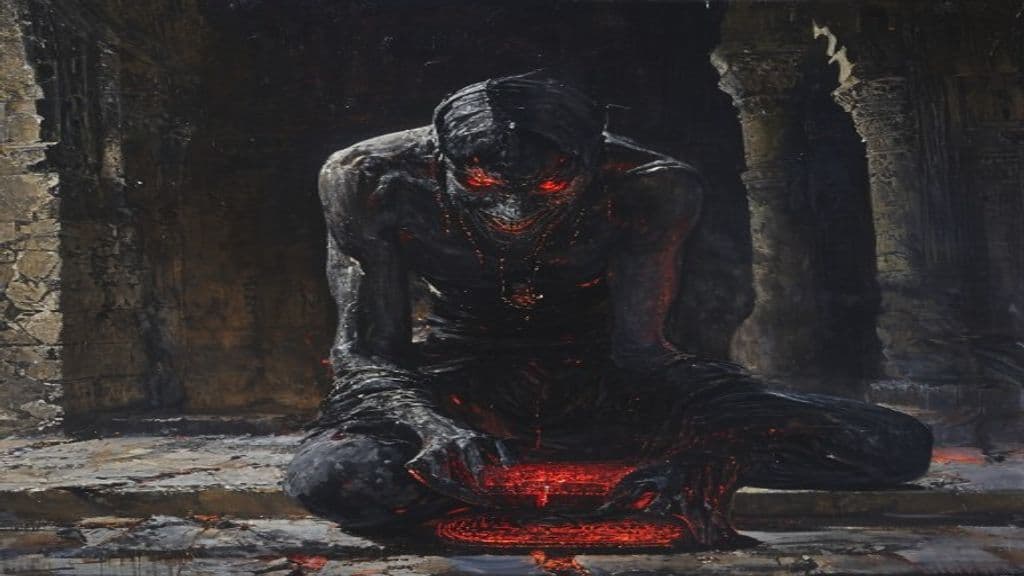
A class of corrupted djinn who follow Iblis and dedicate themselves to leading humans astray — distinct from Iblis himself, the Shayatin are a species of evil djinn who whisper doubts and temptations into the minds of the living.
Community Record
- [1]Hawaiian hoary bat. Wikipedia: Hawaiian hoary batwiki
- [2]ʻŌpeʻapeʻa, the Hawaiian Hoary Bat (Division of Forestry and Wildlife). Hawaii Department of Land and Natural Resources, Division of Forestry and Wildlife: ʻŌpeʻapeʻa, the Hawaiian Hoary Batother
- [3]Hawaiian Hoary Bat Guidance Document – Division of Forestry and Wildlife. DOFAW: Hawaiian Hoary Bat Guidance Documentother
- [4]Ecology and Distribution of the Endangered Hawaiian Hoary Bat | U.S. Geological Survey. USGS: Ecology and Distribution of the Endangered Hawaiian Hoary Batacademic
- [5]Recovery Plan for the Hawaiian Hoary Bat (Lasiurus cinereus semotus). U.S. Department of the Interior: Recovery Plan for the Hawaiian Hoary Batother
- [6]A second endemic land mammal for the Hawaiian Islands: a new genus and species of fossil bat (Chiroptera, Vespertilionidae). Paleontological monograph describing a separate extinct endemic Hawaiian vespertilionid batacademic
- [7]Hawaiian Hoary Bat monitoring page (NABat). NABat monitoring: Hawaiian Hoary Batother
- [8]Distribution and Abundance of the Endangered Hawaiian Hoary Bat, Lasiurus cinereus semotus, on the Island of Hawai’i. Scientific survey/report on distribution and abundance on Hawaiʻi Islandacademic
- [9]DTIC ADA443510: Summary of Threatened and Endangered Bat-Related Restrictions on Military Training, Testing, and Land Management. Archive: Summary of bat‑related restrictions affecting military land use and managementother