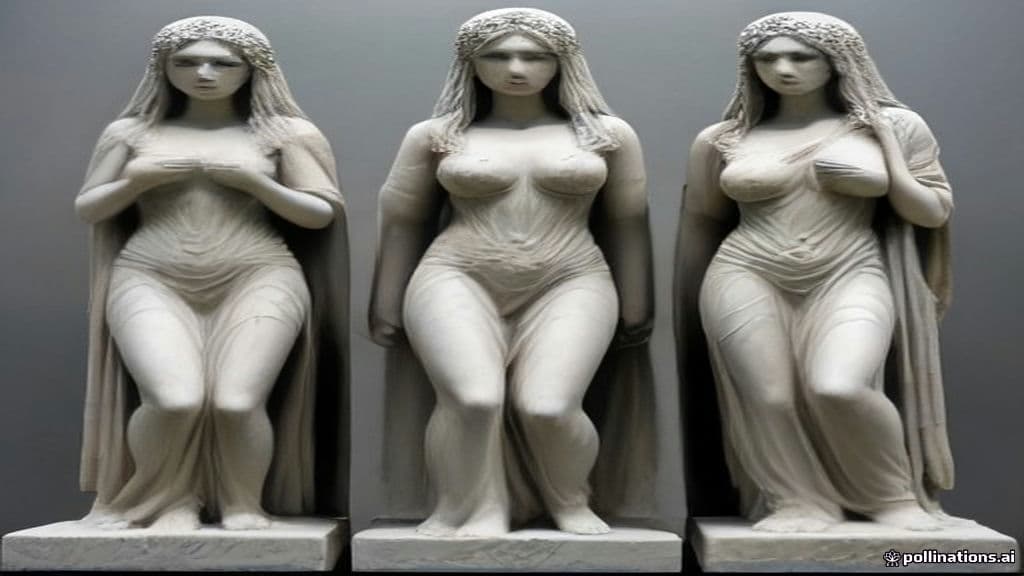
Henioche is not a single origin-mythic being but a recurring Greek personal name and an epithet attested across variant traditions. Attestations in the supplied sources include: (1) Henioche as a surname (epithet) of Hera at Lebadea (local cultic usage summarized in reference compilations); (2) Henioche or Eniocha named as the wife of King Creon of Thebes in some authors (where other traditions call Creon's wife Eurydice); (3) Henioche listed as a daughter of Creon and sister of Pyrrha in Theban genealogies (Pausanias records stone statues said to represent Henioche and Pyrrha at the Ismenian sanctuary of Apollo in Thebes); (4) Henioche, daughter of Pittheus, attested in some genealogical accounts as mother of the robber Sciron (or Sinis) by Canethus; (5) Henioche named by Valerius Flaccus as the wet-nurse of Medea. These multiple, partly conflicting roles reflect name-repetition and local variation rather than a single unified origin narrative.
No consistent supernatural appearance is described in the sources. Henioche appears as mortal women in narrative genealogies and as a commemorated stone portrait: Pausanias (Description of Greece) reports 'statues of women made of stone, said to be portraits of Henioche and Pyrrha, daughters of Creon' placed at the entrance of the sanctuary of Apollo Ismenius in Thebes (Pausanias 9.10.3). Beyond such sculptural commemoration, no physical or otherworldly form is attested for Henioche in the provided materials.
The sources attribute no supernatural powers to Henioche. Instead she appears in domestic, genealogical, and cultic roles: wife or mother within Creon's family (varying by source), mother of named offspring (e.g., Menoeceus/Megareus, Lycomedes, Haemon in some traditions), mother of Sciron (by Canethus) in certain genealogies, and wet-nurse to Medea in Valerius Flaccus' Argonautica. As an epithet of Hera at Lebadea, Henioche functions as a cultic surname applied to a major goddess in a local sanctuary context rather than indicating independent agency.
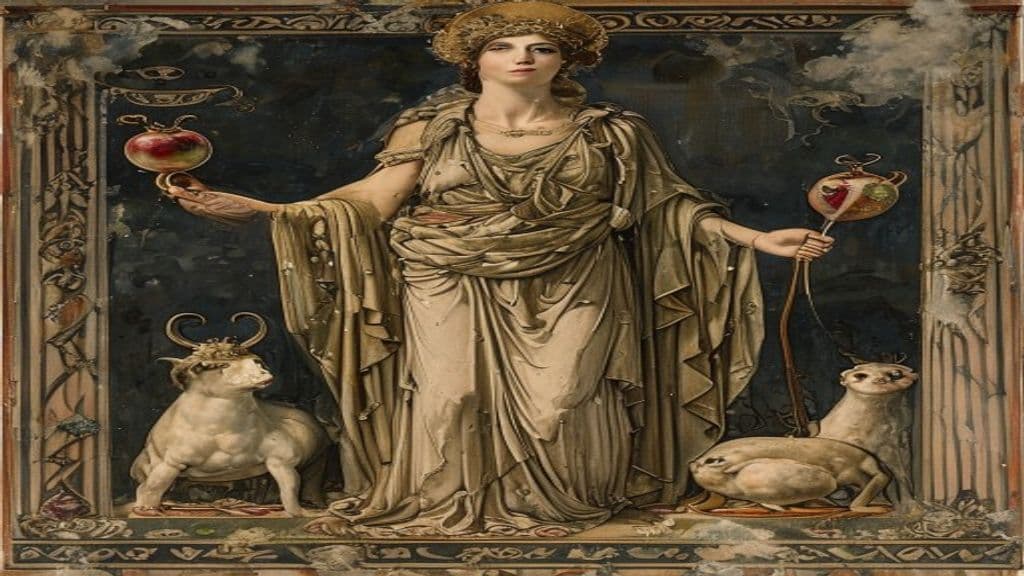
Hera
Hera is an ancient Greek goddess, queen of the Olympian gods, and a principal tutelary deity of marriage, women, and family. She functions in myth and cult as protector of lawful marriage and women in childbirth, a civic tutelary figure (notably of Argos), and a sometimes-jealous consort of Zeus with archaic fertility associations in certain local rites.

Medea
Medea is a mythic Greek woman of royal lineage associated with practiced pharmakeía (drugcraft) and ritual knowledge; in epic she functions as the helper who enables Jason's success, and in tragedy she becomes a transgressive avenger whose actions include murder. Sources present her variably as mortal with divine ancestry (granddaughter of Helios) and as a skilled worker in magical substances and rites often linked in literature to Hecate.
Community Record
- [1]Henioche — Wikipedia. Wikipedia, article 'Henioche' (summary of multiple classical attestations)wiki
- [2]Description of Greece — Pausanias (Thebes / Ismenian Apollo). Pausanias, Description of Greece (passage noting stone statues said to be portraits of Henioche and Pyrrha at the sanctuary of Apollo Ismenius, Thebes)literary
- [3]Argonautica — Valerius Flaccus (reference to Medea's wet-nurse). Valerius Flaccus, Argonautica (naming Henioche as Medea's wet-nurse in Roman retelling of Greek myth)literary
- [4]Pantheon.org — Henioche entry. Modern compendium summarizing classical genealogical variants for figures named Heniocheother
- [5]Sciron — Wikipedia (genealogical context). Wikipedia article on Sciron (used in supplied materials to situate Henioche as mother of Sciron in some traditions)wiki