
Medea is presented in Greek literary tradition as daughter of King Aeëtes of Colchis and a descendant of the sun god Helios. Her genealogy is noted in early sources (e.g., Hesiodic tradition lists her lineage), while fuller narrative roles develop in Hellenistic epic (Apollonius of Rhodes' Argonautica) and classical drama (Euripides' Medea). Across accounts she moves from Colchis with Jason and later appears in Corinth and, in the Euripidean tradition, in exile at Athens.
The cited sources supply no consistent, detailed physical description; Medea is characterized primarily by role (daughter of Aeëtes, niece of Circe, wife of Jason) and by actions. Literary portrayals vary with genre: epic narratives present her as the young helper-maiden who aids Jason, while tragic treatment in Euripides depicts her as a mature, rhetorically powerful woman who enacts vengeance. Later artistic adaptations provide varied visualizations but are not detailed in the provided materials.
Medea is repeatedly described as an accomplished pharmakís — a practitioner of pharmakeía who prepares and applies unguents, narcotics, poisons, and other material techniques. In the Argonautica traditions she provides Jason with a protective anointing (an unguent) and narcotic herbs to drug a guardian dragon so he can take the Golden Fleece; in Euripides she uses poisoned garments to kill Jason's new bride and, in that play's account, murders her own children in revenge. Literary sources also commonly associate her with Hecate and portray her as possessing ritual knowledge and priestly or liminal standing, though depictions vary on how definitive a priesthood is.
Weaknesses
- conditionmortal social vulnerability (subject to exile and legal/societal consequences in some traditions)
- otherreliance on narrative divine agents (some accounts depict her actions as influenced by gods such as Hera or Aphrodite)
Wards
None recorded.
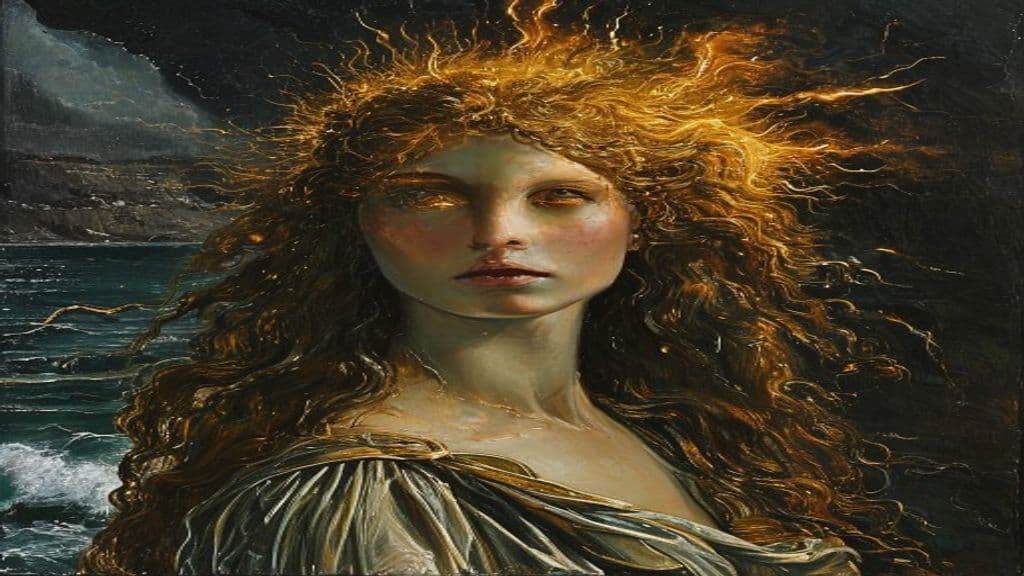
Circe
Circe is a figure of Greek myth known as a practitioner of potent pharmacological and ritual arts who occupies a liminal status between goddess, nymph, and witch. She is famed for her knowledge of herbs and potions, her ability to transform humans into animals in narrative episodes, and for performing ritual purification in at least one classical source.
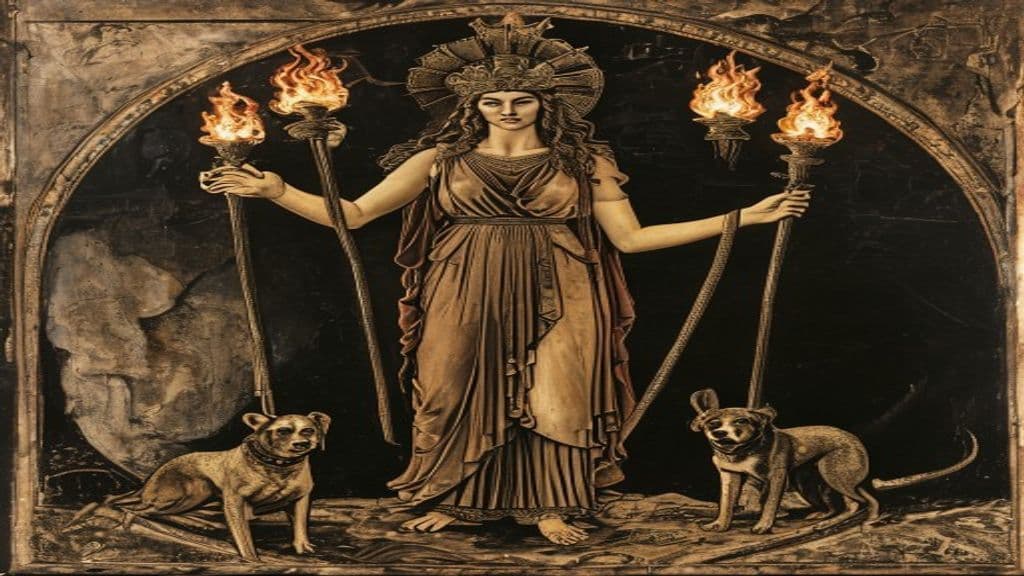
Hecate
Hecate (Ancient Greek: Ἑκάτη) is a liminal goddess in ancient Greek religion associated with crossroads, night, light, magic/witchcraft, the Moon, and household protection. She appears in early Greek poetry (Hesiod) with broad domains and in later traditions (notably the Chaldean Oracles) with expanded cosmological roles; she retained important regional cults, especially in Anatolia (Lagina) and had popular associations with witches in Thessaly.
Admetus
Admetus is a mortal king of Pherae in Thessaly in the Greek tragic tradition (notably Euripides' Alcestis). His life becomes the subject of a divine bargain in which Apollo intervenes to delay his appointed death, a bargain that requires another to die in his stead — most famously his wife Alcestis.
Callirhoe
Callirhoe (also Callirrhoe, Callirhoé) is a name attested across Greek myth, classical literature, toponymy, and botanical taxonomy. The provided sources do not present Callirhoe as a single supernatural spirit or consistent cosmological entity; instead the name refers to several mythological characters, an ancient Greek novel and its artistic adaptations, a place with baths near the Dead Sea, and a genus of mallow-family plants used in horticulture and traditional herbal practice.
Cephalus
Cephalus (Ancient Greek: Κέφαλος) is an ancient Greek masculine personal name borne by several mythological and literary figures. In surviving sources he appears as a hunter, husband of Procris, a beloved of the dawn-goddess Eos in some traditions, a son in varying genealogies, and as a named interlocutor in Plato's Republic rather than as a class of supernatural being.
Minos
Minos is a legendary Cretan king in ancient Greek myth, remembered as a lawgiver and founder of Cretan naval power in life and as one of the three judges of the dead in Hades after death. Classical sources present him as a semi-divine, politically powerful mortal (son of Zeus and Europa) whose authority is both terrestrial and judicial in the afterlife.
Niobe (Argive)
Niobe is a mortal figure of Greek myth, daughter of Tantalus and wife of Amphion, famed for boasting of her many children and for grieving them when Apollo and Artemis slew the Niobids; she is transformed into a perpetually weeping rock on Mount Sipylus in later tradition.
Mechho Bhoot
The fish-eating ghost of Bengal — the spirit of a fisherman or a person obsessively fond of fish in life, condemned to haunt river banks and fishing boats, stealing the catch and causing boats to capsize. Distinctly Bengali: a ghost shaped by the culture of a river civilization.
Mecho Bhoot
No verifiable information about an entity called "Mecho Bhoot" is present in the single provided source. The supplied source (a Wikipedia entry for the animated series Bantul The Great) does not define, describe, or mention Mecho Bhoot; therefore the nature, attributes, and cultural context of Mecho Bhoot are unknown based on the available material.
Mecisteus
Mecisteus is a mortal heroic figure from ancient Greek tradition attested in genealogical lists and epic-cycle episodes. He appears in connections with the Theban cycle (Seven Against Thebes), Trojan War narratives, and Argive genealogies, primarily as a warrior and ancestor rather than a developed individual character.
Medb
Medb is the legendary queen of Connacht in the Irish Ulster Cycle, presented as a powerful royal figure and a sovereignty-woman who embodies the land's power to grant kingship. She is famed as the instigator of the Táin Bó Cúailnge and is etymologically associated with mead/intoxication and rulership.
Medieval revenant
A revenant is a folkloric returning dead — described in the supplied sources as either a spirit or an animated corpse — believed to have been resurrected to re-enter the world of the living and to haunt them. The English term derives from Old French revenant, literally ‘returning’.
Medjed
Medjed is a minor, named supernatural figure attested in a few copies of spell 17b of the Egyptian Book of the Dead and depicted on nine New Kingdom/Late Period papyri dated to around the Twenty‑first Dynasty. Textual lines call him “that smiter,” say he “shoots with his eyes, yet is unseen,” and that “the sky is encircled with the fiery blast of his mouth,” and place him among those who belong to the House of Osiris in the Duat.
Medon
Medon (Μέδων) is a Greek personal name attested across mythic, epic, and civic sources for multiple distinct mortal figures (herald, warriors, local notable) and once for a centaur; it functions as a name-cluster rather than a single supernatural being. The name also recurs in modern taxonomic and toponymic usages, which are homonymous transfers rather than indications of a unified mythic entity.
Community Record
- [1]Medea — Wikipedia. Wikipedia article 'Medea' (summarized references to Hesiod, Apollonius of Rhodes, Euripides, Herodotus, Ovid)wiki
- [2]Medea by Euripides — Project Gutenberg / Internet Classics Archive. Euripides, Medea (play) — English translation available via Project Gutenberg / The Internet Classics Archiveliterary
- [3]Argonautica tradition (summarized in secondary sources). Summary of Medea in Argonautica and other literary traditions (Mythoi Koinoi chapter on Medea)other
- [4]Wikidata: Medea. Wikidata entry for Medea (structured data linked to literary attestations)other