
In a mythic episode recorded in Graeco‑Roman sources and later represented in art, Hercules (Heracles) walks on a beach near Tyre while courting a nymph named Tyros. The hero's dog bites a sea snail (πορφύρα / porphúra), the snail's 'blood' dyes the dog's mouth Tyrian purple, and seeing the stained mouth the nymph demands a gown of the same color — prompting the origin of the purple dye. Some commentators note an alternate attribution of the episode to the Tyrian deity Melqart (identified with Heracles in Phoenician contexts), but the cited traditions present the canine as part of the Heracles narrative and as the incidental vector of discovery.
Textual sources do not provide a detailed description, name, or breed for the dog; it is described only as Hercules' companion, notable for its purple‑stained mouth after biting the porphúra. Artistic representations vary: Peter Paul Rubens's c.1636 oil sketch depicts Hercules and the dog on the beach with the dog's mouth stained purple and uses a large smooth shell (nautilus‑like) rather than the biologically accurate spiny murex associated with Tyrian purple. No ancient source assigns special morphology beyond its role as the hero's dog.
The dog possesses no supernatural powers in the cited materials; its 'ability' is ordinary animal behavior — specifically, biting a sea snail. That incidental act functions as a narrative mechanism (an accidental discovery) that reveals the dye's color to human characters. Sources do not ascribe autonomous agency, cultic status, or magical faculties to the animal.
Weaknesses
- otherNone attested — sources give no magical weaknesses or wards for the dog
Wards
- otherNone attested — the episode is an origin myth and sources record no apotropaic measures regarding the dog
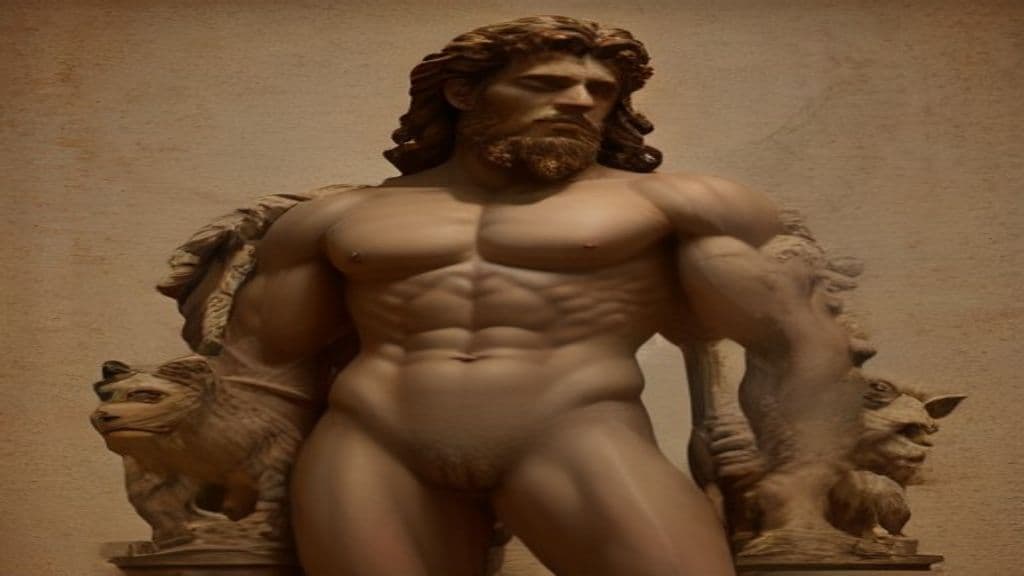
Hercules
Hercules (Latin: Hercules) is the Roman reception of the Greek divine hero Heracles: a semi-divine, divinized heroic figure son of Jupiter and the mortal Alcmena who was widely venerated across Italy. Represented in cult, votive art, and literature, he functions as a protector and martial champion whose identity was adapted through Etruscan and local Italic contexts.

Melqart
Melqart is the principal tutelary deity of the Phoenician city of Tyre, venerated as the city's divine patron, protector of its colonies, and a central figure in Phoenician/Punic civic religion. He is associated in the sources with an annual 'awakening' festival often interpreted as a dying-and‑rising motif, and his name was invoked to sanction oaths and protect settlements.
Community Record
- [1]Hercules's Dog Discovers Purple Dye (Wikipedia). "Hercules and his dog were walking on the beach on their way to court a nymph named Tyros. The dog bit a sea snail (πορφύρα/porphúra), and the snail's blood dyed the dog's mouth Tyrian purple. Seeing this, the nymph demanded a gown of the same color, and the result was the origin of purple dye."wiki
- [2]Tyrian purple (Wikipedia). "Although the snail in the story should be a spiny murex, the kind of snail from which Tyrian purple was made, Rubens instead depicts a large smooth shell that resembles a nautilus." and notes on royal connotations of purple.wiki
- [3]Hercules' Dog Discovers Purple Dye - Alchetron. Summary of the mythic episode and its reception in art.other
- [4]Art History Reader: The History of Purple | Sartle. Discussion of the cultural meaning of royal purple and its use in art to signify emperors and divinity; context for Rubens's patronage and symbolic deployment.other