
Classical sources present Hippolyte as an Amazonian queen with divine lineage: a daughter of Ares (the god of war) and Otrera. She appears in multiple and variant traditions; scholars note the myths about 'Hippolyte' are so varied that they may refer to different women bearing the same name. The name also occurs elsewhere in Greek myth (for example, as a Hesperide and as a queen of Iolcus sometimes called Hippolyte or Astydamia), indicating the onomastic multiplicity that classical writers and later readers must disentangle.
Ancient texts emphasize emblematic martial items rather than a fixed physical portrait. Hippolyte is specifically associated with the zoster — a 'war belt' or girdle (the Greek word appears in the Iliad) said to have been given by Ares and worn by her. Classical and later iconographic conventions portray Amazonian queens in martial dress (shield, spear, horseback imagery), but the supplied sources caution that direct textual descriptions focus on the girdle/zoster rather than a consistent bodily depiction.
Sources do not ascribe supernatural powers to Hippolyte beyond her social and narrative roles. She functions as a queen and military leader of the Amazons (a position often grounded in descent from Ares), and her primary narrative function is as the possessor of Ares' girdle, which becomes the goal of Heracles' ninth labor in many accounts. Her story is woven into episodes with major heroes (Heracles and Theseus), including conflict, retrieval of the girdle, and at least one tradition where Theseus abducts an Amazon companion during related events. Different accounts assign different fates and actions to figures named Hippolyte, so behaviors and specific outcomes vary across sources.
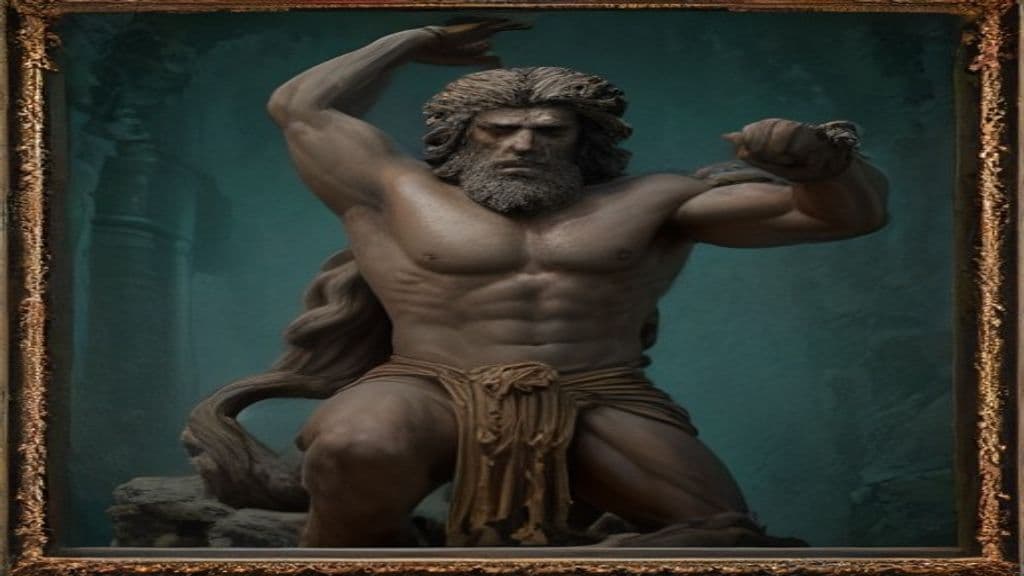
Heracles
Heracles is the greatest hero of Greek myth whose career bridges mortal hero-cult and full divinization. Celebrated for his Twelve Labours, martial prowess, and travels between the mortal world, the underworld, and Olympus, he functioned as a civic patron, ancestor of royal lines (the Heracleidae), and object of cult that treated him both as chthonic hero and as god.

Theseus
Theseus is a legendary hero of Greek myth credited with clearing dangers from Attic roads, slaying the Minotaur, and performing foundational civic acts for Athens (including synoikismos and establishing cult practice). He is portrayed as of mixed mortal and divine parentage and functions as a culture-hero and exemplar in later authors' moralizing biographies.
Abas
Abas (Ancient Greek: Ἄβας, gen.: Ἄβαντος) is not a single mythic being but a recurring personal name borne by multiple mortals and minor mythic figures in Greek epic and genealogical traditions — kings, founders, seers, warriors, attendants, a centaur, and a youth transformed by a goddess. The name is glossed in the sources as 'guileless' or 'good-hearted' and appears across Argive, Theban, Trojan, Euboean, and other local cycles.
Acheilus
Acheilus (also spelled Akheilos/Achilleus in some sources) is a minor figure of Greek myth described as a mortal son of Zeus who was transformed into a shark and thereafter called a 'shark-formed sea daimon.' Surviving summaries frame his story as a hubris metamorphosis: boasting about his beauty led a goddess to change him into a marine monster.
Achelois
Achelois (Ancient Greek: Ἀχελωίς, 'she who drives away pain') is an attributive name or epithet used in ancient Greek mythic contexts rather than a single, consistently characterized being. The term appears applied to several different figures — a surname of the Sirens, a general name for certain water-nymphs (Acheloides), and as the name of a daughter of Pierus — and functions within Greek naming practice as a descriptive label rather than a fixed ontological office.
Achilles (son of Zeus)
A minor figure in Greek myth named Akhilleus (Ancient Greek: Ἀχιλλεύς), presented in some traditions as a son of Zeus and the Lamia who was famed for irresistible beauty, won a beauty contest judged by Pan, and was transformed into ugliness by Aphrodite. This Akhilleus is distinct from the Homeric hero of the Trojan War.
Achiroe
Achiroe (variants Anchirrhoë, Anchinoë/Ankhinoe) is a minor Greek mythological figure: a Naiad associated with the river Nile, daughter of the river-god Nilus, who becomes the wife of the Egyptian king Belus and mother of mythic progenitors such as Aegyptus and Danaus (with some accounts also naming Cepheus and Phineus). She functions primarily as a genealogical link between river-divinity and royal lineages rather than as an active agent in surviving myths.
Acontes
Acontes (Ancient Greek: Ἀκόντην) is an Arcadian prince in Greek mythology, counted among the fifty sons of the impious King Lycaon. He appears in the Lycaon narrative as a participant in a sacrilegious meal prepared for Zeus (disguised as a peasant) and is destroyed by the god's lightning as punishment.
Actaea
Actaea is a named sea‑nymph in Greek mythic lists, identified in the provided sources as the personification or eponym of the seashore. She appears primarily in onomastic and catalogue contexts (lists of nymphs/Nereids) and has no surviving independent narrative or cultic rites attested in the cited material.
Acte (Akte)
Acte (Ancient Greek Akte, sometimes rendered Acme) is a divine personification in Greek myth: one of the Horae who embodies a particular hour of the day — specifically the hour of eating and pleasure, a designated afternoon work-hour — and functions chiefly as a temporal marker rather than an active mythic agent.
Adonia
The Adonia festival is a ritual mourning celebration for Adonis, the consort of Aphrodite in ancient Greek mythology. (Note: 1. The draft claims that the article is about a "ritual mourning celebration", but the source only mentions the festival as a mourning celebration. 2. Power tier should be Primordial or Ancient since )
Aega
Aega is attested in modern reference works as a mythological name from the Greek tradition; the string 'Aega' is used for more than one minor figure or entry in Greek mythic catalogs. Surviving provided sources give no coherent myth, iconography, or rituals tied to a single, identifiable deity or spirit named Aega.
Aegaeus
Aegaeus (Ancient Greek: Αἰγαῖος) appears in Greek myth as (1) a local river-god associated with the island called Scheria (traditionally associated with Corfu) and father of the nymphs Aigaiides and of Melite (who in some sources bore Heracles a son, Hyllus), and (2) as a toponymic surname/epithet of the sea-god Poseidon derived from the town of Aegae in Euboea.
Aegesta
Aegesta is an ancient place-name and eponym recorded in Greek and Roman sources as an alternate form of Segesta, an Elymian city in northwestern Sicily, and as a mythic personal name (Aegestus/Aegesta) tied to Trojan foundation legends rather than a supernatural being.
Community Record
- [1]Hippolyte (mythology) — Wikipedia. Wikipedia, 'Hippolyte (mythology)'wiki
- [2]Hippolyte — Wikipedia (general). Wikipedia, 'Hippolyta / Hippolyte'wiki
- [3]Hippolyte (name). Wikipedia, 'Hippolyte (name)'wiki
- [4]Rameau: Hippolyte et Aricie (reference). Reference to Rameau's opera 'Hippolyte et Aricie' (classical reception)literary
- [5]Myth survey entry prepared by Tikva Schein, Bar-Ilan University. Prepared by Tikva Schein, myth survey entryacademic
- [6]Archive references mentioning Hippolyte and related material. Various archive items cited in research notesother