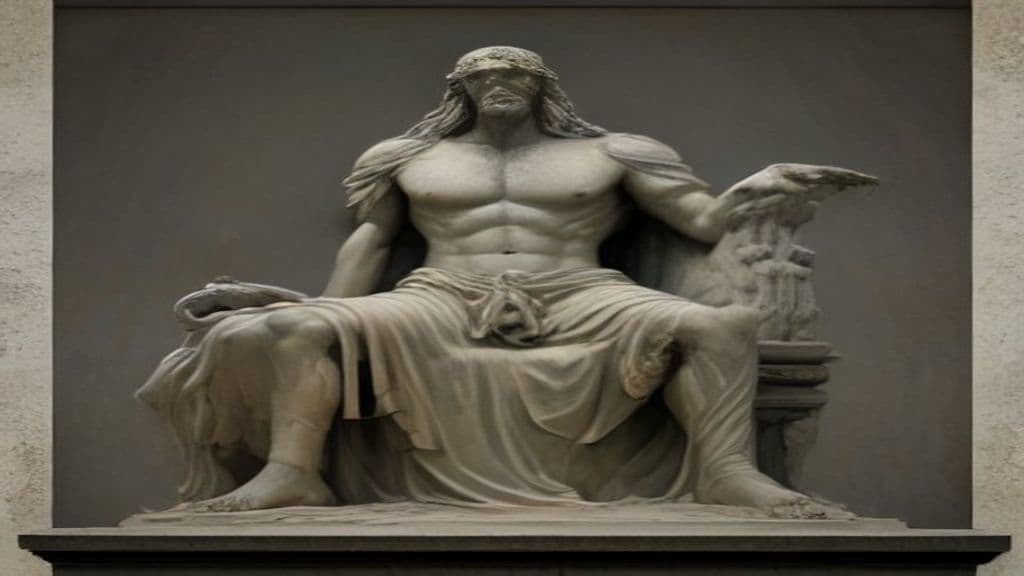
The name Hippothous appears repeatedly in Greek mythic and literary genealogies and narratives rather than as a single origin myth. Different individuals named Hippothous are presented in independent contexts: one is listed among the sons of Aegyptus in the Danaid tradition and is killed on his wedding night; another is associated with Athenian/Eleusinian genealogy as a descendant of Poseidon who receives rule after Theseus slays Cercyon; one appears among the hunters of the Calydonian boar and later becomes king in Arcadia; Homeric epic names a Hippothous among allied leaders in the Trojan War; and Xenophon's Ephesian History (the Ephesiaca) uses the name for a novelistic character involved in scenes of recognition and lament. These attestations show the name's reuse across genealogical, epic, and novelistic registers rather than a single unified foundation story (sources: Wikipedia summary; Iliad Book XVII; Xenophon, Ephesiaca; Cercyon of Eleusis summary).
Across the attestations Hippothous is always presented as a human figure; the sources do not assign a consistent, exceptional physical appearance. In Homeric and epic passages Hippothous appears in battlefield lists and exhortations, implying the conventional accoutrements and bearing of an armed leader or warrior. In genealogical and dynastic narratives the figures bearing the name are portrayed as princes or kings by role rather than by physical description. In the Ephesiaca passages Hippothous manifests ordinary human affect—tears, addresses to parents and country—consistent with a literary human character. No supernatural or shared corporeal markers are recorded for the name in the supplied materials (sources: Iliad Book XVII; Xenophon, Ephesiaca; Wikipedia summary).
No supernatural powers are attributed to any Hippothous in the supplied materials; their 'abilities' are social and narrative roles typical of mortals in Greek myth. Individual Hippothous figures act as warriors or leaders in battle (Homeric catalogue/exhortation), as dynastic heirs or kings who inherit realms (the Hippothous who succeeds Cercyon or becomes king of Arcadia), as hunters participating in pan‑Hellenic expeditions (Calydonian boar hunt), and as literary characters capable of emotional expression and social speech in Hellenistic romance (Xenophon's Ephesiaca). They also appear as victims within tragic family cycle narratives (a son of Aegyptus slain by his Danaid bride) or as casualties of heroic violence (killed by Heracles or Telephus in variant traditions). These behaviors and roles are all grounded in human social, martial, and familial capacities rather than in magical or otherworldly faculties (sources: Wikipedia summary; Iliad Book XVII; Xenophon, Ephesiaca).
Weaknesses
- otherNone attested (not applicable)
Wards
- otherNone attested (not applicable)
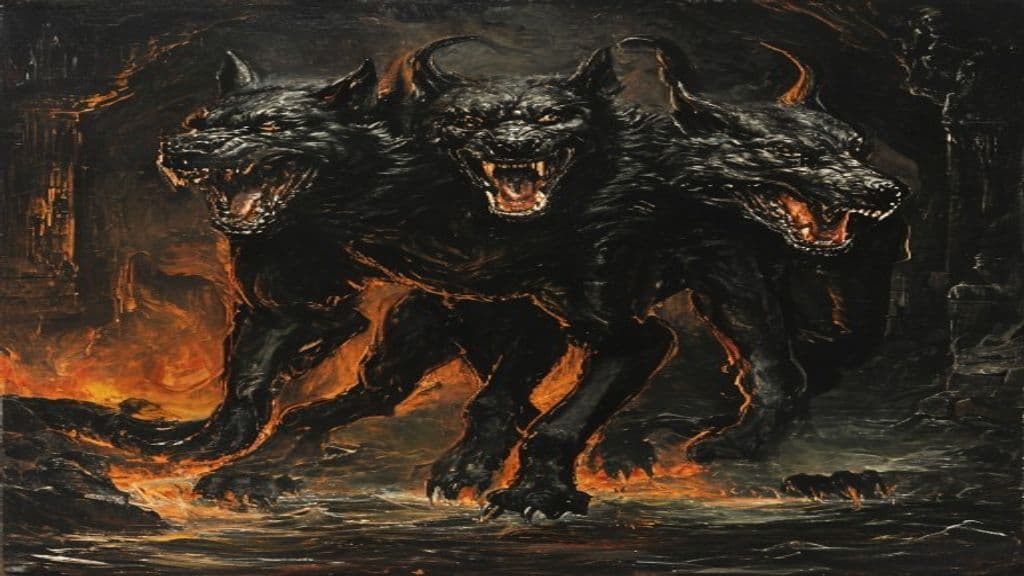
Cerberus
The three-headed hound of Hades, guardian of the underworld's gates — welcoming the dead in but allowing no shade to leave and no living mortal to enter uninvited.

Theseus
Theseus is a legendary hero of Greek myth credited with clearing dangers from Attic roads, slaying the Minotaur, and performing foundational civic acts for Athens (including synoikismos and establishing cult practice). He is portrayed as of mixed mortal and divine parentage and functions as a culture-hero and exemplar in later authors' moralizing biographies.
Abderus
Abderus (Ancient Greek: Ἄβδηρος, romanized Ábdēros) is a mortal heroic figure in Greek myth closely associated with Heracles, remembered as the youth left in charge of the Mares of Diomedes who was killed by them. He functions as an eponymous local/divine-hero ancestor for the city of Abdera and received funerary commemoration and athletic agones at his tomb.
Acamas
Acamas (Ancient Greek: Ἀκάμας) is a personal name recurrent in ancient Greek narrative traditions applied to multiple human characters (warriors, princes, suitors), once to a Cyclops, and once as a hound's name. Rather than a single supernatural entity, bearers of the name appear episodically across the Trojan War, Theseid, and Theban cycles as mortal actors whose deeds intersect with gods and fate.
Acarnan
Acarnan (Ancient Greek: Ἀκαρνάν) is an anthroponym attested in Greek mythic and epic tradition as the name of at least two distinct mortal figures: a son of Alcmaeon and Callirrhoe, and a human suitor of Penelope from Dulichium. The lexical form also appears adjectivally/ethnically (Acarnanian), linking the word to the region Acarnania; etymologically the name is reported as derived from a Greek fish-name (akarnan).
Acastus
Acastus is a mortal heroic figure of ancient Greek tradition: son of Pelias who became king of Iolcus, an Argonaut who sailed with Jason, and an actor in the post-Argonautic cycle involving Medea, Peleus, and the aftermath of Pelias’s death. He is attested as performing civic and ritual actions (burying Pelias, instituting funeral games, purifying Peleus) and as a participant in vendetta episodes that end in violent reprisals.
Acessamenus
Acessamenus (Ancient Greek: Ἀκεσσάμενος, Akessamenos) is attested in Greek sources as a mortal king of Pieria and the eponymous founder of a Macedonian place called Akesamenai. He appears in Homeric genealogy as the father of Periboea, whose union with the river-god Axius links Acessamenus into the ancestry of the hero Asteropaios.
Achaeans (Homer)
In Homeric epic, 'the Achaeans' (Ancient Greek: Ἀχαιοί, Akhaioí) is a collective ethnonym used to refer to the Greek peoples as a single grouped human contingent—the army of Greeks in the Trojan War narratives such as the Iliad and the Odyssey. The term functions as a poetic designation for human actors within the moral, social, and military universe of Homeric poetry rather than as a supernatural class of beings.
Acmon
Acmon (Ancient Greek: Ἄκμων, 'anvil') is a polyvalent personal name in Greek myth borne by several distinct minor figures — a Dactyl (artisan), a Phrygian eponymous king, a mischievous woodland creature, companions in epic cycles (one companion of Diomedes transformed into a bird; an Aenead), and in some brief traditions an alleged father of Uranus. The name therefore functions across artisanal, topographical, trickster, and metamorphosis motifs rather than denoting a single unified supernatural species.
Acrisius
Acrisius (Ancient Greek: Ἀκρίσιος, Akrisios) is a mythic-historical king of Argos in Greek tradition whose narrative is defined by an oracular prophecy foretelling his death by his daughter's son. He is portrayed as a mortal ruler entangled with dynastic rivalry, oracular authority, and the eventual accidental fulfillment of fate.
Aeacidae
The Aeacidae are a dynastic lineage in Greek myth and historiography descended from the hero Aeacus, son of Zeus and the nymph Aegina. The name functions as a patronymic designation for those 'of Aeacus' and is used to claim genealogical legitimacy and political prestige in regions such as Aegina and Molossian Epirus.
Aegipan
Aegipan (Αἰγίπαν / Αἰγίπανος) is an ancient Greek mythological figure associated with goat attributes and with the sea‑goat imagery of the constellation Capricornus. He appears in classical myth as a semi‑divine helper (notably in the Typhon episode) and, in later natural‑history and medieval bestiary reception, the name is applied to satyr‑like or ape‑like wild men in distant lands.
Aegisthus
Aegisthus (Greek Αἴγισθος, Aigisthos) is a mortal member of the House of Atreus in Greek myth who, born of incestuous circumstances and raised by shepherds and a goat, participates in dynastic murder and usurpation — notably the slaying of Atreus in some accounts and the conspiracy (with Clytemnestra) that results in Agamemnon's death — and is later killed by Orestes, an episode that figures in narratives about inherited guilt, vengeance, and the transition from private retribution to public justice.
Aeolus
Aeolus is a name applied to multiple related figures in Greek myth: an eponymous son of Hellen (founder of the Aeolian people), a son of Poseidon who led colonial ventures to Tyrrhenian islands, and a son of Hippotes depicted in epic as a ruler or keeper of the winds. Ancient mythographers note confusion and overlap among these persons.
Community Record
- [1]Hippothous (Wikipedia). Wikipedia, 'Hippothous' entrywiki
- [2]The Iliad, Book XVII. Homer, Iliad, Book XVII (online text)literary
- [3]The Iliad, Book XVII (MIT Classics Archive). Homer, Iliad, Book XVII (MIT Classics Archive)literary
- [4]Ephesian History (Ephesiaca), Book III (translation). Xenophon (Ephesiaca), Book III (Rooke translation, online)literary
- [5]Ephesian History (Ephesiaca), Book V (translation). Xenophon (Ephesiaca), Book V (Rooke translation, online)literary
- [6]Cercyon of Eleusis (Wikipedia). Wikipedia, 'Cercyon of Eleusis' entry (context for Hippothous who succeeds Cercyon)wiki