
Ancient testimonies offer multiple, often contradictory accounts of Homer's origins and life: various cities (Chios, Smyrna, Cyme, Ios, Argos, Pylos, Athens) claimed him, and some biographies assign mythical parentage (e.g., a Muse) or other legendary details. Modern scholarship dates the composition of the Iliad and the Odyssey to roughly the late eighth or early seventh century BC and emphasizes oral transmission and formulaic composition; many scholars treat the poems as products of an oral tradition and debate the extent to which a single historical individual named Homer authored them. Antiquity also attributed a broader corpus (the 'Homerica' such as the Homeric Hymns, Batrachomyomachia, Margites) to the Homeric name, demonstrating how the persona served as an anchor for multiple related works.
Ancient biographical traditions repeatedly depict Homer as blind, a recurring motif in most surviving lives and testimonies; beyond that motif there is no consistent corporeal portrait in the sources. Later antiquarian accounts supply varying details of parentage and regional origin, but no single, reliable physical description emerges from the tradition. Modern popular uses of the name (for example, the fictional character Homer Simpson) are separate cultural adaptations and are not descriptions of the classical persona.
The sources attribute to Homer literary and performative mastery rather than supernatural powers: composition and recitation of long epic narratives, expertise in oral-formulaic technique, and the role of a rhapsode or wandering bard who performed at festivals and public gatherings. The Homeric poems are credited with shaping Greek education and ideals (heroism, glory, honor), and Plato famously remarks that Homer 'has educated Greece,' indicating the formative cultural influence of the works associated with the name.
Weaknesses
- conditionnot applicable — sources provide no magical weaknesses
Wards
- othernone recorded — sources do not describe ritual wards or protections against Homer
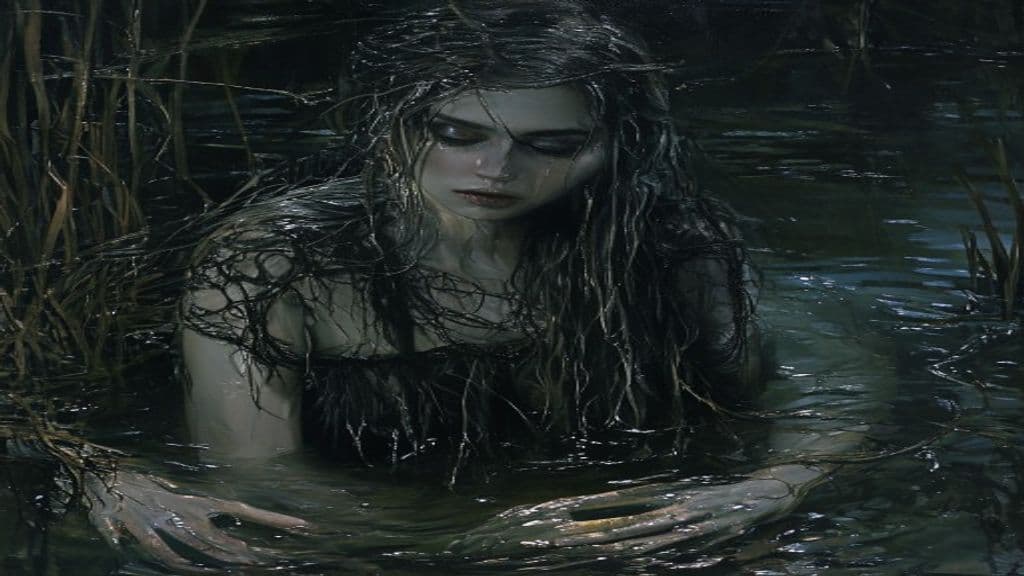
Rusalka
Water spirits in Slavic folklore — the spirits of young women who died by drowning or suicide, bound to rivers and lakes. Beautiful and dangerous, they can bewitch men to their deaths.
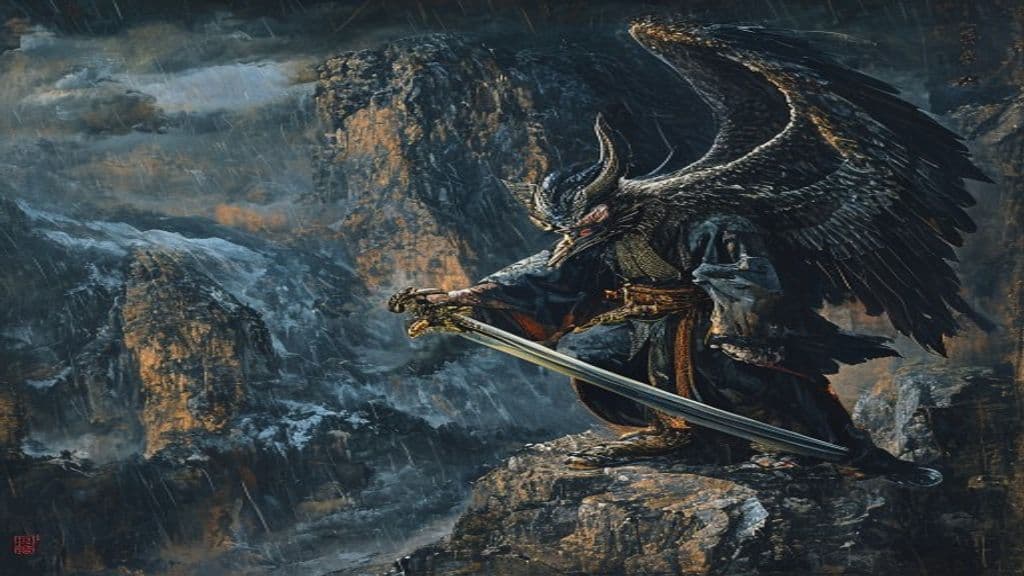
Tengu
Proud, warrior-like mountain spirits of Japan, associated with martial arts, pride, and the wild mountains. Neither fully good nor evil — they test and train warriors and monks, but punish the arrogant.
Rusalka
Water spirits in Slavic folklore — the spirits of young women who died by drowning or suicide, bound to rivers and lakes. Beautiful and dangerous, they can bewitch men to their deaths.
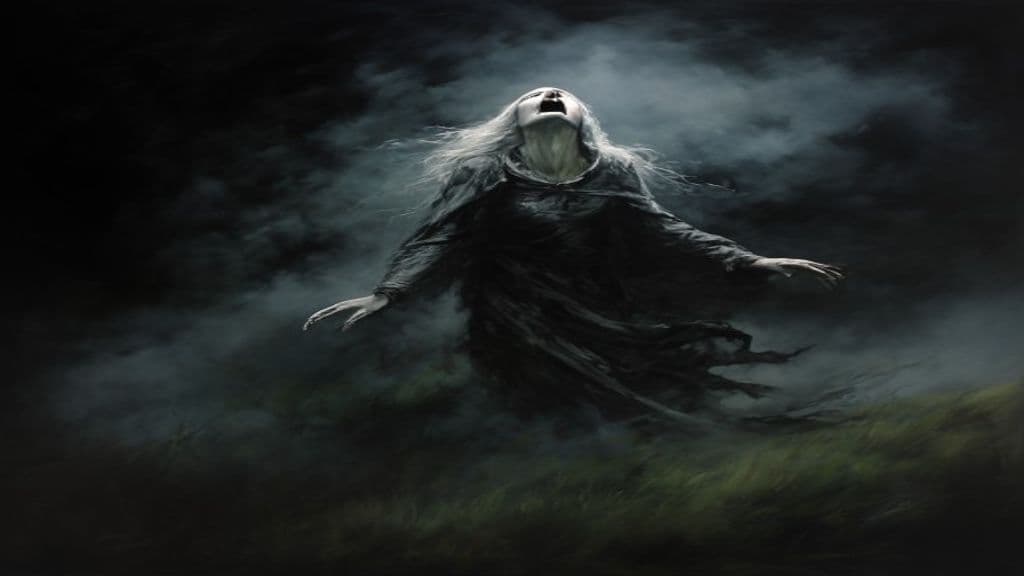
Banshee
A female spirit of Irish and Scottish folklore whose wail heralds an impending death in a family of Gaelic descent. Not a cause of death — a witness to it.
Calesius
Calesius (Greek Καλήσιος) is a minor human figure in the Homeric epic: the attendant and charioteer of Axylus who is killed alongside his master on the Trojan battlefield in Book VI of the Iliad. He appears as a named mortal illustrative of loyalty and the human cost of war, with no supernatural attributes in the cited sources.
Leleges
Leleges are an autochthonous, pre-Hellenic people named in ancient Greek literature and historiography as former inhabitants of parts of the Aegean and western Anatolia. Classical authors use the category to account for older place‑names, cults, ruins, and social remnants encountered by later Greeks rather than ascribing to them supernatural status.
Holy Guardian Angel
In Christian theological and devotional contexts, the Holy Guardian Angel is an individually assigned angelic being appointed to protect and guide a particular person, group, or nation. The idea is embedded in the Christian angelic worldview and is commemorated liturgically (Memorial of the Holy Guardian Angels, 2 October).
Holy Living Creatures
A class of heavenly attendants appearing in Jewish and Christian throne-vision literature (notably Ezekiel and Revelation) who perpetually worship and stand before the divine presence; later traditions (merkabah, Zohar, patristic exegesis) adapt and symbolically associate them with four archetypal forms.
Holy Spirit (Christianity)
In mainstream Trinitarian Christianity the Holy Spirit (Holy Ghost) is the third Person of the Trinity, the distinct divine Person who is the Lord and Giver of Life, present at creation, active in prophecy and inspiration, and pouring out divine presence on the Church (e.g., Pentecost). Broader Abrahamic language (Hebrew ruach, Greek pneuma) underlies Christian pneumatology and informs liturgical invocation (baptismal formula, prayer, benediction).
Holy Wisdom (Hagia Sophia / Sancta Sapientia)
Holy Wisdom (Greek Ἁγία Σοφία, Latin Sancta Sapientia) is a theological personification of divine Wisdom in Jewish and Christian scripture and later patristic and liturgical tradition. Treated as an active, quasi-personal attribute of God, Wisdom is invoked in liturgy, celebrated in church dedications, and identified variously with the Logos (dominant patristic view), the Holy Spirit (minor patristic view), or — in later Russian Sophiology — a feminine principle associated with the Theotokos.
Homay
Legendary figure from Persian tradition, daughter of Kay Bahman, central character in the epic poem Homāy-nāmeh. (Note: - Power tier: Not specified - Appearance: Missing - Abilities: Missing - Sensory cues: Missing - Weaknesses: Missing - Wards: Missing)
Hone-onna
Hone-onna (骨女, "bone woman") are a class of yōkai in Japanese folklore identified as women who died while still attached to living lovers and who return at night to reunite with those lovers. To the beloved they appear as beautiful young women, while their true form is a decaying skeleton; their nocturnal visits are said to drain the life force of the living partner unless the deception is revealed or religious protections are maintained.
Honey Island Swamp monster
A regional Louisiana cryptid reported from Honey Island Swamp in St. Tammany Parish, commonly described as a large, bipedal, hair-covered humanoid. The figure exists primarily in local legend, tourism, and popular-culture accounts rather than as a scientifically verified animal.
Hongatar
A Finnish haltija (localized spirit) associated with the bear: presented in runic songs as the mother or progenitor of the bear, and named for the honka pine used to hang bear skulls during peijaiset (bear funeral/feast). She is an invited guest of those rites and forms part of a family/network of tree-linked female haltijas in Finnish/Karelian oral tradition.
Hopleus
Hopleus (Ancient Greek: Ὁπλεύς) is a Greek personal name borne by multiple mortal figures in myth and epic: an Arcadian son of Lycaon, a Thessalian son of Poseidon and Canace, a Lapith listed among spearmen on Heracles' shield, and a soldier in the army of the Seven against Thebes. He is a human/heroic name appearing across genealogical lists and narrative cycles rather than a single supernatural type.
Horae
The Horae are Greek divine personifications of natural portions of time—originally the seasons—who regulate growth, ripening, and the periodicities of nature, and who later came to embody right order, justice, and civic stability. They appear in variable groupings (commonly triads) with both rural agricultural cults and urban juridical cults and act as attendants and guardians within the divine household.
Community Record
- [1]Homer - Wikipedia. Wikipedia, 'Homer'.wiki
- [2]The Iliad by Homer (MIT Classical Archive). The Internet Classics Archive, 'The Iliad' translated text.literary
- [3]On Translating Homer, by Matthew Arnold (parts 1–2). Matthew Arnold, 'On Translating Homer'.literary
- [4]Homer Simpson - Wikipedia. Wikipedia, 'Homer Simpson' (example of modern cultural reuse of the name).wiki
- [5]Homer and the Iliad (users.globalnet.co.uk). Online essay, 'Homer and the Iliad'.other