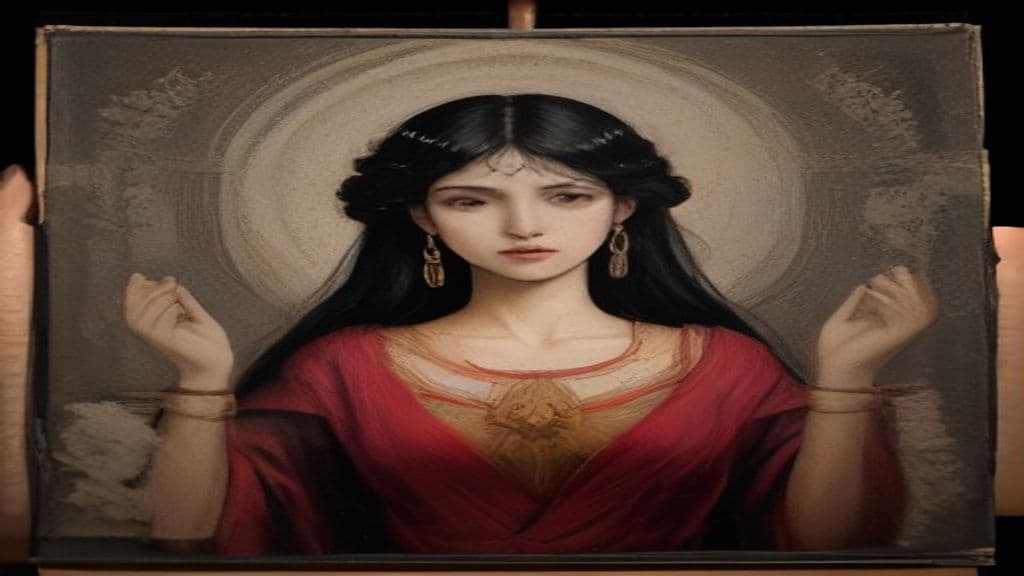
Iphiloche appears in the genealogical tradition of the Greek heroic age as the named bride (or daughter of Alector in some witnesses) who marries Megapenthes, the illegitimate son of Menelaus. Her attestation occurs in summaries and scholia preserved in later commentators (Eustathius is cited for variant forms). Beyond serving to situate Megapenthes within family networks of the Trojan-cycle generation, no narrative origin, mythic birth-account, or independent story about her is recorded in the provided sources.
No ancient physical description, iconography, age, dress, or visual attributes for Iphiloche is recorded in the cited materials. The sources supply only her name and genealogical relation (wife/daughter), with no descriptive detail.
The sources do not ascribe any supernatural powers, distinctive behaviors, or notable deeds to Iphiloche. She is presented solely in a genealogical capacity (bride/wife connecting family lines). There is no narrative of actions, ritual agency, or magical competence in the provided material.
Alcidamea
Alcidamea (also given as Alcidamia) is attested in classical mythographic sources as a mortal woman of Corinthian genealogy: the partner of the god Hermes and mother of Bunus (Bounos). Separately, Alcidamea is the Latinized name used in modern entomological taxonomy for a subgenus of solitary bees (Hoplitis (Alcidamea)).
Anaxiroe
Anaxiroe is a named female figure in archaic Greek genealogical tradition associated with the ruling families of Elis. In the supplied sources she appears only in relational roles (daughter of Coronus; in some accounts the wife of Epeius) and carries no supernatural attributes, cult, or ritual functions.
Arcesius
Arcesius (Ancient Greek: Ἀρκείσιος, also Arceisius/Arkeisios/Arcisius) is a mythic ancestral king of Ithaca attested in classical genealogical traditions as the father (or ancestor) of Laertes and an ancestor of Odysseus and Telemachus. Sources record multiple, conflicting parentage variants and occasional miraculous birth motifs; later uses of the name appear in non-mythic contexts (opera role, Roman technical literature, and a modern taxonomic label).
Archilycus
Archilycus (Ancient Greek Ἀρχίλυκος, Archílykos; Latinized Areilycus in some lists) is a mythic mortal attested only in genealogical and cataloguing traditions of ancient Greece. He is recorded as a member of a Boeotian noble lineage and as the father of leaders who took part in the Trojan expedition; he is not presented as a deity, monster, or active narrative character in surviving sources.
Arestor
Arestor (Ancient Greek: Ἀρέστωρ) is an Argive princely figure in Greek mythic genealogies, known primarily as a forefather and eponymic node connecting the foundation myths of Argos/Mycenae and several heroic-age figures (notably as father of one or more figures named Argus). He functions as a mortal genealogical ancestor in the literary tradition rather than as an independently acting supernatural being.
Argeus
Argeus (Ancient Greek: Ἀργεύς, "the hunter") is a personal and place-name attested across classical, Christian, and modern contexts. The name labels several distinct referents — mythological individuals (including a king of Argos), a historical/legendary pretender, a Christian saint, and a Roman toponym for Mount Erciyes — rather than a single supernatural being.
Boethoos
Boethoos (also Boethous/Boethos) is a minor named figure in Greek mythological genealogy, attested as a Lacedaemonian son of Argeios (son of Pelops) and Hegesandra (daughter of King Amyclas of Sparta). He appears only as a genealogical descendant within Peloponnesian heroic lineages in the supplied sources.
Cercaphus
Cercaphus (Ancient Greek Κέρκαφος) is a name borne by several related figures in Greek mythic genealogies and local foundation stories. Most prominently he appears among the Heliadae of Rhodes—portrayed as a son/descendant of Helios whose descendants become eponymous founders of Rhodian cities—but variant traditions attach the name to other ancestral figures in Thessaly and localized etiologies.
Cydragora
Cydragora (also attested Cyndragora) is an alternate personal name used in Greek mythic genealogies for the woman more commonly called Anaxibia, here identified in some traditions as a daughter of Atreus who married Strophius of Phocis and was mother of Pylades. The figure is presented as a mortal mythic woman whose primary role is dynastic and genealogical rather than supernatural.
Dardanus (son of Zeus)
Dardanus is a mythic progenitor and eponymous founder in Greek tradition, named as a son of Zeus and the Pleiad Electra and presented as ancestor of the Trojan royal line and the namesake of places on the Asian shore of the Hellespont.
Makedon
Makedon (Μακεδών; also Makednos, transcribed Macedon) is the eponymous ancestor and founding progenitor of the Makedones (ancient Macedonians) in fragmentary ancient Greek genealogical narratives. He functions as a legendary first man in etiological accounts that explain the origin of the Macedonian ethnonym and identity.
Onesimachus
Onesimachus (Ancient Greek: Ὀνησίμαχος) is attested in the provided source only as a personal name appearing in Greek mythic genealogical material. He is cited as an alternative father of Amarynceus in one variant; the source treats him as an ordinary mortal figure within genealogical traditions rather than a supernatural being.
Community Record
- [1]Megapenthes (son of Menelaus) — Wikipedia. Wikipedia entry for Megapenthes (son of Menelaus), noting he married Alector's daughter Iphiloche.wiki
- [2]Megapenthes (son of Menelaus) / Iphiloche — Wikipedia (summary). Wikipedia summary cited in the research notes indicating 'He married Alector's daughter, Iphiloche.'wiki
- [3]Wikidata: Iphiloche (Pauly-Wissowa cross-reference). Wikidata entry noting cross-reference in Pauly-Wissowa/Realencyclopädie for the name-form.other
- [4]Alector — Wikipedia. Wikipedia entry for Alector, cited as the parentage marker in some witnesses for the woman who marries Megapenthes.wiki
- [5]Research notes summarizing Eustathius and scholia variants. Summaries in the supplied materials noting that Eustathius of Thessalonica hands down variant names (Iphiloche / Echemela / Echemelos) and that the attestations derive from scholia and later commentators.other