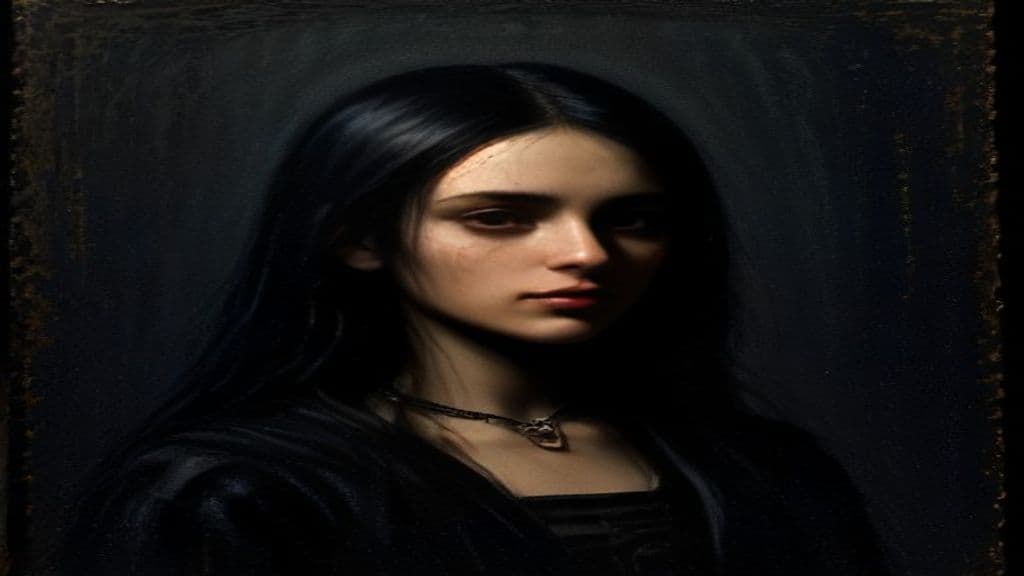
The provided corpus contains no narratives, myths, or ethnographic accounts describing an origin story for an entity named Irmi. References to 'Irmi' in the sources are to modern personal names and unrelated archival items rather than to a supernatural being.
No descriptions of appearance are present in the supplied sources; the materials do not describe any physical or spectral form for an entity called Irmi.
There are no accounts in the provided sources of powers, behaviors, or interactions with humans for an entity named Irmi.
Iram of the Pillars
A supernatural place mentioned in the Quran, associated with punishment on Judgment Day. (Note: - Power tier should be Lesser (local spirit) as Iram of the Pillars is described as a lost city, not a cosmic entity. - There's no mention of punishment on Judgment Day as its primary association; it')
Iratxoak
In Basque mythology, benevolent imps that assist with farm labor at night if treated kindly. (Note: - Power tier: Lesser (not Ancient), as Iratxoak assist with farm labor, but do not seem to have cosmic or deity-level abilities. - Appearance: The article contradicts itself by stating that the appear)
Iravan (Aravan / Kuttantavar)
Iravan (Sanskrit: Irāvān; Tamil: Aravāṇ) is a minor Mahabharata hero—son of Arjuna and the Naga princess Ulupi—who in South Indian (Tamil) religion is transformed into a village/guardian deity (often called Aravan or Kuttantavar) and is principally worshipped in the form of his severed head. In Tamil cults he functions as a propitiatory figure for fertility, healing, and village protection and as a central patron figure in ritual practices of transgender communities.
Iravati
Hindu goddess associated with the sacred river Ravi, connected to cosmological narratives. (Note: 1. Power tier should be Primordial (agreed) but the draft article does not provide a compelling argument to justify it; provide source material supporting Iravati's cosmic-level abilities. 2. The desc)
Irawaru
Figure in Māori mythology transformed into a dog by his brother-in-law Māui. (Note: 1. Power tier: Based on the source material, Irawaru's transformation is a result of Māui's supernatural powers, but there is no indication that he was a powerful regional figure (Greater) before bein)
Irbis Seguy
Irbis Shekui Khagan (Irbis Seguy) was a historical ruler (khagan) of the Western Turkic Khaganate who reigned circa 642–651 CE. Linked to the Nushibi faction, his rule involved alliance with and conflict against the Tang dynasty and rival Duolu leaders, culminating in his overthrow by Ashina Helu.
Irnina
Irnina (dir-ni-na / dir-ni-ni) is a Mesopotamian divine personification of victory attested both as an independent goddess and as an epithet applied to other deities (notably Ishtar). She appears in god lists, royal campaign literature, and syncretistic hymnody and is placed in some sources near underworld deities.
Iroko
In Yoruba tradition, Iroko is associated with the sacred hardwood tree of the same name. (Note: 1. Remove Power tier: Minor Spirit as it's not supported by source material. 2. Add origin story: The Iroko is associated with the sacred hardwood tree of the same name in Yoruba tradition. 3. Under A)
Irong-Irong
Irong-Irong is attested in the provided sources only as a toponym — a historical form of a place-name and the modern name of a bay (Irong-Irong Bay) in Samar province, Philippines. There is no documentary evidence in the supplied material that Irong-Irong is or ever was a supernatural being, spirit, or agent.
Irus
Irus (Ancient Greek: Ἶρος) is a name applied to two distinct mortal figures in Greek myth: a genealogical figure (son of Actor, father of Eurytion and Eurydamas) attested in mythographic/dictionary sources, and Arnaeus, the beggar of Ithaca nicknamed Irus in Book 18 of Homer’s Odyssey. Both are human personae within classical narrative traditions rather than supernatural beings.
Iry (as-attested-uses)
No coherent folkloric or mythological entity called 'Iry' is attested in the supplied sources. The string 'Iry' appears only as an element of personal names, modern nicknames/handles, a taxonomic component, and as an administrative label in archival materials.
Isakki (Isakki Amman)
Isakki (Tamil: இசக்கி), also called Isakki Amman or Esakki, is a popular village goddess (kaval deivam) venerated in parts of southern Tamil Nadu. She functions primarily as a local guardian and maternal/fertility deity whose humble shrines are associated with sacred trees, votive terracotta figures, and offerings seeking child welfare and protection.
Community Record
- [1]Irmi Krauser (Wikipedia entry). Wikipedia contributors. "Irmi Krauser." Wikipedia, The Free Encyclopedia.wiki
- [2]Irmin Schmidt (Wikidata entry Q664494). Wikidata. "Irmin Schmidt" (Q664494).wiki
- [3]Süleymân-Nâme-i Kebîr: 6-7. Ciltler - Firdevsî-i Rûmî (Archive catalog entry). Archive.org catalog entry for Süleymân-Nâme-i Kebîr: 6-7. Ciltler - Firdevsî-i Rûmî.other
- [4]Toggolino Hits 2 [CD] (Archive catalog entry). Archive.org catalog entry for Toggolino Hits 2 [CD].other
- [5]CIA Reading Room index: SCIENTIFIC ABSTRACT LOJDA, L. - LOKAY, V. I.. CIA Reading Room / Archive.org catalog entry referencing scientific abstracts.other