
In popular and scholarly accounts the kapre emerges as a local class of tree-associated personage in Philippine lowland cosmologies: an animate, social presence bound to large trees and wooded places. Ethnolinguistic and historical sources commonly link the modern word to Spanish cafre (derived from Arabic kafir/kāfir), a colonial-era label used by Iberian speakers to describe certain dark-skinned non-Christian peoples; several accounts note that characterizations of the kapre in lowland popular imagination were influenced by these colonial contacts and racialized portrayals of Negrito and other indigenous groups. The sources supplied do not provide a single origin myth that tells how the first kapre came to be; rather, the figure is documented as an entrenched landscape inhabitant whose folkloric role has been shaped by both indigenous tree-spirit concepts and layered colonial-era discourse.
Folkloric descriptions consistently portray the kapre as very tall (commonly reported around 7–9 feet / 2.1–2.7 m), with dark-colored skin, a large muscular build, and abundant hair. Accounts emphasize distinctive sensory markers such as a strong body odor and conspicuous night-time red eyes in some witness reports. Kapres are commonly pictured seated on branches of large trees; they are said to wear an indigenous loincloth (bahag) and sometimes a belt which, in some versions of the tales, is associated with invisibility. Descriptive language in the sources sometimes likens their build to giant or apelike forms—this is reported as part of folkloric imagery rather than a biological claim.
Kapres are principally nocturnal tree-dwellers and are described in folklore as social, personlike beings able to interact with humans in varied ways: they play pranks, confuse or mislead travelers, court or show attraction to humans (particularly women), become companions or persistent followers of those they favor, and may become vengeful if their tree is harmed. A common motif holds that a person who becomes a kapre's friend will gain the ability to see it; some accounts add that possession or use of the kapre's belt may affect its visibility. Kapres are regularly associated with smoking (pipe or cigar), and folk explanations link visible smoke, floating embers, or congregations of fireflies in trees to a kapre's pipe; such phenomena are reported in the sources as folkloric signs rather than scientifically established effects. Some narratives attribute to kapres magic items (for example, a small white stone said in some versions to grant wishes), but there is no single authoritative catalog of powers in the provided materials. Their moral character in the sources is ambiguous—ranging from prankish or companionable to dangerous when provoked.
Weaknesses
None recorded.
Wards
- conditionavoid harming or cutting large trees

Tikbalang
A Philippine nature spirit/phantom associated with wild, liminal places; often depicted in later accounts as a tall, lanky half-horse, half-human trickster that can mislead travelers, guard trees or territories, and in some versions be tamed or domesticated by humans.
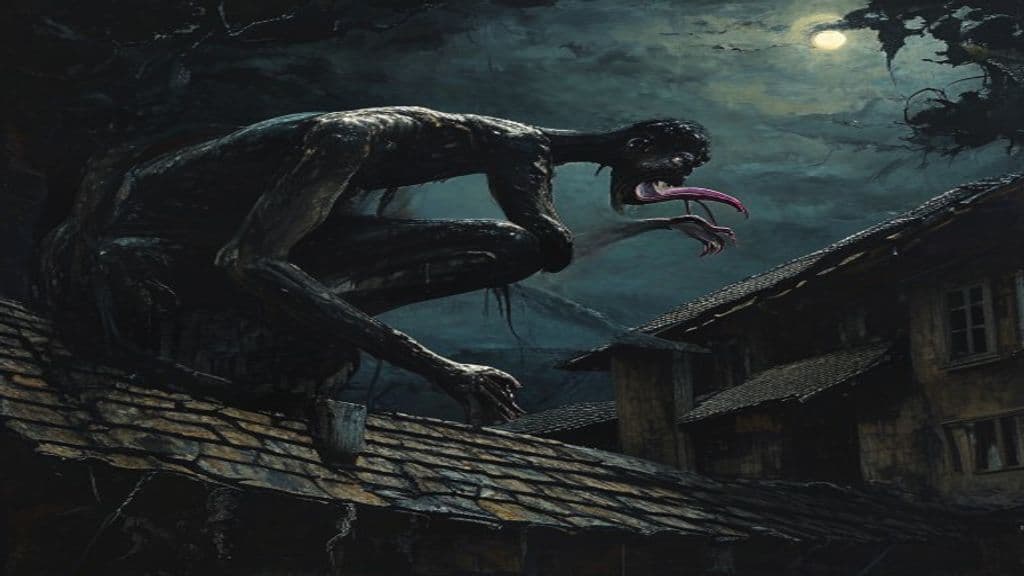
Aswang
The most feared supernatural being in Philippine folklore — a shape-shifting monster that appears human by day but transforms at night to prey on pregnant women and children.
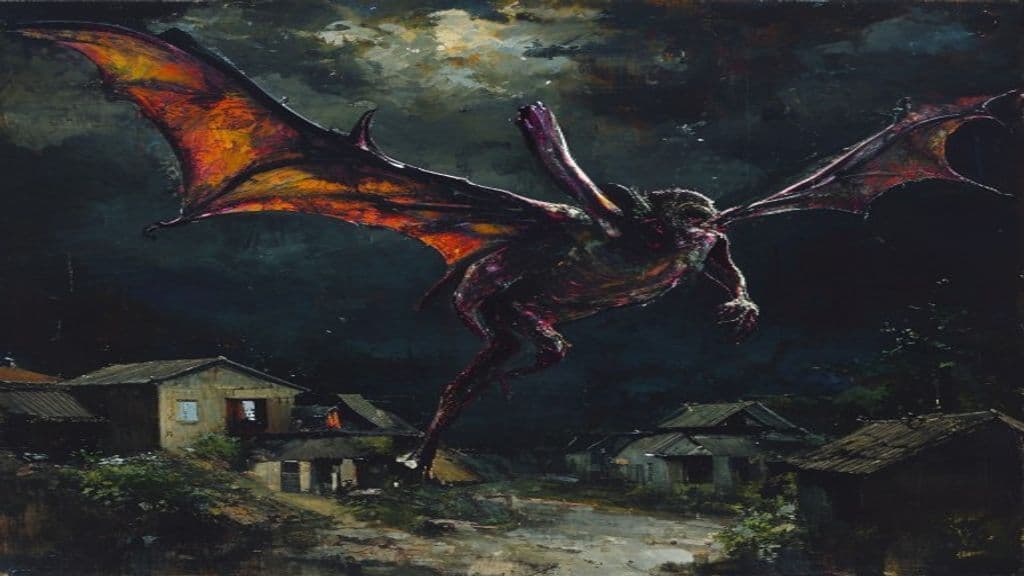
Manananggal
A terrifying Philippine vampire who severs its own upper body from its lower half at night, sprouting bat wings to fly out and feast on sleeping pregnant women's fetuses.
Community Record
- [1]Kapre - Wikipedia. Wikipedia contributors, 'Kapre', Wikipedia, The Free Encyclopedia.wiki
- [2]Kapre | USC Digital Folklore Archives. USC Digital Folklore Archives, 'Kapre'.folk
- [3]EP.37 - Exploring the Filipino Identity through Music featuring Baby Lon the Babel (podcast archive). Archive.org, podcast episode referencing kapre among Filipino mythology and folklore.other
- [4]Bigfoot: The Legend of the Kapre in the Philippines...1997. BigfootEncounters.com, 'The Legend of the Kapre in the Philippines'.other