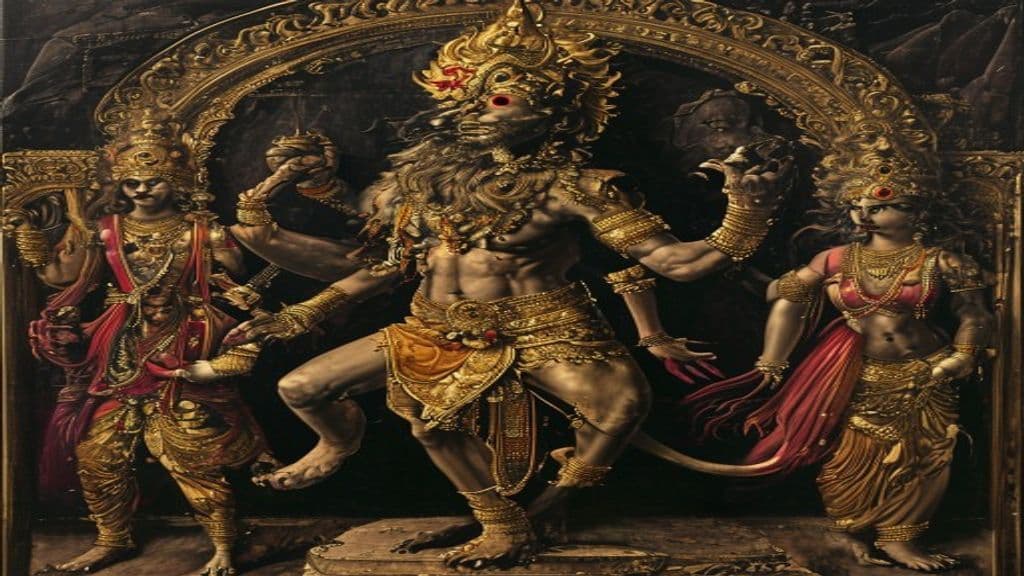
In the Purāṇic and epic corpus summarized in the provided sources, the kimpurushas are presented as a class of beings formed in mythic time; one summary statement records Brahmā creating the kimpurushas and kinnaras from his reflected image. The supplied materials also indicate variation across texts: some Purāṇas associate or conflate kimpurushas with kinnaras, while other Purāṇic passages distinguish the two groups. No fuller etymology or systematic cosmogonic account is given in the provided excerpts.
The canonical description given in the cited summaries describes kimpurushas as possessing human bodies with lion heads. This hybrid form is the recurring physical identifier in the supplied sources. Female counterparts are attested in one narrative as kimpurushīs (female kimpurushas) created in a Rāmāyaṇa-related episode. The sources do not expand on clothing, coloration, size, or other bodily details beyond the human-bodied/lion-headed formulation.
The supplied sources emphasize sociological and behavioral roles rather than distinctive occult powers. Kimpurushas function as attendants of Kubera, occupying retinue and courtly roles in the mythic economy, and they perform vocal devotional roles: they sing praises of Viṣṇu's Nārasiṃha avatāra after the slaying of Hiraṇyakaśipu and praise Mahābali for his offering to the Vāmana avatāra. In a Rāmāyaṇa-related account, Budha transforms women into kimpurushīs and instructs them to pair with kimpurushas and to dwell on a mountain, indicating domestic and residential behaviors. The provided materials do not ascribe specific supernatural abilities (such as magical powers, combat feats, or cosmological functions) to kimpurushas; no explicit combat prowess or magical faculties are recorded in the excerpts supplied.
Weaknesses
- otherNo weaknesses attested in supplied sources
Wards
- otherNo protective charms, wards, or ritual protections are recorded in the provided material
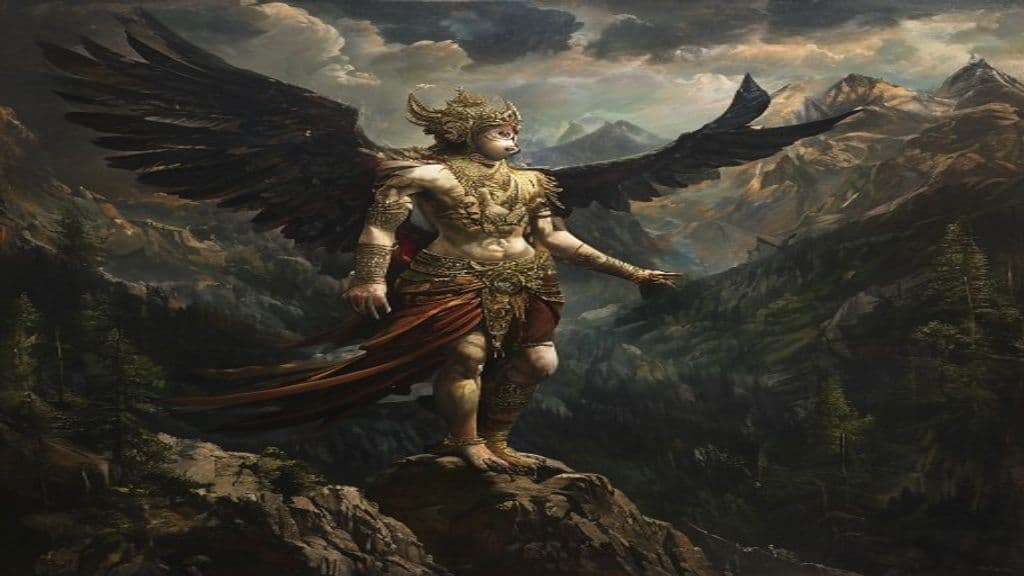
Kinnara
A benevolent, part-human and part-bird entity from Tibetan tradition associated with music and protection. (Note: - Power tier: Primordial (due to its association with Hindu and Buddhist mythology) - Appearance: The exact description isn't provided, but it's mentioned that they are part human and part bird; more )
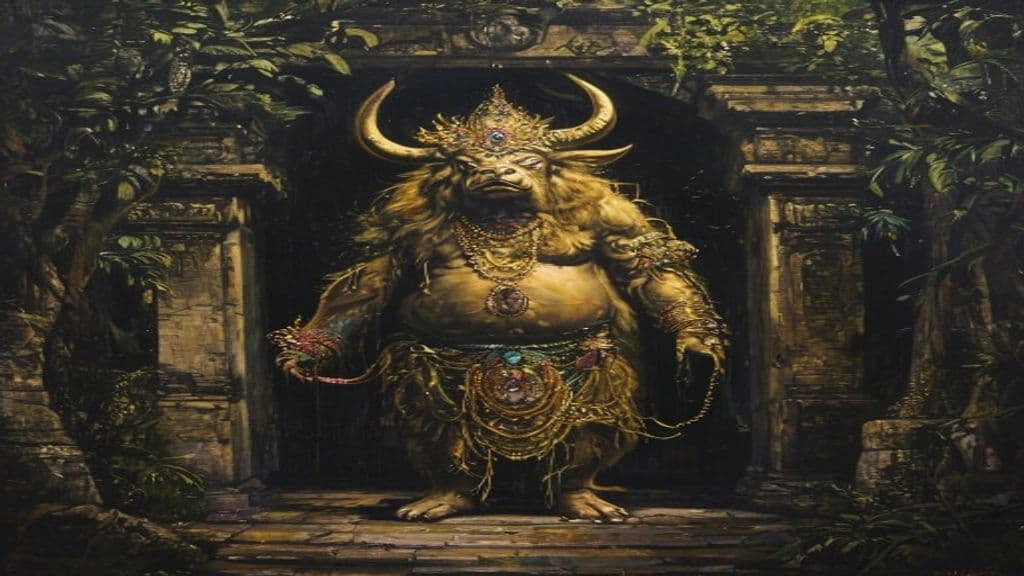
Yaksha
Nature spirits of Hindu, Buddhist, and Jain cosmology — guardians of forests, treasures, and wilderness. Ambivalent beings, capable of great benevolence to the respectful and terrible harm to the greedy.
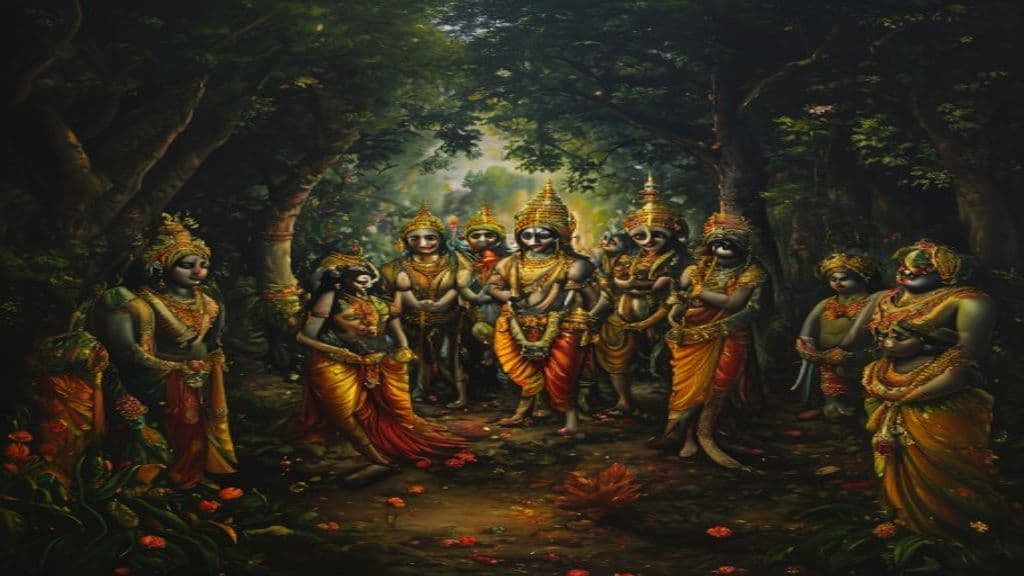
Gandharva
A class of non-human celestial or semi-celestial beings in Indic religions associated principally with music, song, dance, fertility, and an escort/guardian role for liminal arrivals (such as Soma or beings). In Hinduism they are minor deities and musicians of the devas; in Buddhist cosmology they are a low rank of devas and the term (gandhabba in Pāli/commentary) is also used doctrinally for a sentient intermediate state between death and rebirth.
Kilili
Kilili is a Sumerian-origin liminal female spirit or minor goddess attested in Mesopotamian textual and material sources. She functions as an attendant or messenger of the major goddess Ishtar and is associated with windows, haunted/liminal places, and avian (owl) imagery; she also received localized cult offerings in Neo-Assyrian and Neo-Babylonian contexts.
Killer Shrike
Killer Shrike is a comic-book supervillain identity in Marvel Comics, primarily embodied by Simon Maddicks. A soldier-turned-corporate special agent and mercenary, he dons powered armored equipment (including an implanted anti-gravity generator and wrist-mounted power blasters) and serves as a recurring mid-tier antagonist in stories involving Spider-Man and other Marvel heroes; he first appeared in The Rampaging Hulk #1 (Jan 1977).
Killer in the Backseat
A modern urban-legend narrative in which a concealed human attacker hides in the rear passenger area of an automobile, discovered or exposed when another driver or attendant warns the lone driver (often by flashing high beams) or when she stops and is checked. The tale functions as a late-20th/21st-century cautionary story about solitary travel rather than a supernatural entity.
Kim Gyo-gak
A historical Silla prince who became a Buddhist monk and is believed by Mount Jiuhua monks to have been the terrestrial manifestation (reincarnation) of the bodhisattva Ksitigarbha (Chinese: Jijang). His life at Mount Jiuhua is credited with transforming the mountain into a major Ksitigarbha sacred site.
Kim Quy
Kim Quy (Chữ Hán: 金龜, "Golden Turtle") is a mythical golden turtle figure in Vietnamese legend who appears in narratives tied to royal foundation and sacred weapons. In the best-known tales Kim Quy provides magical aid to rulers or appears as the envoy of an aquatic deity (the Dragon King) to reclaim a divine sword.
Kimaris
Kimaris (also Cimeries, Cimeies, Cimejes and related forms) is a named spirit appearing in Renaissance and early modern grimoire catalogs (notably the Ars Goetia and Johann Weyer's Pseudomonarchia Daemonum) described as a martial, serviceable spirit who can be invoked by ritual magicians to teach, form warriors, and locate hidden treasures. Variant manuscript traditions (e.g., a Coptic attestation) sometimes present the name in a non-hostile, godlike helper role.
King Arthur
King Arthur is a central figure of the medieval Matter of Britain: a legendary king and folk‑hero presented variously as a post‑Roman military leader of the Britons, a chivalric monarch of great courtly fame, and a figure entwined with later otherworldly motifs (Avalon, Excalibur, Merlin). Sources range from early Welsh annals and poetry to Geoffrey of Monmouth, continental romances, and later English retellings.
King Caspian X (tradition)
The provided sources do not document King Caspian X as a supernatural or folkloric entity. References to 'Caspian' in the materials pertain to the fictional literary character Prince Caspian from C. S. Lewis's The Chronicles of Narnia, to historical/administrative uses of the toponym 'Caspian Oblast,' and to modern cultural uses of the name.
King Gesar
Central figure in the Tibetan epic, embodying bravery, wisdom, and spiritual power. (Note: * Power tier should be Primordial (cosmic level) given King Gesar's embodiment of bravery, wisdom, and spiritual power, which suggests a higher plane of existence. * The origin story is missing entire)
King Hroðgar
Hroðgar is a semi‑legendary early medieval Danish king of the Scylding dynasty known from Old English and Norse saga material. In the Beowulf tradition he is the generous lord of the mead‑hall Heorot whose court becomes the scene of Grendel's assaults and the hero Beowulf's intervention.
King Laurin
Supernatural being from South Tyrolean saga associated with explaining natural phenomena through mythological stories in the Dolomites. (Note: - Power tier: Primordial (since it involves natural phenomena and shaping mountain landscapes) - Abilities: Add detail that he possibly influences optical phenomena such as alpenglow - Weaknesses: Non)
King Lune
King Lune is attested in the supplied sources only as the name of a fictional king recorded in character lists/databases. The available materials do not provide a narrative role, descriptive details, or any folkloric or ritual information about him.
Community Record
- [1]Kimpurushas (Wikipedia). Wikipedia contributors. "Kimpurushas." Wikipedia, The Free Encyclopedia. https://en.wikipedia.org/wiki/Kimpurushas (accessed in supplied research notes).wiki
- [2]Kimpurushas (Wikidata). Wikidata entry Q116507300 (referenced in supplied research notes).wiki