
In the Enūma Eliš cosmology Kingu appears as a prominent figure associated with the primeval watery powers (the literature places him in the company of Tiamat and the chaotic generation that confronts the younger gods). The epic records that Tiamat gives him authority in her camp and that he is opposed by the storm/creator-god Marduk; after Marduk defeats him his blood is used in the creation of humankind. The supplied sources do not preserve a fully detailed independent origin narrative that predates or differs from his role in Enūma Eliš, though modern commentators note he is attested in other Mesopotamian texts as well.
Surviving primary and summary texts used in the provided material do not supply a detailed physical description of Kingu (no consistent iconographic or bodily attributes are given in these sources). The Enūma Eliš emphasizes his status and function (spouse/subordinate of Tiamat and commander of her forces) rather than corporeal detail; no reliable later traditional imagery or standardized depiction is attested in the provided sources.
Within the Enūma Eliš Kingu's principal capacities are political/military and cosmogenic: he is entrusted by Tiamat with leadership and command of her host in opposition to the younger gods, and after his defeat his blood becomes a raw material used in the craft of humanity, giving him a direct role in the origin of human beings. The provided materials note his appearance in other Mesopotamian compositions (e.g., The Defeat of Enutila, Enmešarra, and Qingu) but do not enumerate additional powers or consistent behaviors beyond his recurring role as a defeated antagonist in divine conflict.
Weaknesses
- otherDefeat by Marduk (death and dispossession)
Wards
None recorded.
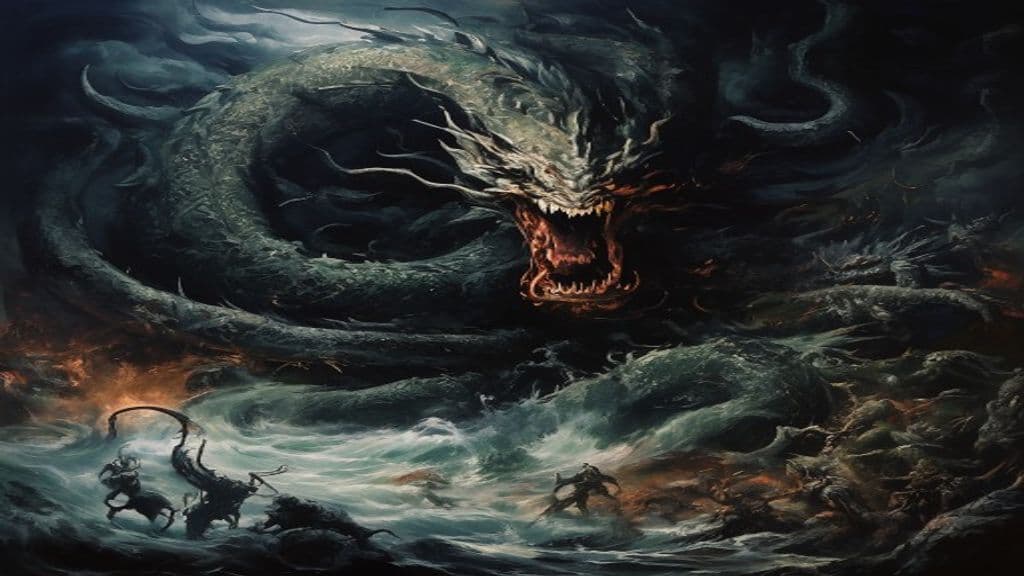
Tiamat
The primordial salt-sea dragon of Babylonian creation myth — the chaos-mother from whose slain body the universe was built, and whose blood became the first humans.
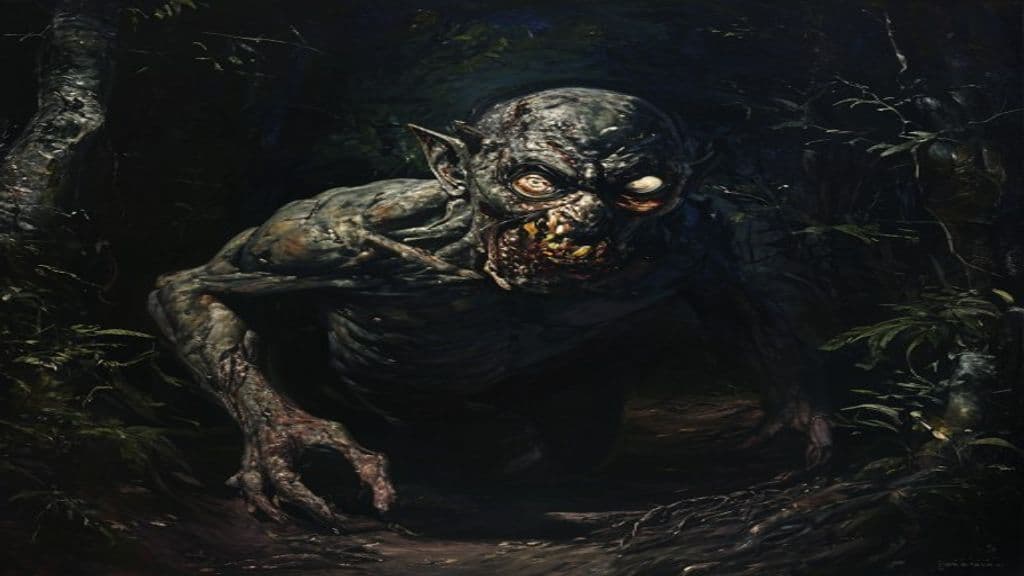
Pishacha
Flesh-eating spirits of Hindu mythology that haunt cremation grounds and are associated with disease, madness, and possession. The lowest class of demon in the Vedic hierarchy.
King Miraz
A human usurper-king in C. S. Lewis's Narnia cycle who seizes the Telmarine throne by killing his brother and rules Narnia oppressively; he functions as the principal antagonist of Prince Caspian and is opposed by the rightful heir, the Pevensie monarchs, and the suppressed "Old Narnians."
King Tirian
King Tirian is the last reigning monarch of Narnia and the protagonist of C. S. Lewis's The Last Battle. He leads Narnia's military and political resistance against the subversion and invasion portrayed in the book and is closely allied with Jewel the Unicorn.
King Triton
King Triton is a fictional character from Disney's The Little Mermaid franchise, portrayed as the monarch of the underwater kingdom Atlantica and the father of Ariel and her sisters. He functions in the Disney narrative as a powerful, authoritarian yet caring patriarchal ruler and a commercial/media property appearing across film, television, stage, theme-park attractions, and merchandise.
King asleep in the mountain
A widespread folkloric motif in which an ideal ruler or heroic figure is alive but sleeping within or beneath a mountain, preserved in a liminal state and expected to awaken and return in the future. This trope appears in diverse traditions (for example King Arthur and the Kyffhäuser emperor type) and is catalogued in motif-index scholarship.
King in the Mountain
A widespread folklore motif of a ruler or hero who lies hidden or sleeping inside a mountain and is expected to return in a future time of need. Treated by folklorists as a comparative motif or tale type (e.g., the 'Kyffhäuser type') rather than a single named supernatural being.
Kings of Alba Longa
A series of legendary kings in Roman tradition, filling a 400-year gap between the settlement of Aeneas and the founding of Rome by Romulus. (Note: 1. The power tier should be Ancient (deity-level) instead of Primordial, as they are described in a mythic tradition but not as cosmic entities. 2. There is no mention of their appearance or sensory c)
Kinilau
In Hawaiian mythology, Kinilau is a figure described as the son of Menehune and Luanu'u, with significance related to ancestry. (Note: * Power tier: Primordial (Kinilau being a significant figure in Hawaiian genealogy and having multiple sons suggests he is at a higher power tier) * Sensory cues, wards, weaknesses: Not mentioned in s)
Kinnara
A benevolent, part-human and part-bird entity from Tibetan tradition associated with music and protection. (Note: - Power tier: Primordial (due to its association with Hindu and Buddhist mythology) - Appearance: The exact description isn't provided, but it's mentioned that they are part human and part bird; more )
Kinnaree
A benevolent hybrid figure from Hindu-Buddhist myth, presented in Thai tradition as a part-human, part-bird being closely associated with music, love, beauty, and the protection of humans. The motif persists in modern Thai cultural life as decorative and symbolic imagery.
Kiraman Katibin
In Islamic tradition the Kiraman Katibin (Arabic: كراماً كاتبين, 'noble writers') are a pair of angels appointed to record every person's deeds. They function as constant divine scribes whose registers inform God's knowledge and later reckoning, a role attested in the Quran and expanded in hadith and tafsir literature.
Kirby O'Donnell
Kirby O'Donnell is a fictional American treasure-hunter created by Robert E. Howard, operating in early-twentieth-century Afghanistan under the Kurdish-merchant disguise 'Ali el Ghazi'. He appears in three pulp-era adventure stories that center on searches for lost treasures and forbidden cities.
Kishar
Kishar (Akkadian Kišar) is a primordial female principle in Babylonian cosmology attested in the opening lines of the Enuma Elish. She functions as the paired earth-counterpart to the sky-principle Anshar and is genealogically the mother of Anu; surviving sources present her as an abstract, cosmological origin-aspect rather than an actively worshiped cult figure.
Community Record
- [1]Qingu (Wikipedia summary). Wikipedia: Qingu, summary of Enūma Eliš role and later use of his bloodwiki
- [2]Enūma Eliš (textual references / epic). Enūma Eliš (Babylonian creation epic), primary literary context for Kinguliterary
- [3]ENUMA ELISH (alternate online text). Enūma Eliš text (online copy) referenced among source materialsliterary