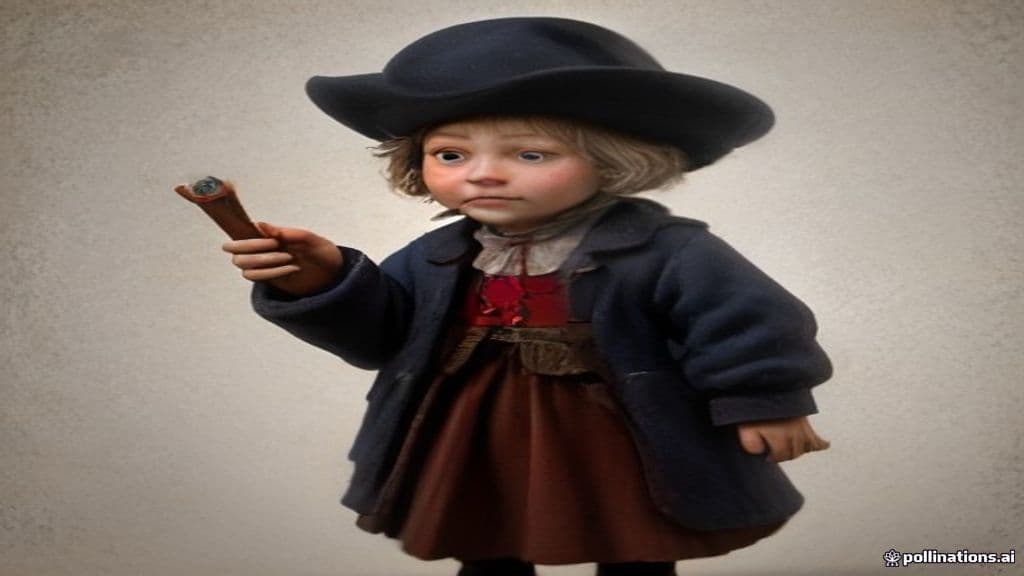
Folklore places the Klabautermann within the family of house- and ship-sprites (kobolds, kabouters, nisse). Some regional motifs link its provenance to the timber of a ship—beliefs record that a stillborn or unbaptized child buried beneath a tree, or similar local soul-in-tree motifs, could lodge in the wood and transfer into the vessel built from that timber, thereby producing a Klabautermann aboard the ship. Other accounts present it as a functional spirit bound to a ship's wood and craft life rather than a singular mythic ancestor.
Descriptions vary across regions. Common portrayals depict a small humanlike figure (one Pomeranian account specifies a diminutive stature), often carrying a tobacco pipe and wearing a nightcap-style sailor's cap and a red or grey jacket; other variants add wide sailor trousers, riding boots, a pointy hat, or a white beard and vivid features. It is also sometimes said to appear naked in some traditions, and in certain accounts it may show itself in the guise of the ship's carpenter. Carved likenesses of the sprite, affixed to the mast, appear in folklore as symbols of good luck.
Folkloric accounts emphasize practical, service-oriented activity: the Klabautermann helps with shipboard work and maintenance (caulking, carpentry-like tasks) and is believed to protect the vessel by warding against illness, fire, and even pirate attack. It is tied to the ship's material life—entering via the timber—and may sit under the capstan in tradition. The spirit is normally unseen and audible (associated with knocking sounds), but its visible appearance is an omen: when it shows itself it is said the ship is doomed to sink. Tradition also holds that the spirit may 'give up' on a vessel when it judges the ship unseaworthy, and its departure signals the ship's impending loss.
Weaknesses
- conditionNever give clothing to a naked Klabautermann — doing so enrages it
Wards
- otherCarved likeness affixed to the mast (votive carving) as a symbol of good luck
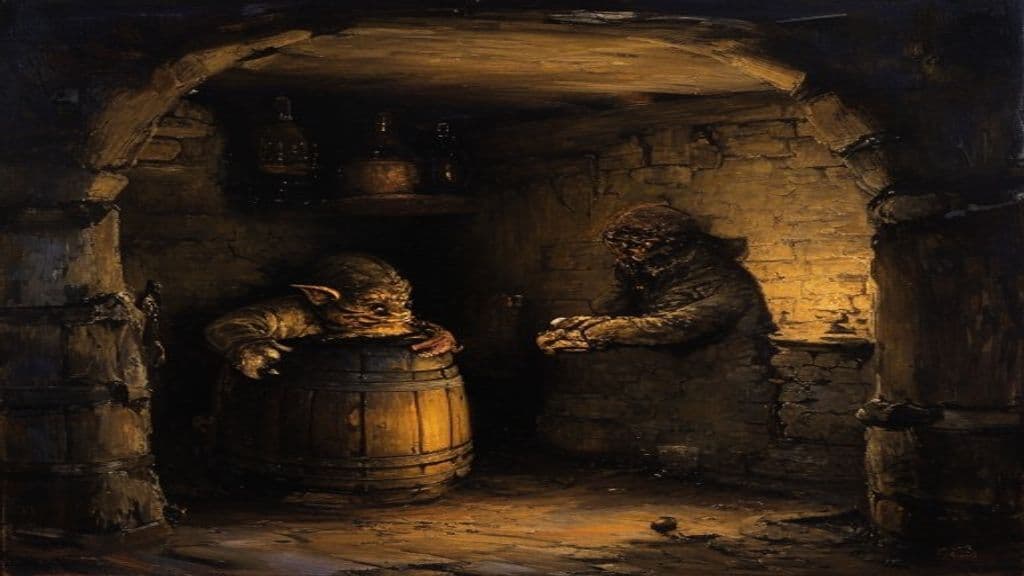
Kobold
The German household and mine spirit — a mischievous but potentially helpful small being who attaches to a household, bringing luck or disaster depending on how it is treated.
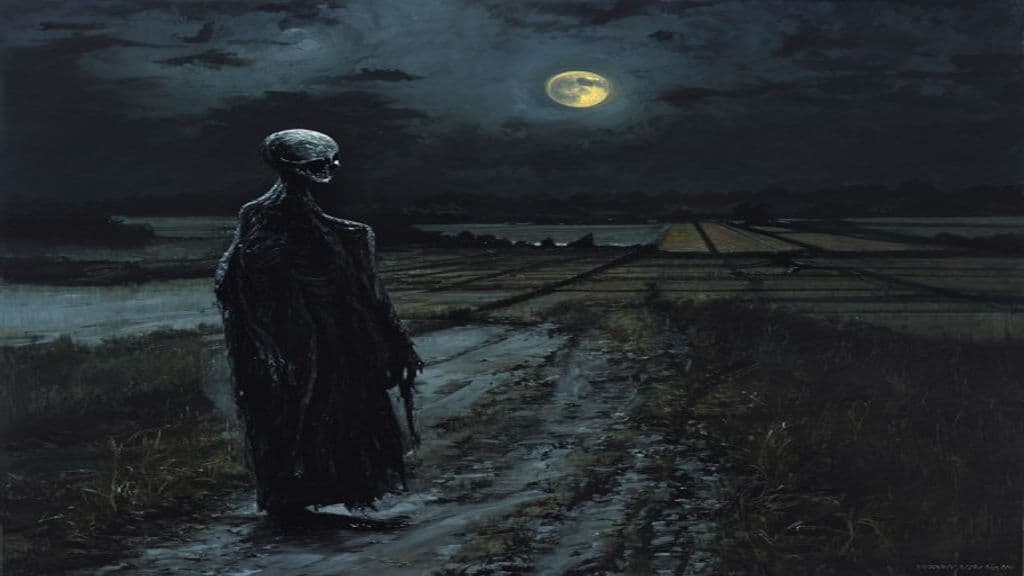
Skondhokata
The headless ghost of Bengal — spirit of someone who died by decapitation or whose body was not found complete after death. Skondho (shoulder) + kata (cut): it carries its head under its arm, seeking the place where the head was lost and terrifying those who encounter it on rural roads at night.
Community Record
- [1]Klabautermann. Wikipedia contributors, 'Klabautermann,' Wikipedia, The Free Encyclopediawiki
- [2]Klabautermann (Wikidata). Wikidata entry Q499530other
- [3]Klabautermann page (folk summary). Bachlund, 'Klabautermann' (webpage summarizing folklore motifs)other
- [4]Archive audio/lyrics and related cultural references. Archive.org, 'Hiev op! - Akustisches Logbuch einer Fischfangreise nach Ostgrönland' (recorded material referencing seafaring life and lore)other
- [5]Archive: Der Störtebecker ist unser Herr (song). Archive.org, recorded song referencing nautical traditionother