No preserved narrative origin survives in the cited material. Scholarly discussion records multiple, contested possibilities: Lumma appears both as a theonym (dLUM-ma) in temple contexts and as an element in theophoric personal names where it may function as an epithet ('the lusty one') or as a regnal/nickname. Some scholars (notably Thorkild Jacobsen) have proposed that a historical ruler—most prominently Eannatum of Lagash—was deified or that Lumma represents a deified regnal persona; this identification is debated and not settled. Linguistic proposals for the name are diverse (Sumerian, Semitic, or substrate origins), and the element lumma may refer to either a distinct divine figure or function as an epithet within personal names depending on context.
Surviving summaries provide no sustained iconographic program for Lumma. Textual attestations describe him as a warrior whose attribute is a mace, implying a martial appearance in some contexts; beyond this, no detailed bodily, garment, or standardized anthropomorphic/zoomorphic depiction is attested in the provided material.
Lumma is portrayed as a combined warrior and agricultural figure—described both as a warrior and as a farmer. He serves as a temple guardian (udug E2-kur-ra) of the Ekur, frequently paired with Ḫadaniš. In ritual contexts he functions as an enforcer against malevolent supernatural beings: an incantation characterizes him in gallu-like terms (rendered by one scholar as a supernatural 'gendarme') and implores Dumuzi to hand over a malicious demon to Lumma so that Lumma may take custody and deal with it. One scholarly suggestion (attested via a proverb in secondary commentary) posits that Lumma could personify good luck and bestow it on persons of good reputation, but that interpretation is inferential.
Weaknesses
None recorded.
Wards
- ritualInvocation of Lumma in incantations

Enlil
Enlil is a principal deity of ancient Mesopotamia, originally preeminent in the Sumerian pantheon as a supreme lord who orders the world by separating heaven (An) from earth (Ki). His principal cult center was the E-kur temple at Nippur, and his cult practices focused on daily offerings and priestly care of his cult statue; mythic traditions portray him as both benefactor and punisher in the administration of cosmic and social order.

Dumuzi
Dumuzi (Dumuzid; Tammuz/Adon/Adonis in Levantine reception) is an ancient Mesopotamian pastoral and fertility deity, shepherd and consort of the goddess Inanna/Ishtar, whose death/abduction and seasonal absence are tied to vegetation cycles and annual cultic mourning and renewal.
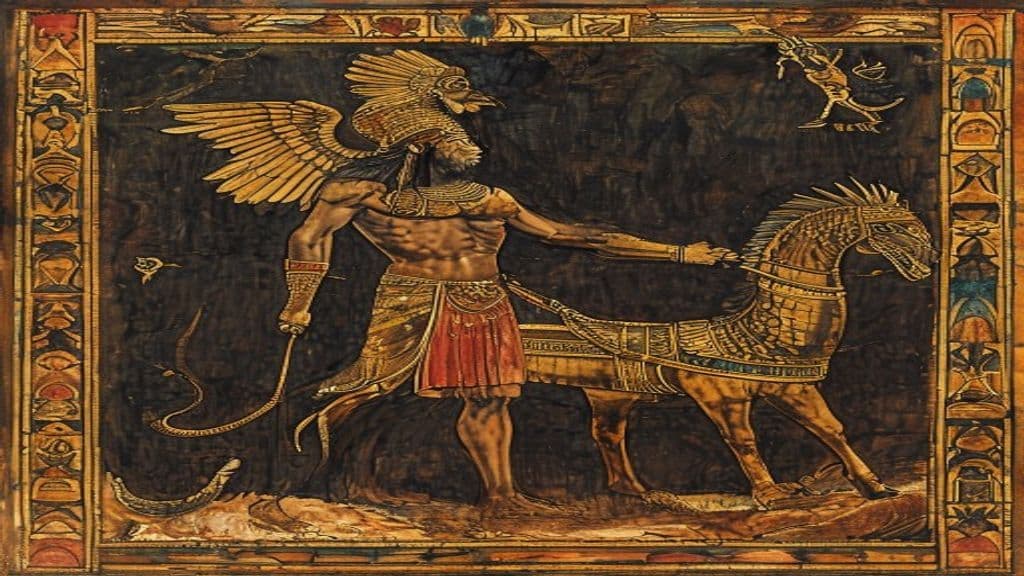
Ninurta
Ninurta is a major deity of ancient Mesopotamia (Sumerian–Akkadian–Assyrian–Babylonian) whose roles include agriculture, healing/exorcism, law and scribal authority, and martial champion of the gods. He is attested from the mid-third millennium BC onward and was venerated at city cult-centers such as Nippur (Eshumesha), Girsu/Lagash (as Ninĝirsu), and later in Assyrian Kalhu.
Community Record
- [1]Lumma. Wikipedia: Lumma (accessed via provided research notes)wiki
- [2]Eannatum. Wikidata: Eannatum (cited in discussion of deified-ruler hypothesis)other