Maenads are not a single origin-person but a cultic and social category within Greek religion: female devotees and ritual agents of Dionysus whose identity and practices appear across regional traditions under a variety of names (Bacchae/Bassarids, Thyiades, Potniades, Mimallones, Klodones). Mythic narratives and civic religion intertwine—some local foundations sought maenadic personnel from established centers (e.g., Delphic guidance to Magnesia to fetch maenads from the Cadmean Ino)—and stories (notably Euripides' The Bacchae) portray maenads both as worshippers and as instruments of Dionysus' divine power or punishment.
Literary and iconographic sources depict maenads wearing fawn or fox skins (bassaris), wearing ivy wreaths, carrying the thyrsus (a staff wound with ivy or vine leaves and topped with a pine cone), handling or wearing snakes, and accompanied by musical instruments (aulos, lyre) and satyrs in vase-paintings. Artistic scenes show them running in forests, dancing, and participating in ritual enactments.
Sources describe maenads as inspired by Dionysus into ecstatic frenzy (enthusiasmos) through dance, music, and intoxication; this state is both religious communion and mythic madness. Ritualized feats attributed to maenads in literary accounts include uprooting trees, striking rocks with the thyrsus to bring forth water, producing wine or honey symbolically from the earth or implements, and performing sparagmos (tearing animals apart) followed by omophagia (eating raw flesh) as sacramental acts. Some literary descriptions assert extraordinary resistances—claims such as immunity to fire or non-lethality of iron are attested in mythic and philological contexts (e.g., dramatic portrayals) but vary by source and are not presented as uniform, absolute rules in the evidence.
Weaknesses
- conditionNo consistent mythic weakness beyond divine limits and narrative constraint
Wards
- otherNo specific apotropaic wards recorded; traditional responses in sources emphasize proper cult observance and honor to Dionysus rather than named protective charms
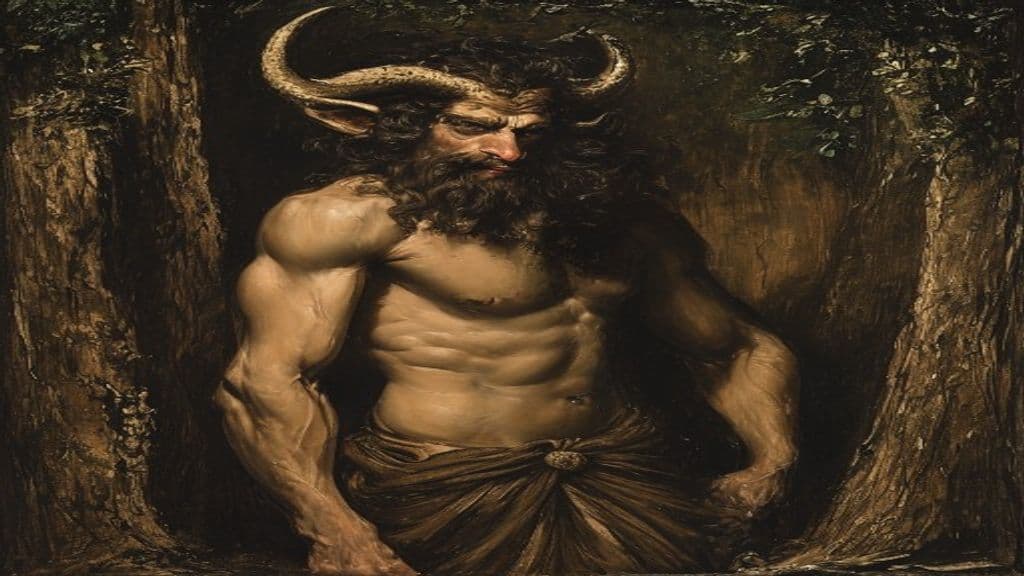
Satyr
In ancient Greek tradition a satyr (σάτυρος, sátyros) is a male nature spirit of woodlands, mountains, and pastures who accompanies Dionysus (and is later identified with Pan/fauns). Satyrs embody ribaldry, music, dance, and unrestrained sexuality and appear collectively (as a chorus) in the satyr play as well as individually in mythic episodes (e.g., Marsyas, Silenus).

Dionysus
Dionysus (Ancient Greek: Διόνυσος) is a major ancient Greek deity associated with wine and winemaking, vegetation and fertility, festivity and theatre, ritual ecstasy and possession, and liminal links with death and the underworld. He is an epiphany-god who travels between worlds, whose cult includes ecstatic rites and mystery initiation.
Community Record
- [1]Maenad - Wikipedia. Wikipedia, 'Maenad' article (summary of ancient Greek sources, cult practice, and iconography).wiki
- [2]Maenad - Wikidata entry Q209599. Wikidata item for 'Maenad' providing linked-data identifiers and labels.other
- [3]Maenad of Bacchus (archive images of iconography). Archive.org collection referencing vase-painting and iconographic depictions of maenads with satyrs and instruments.other
- [4]Pelike (archival vase image). Archive.org image of a pelike showing maenadic imagery and Dionysian scenes.other
- [5]Wine Jug (oinochoe) with a satyr and maenad (archive image). Archive.org image showing maenad and satyr iconography on ceramic ware.other